
No More Guessing Your Shoe Size: Custom Shoes Made from Your Measurements
Part of: Custom Shoes
Ordering custom shoes online often begins with the same concern: “What size should I choose?” A US size 10 can fit differently from one brand to another, and EU, UK and US conversions do not fully describe foot width, instep shape or preferred toe room.
For a made-to-measure order that our team has confirmed, you do not need to select the final production size from a conversion chart alone. Send your usual size as a reference, then provide the requested measurements and clear photographs so we can review the selected style, both feet and the way each measurement was taken before production.
Remote measurements reduce guesswork, but they do not guarantee a perfect fit or replace an in-person fitting, medical assessment or prescribed orthotic service. Availability and the measurement set required are confirmed for the exact shoe style and order.
Your measurements matter more than the size label
Standard shoe sizes are designed around general size groups. They cannot fully describe every individual foot.
For example, two people may both wear EU 43, but:
- One may have a wider forefoot.
- One may have a higher instep.
- One may prefer more toe room.
- One foot may be slightly longer than the other.
- One customer may wear thin socks, while another wears thick socks.
- One customer may use an orthotic insole or need additional room in a specific area.
This is why we use your regular shoe size as a cross-check rather than the only production input. ISO 19407:2023 provides conversion tables for major footwear sizing systems and describes foot length as the logical starting point, while also presenting the conversion tables as guidance. The selected last, toe shape, construction and fitting allowance still matter.
What measurements do we need?
For many personal custom-shoe reviews, we begin with two essential measurements:
- Foot length
- Ball girth, or forefoot circumference
Depending on the shoe style and your individual foot shape, we may ask for additional information such as instep circumference, ankle circumference, an outline of each foot or a note about an orthotic insole. Wait for the measurement request for your selected style instead of sending guessed allowances.
The basic process can be completed at home with a soft measuring tape and another person to help with the photographs.
1. How to measure your foot length
Place your foot naturally on a flat, hard surface. Measure in a straight line from the back of your heel to the tip of your longest toe. Keep the measuring tape flat and straight rather than allowing it to curve around the foot.
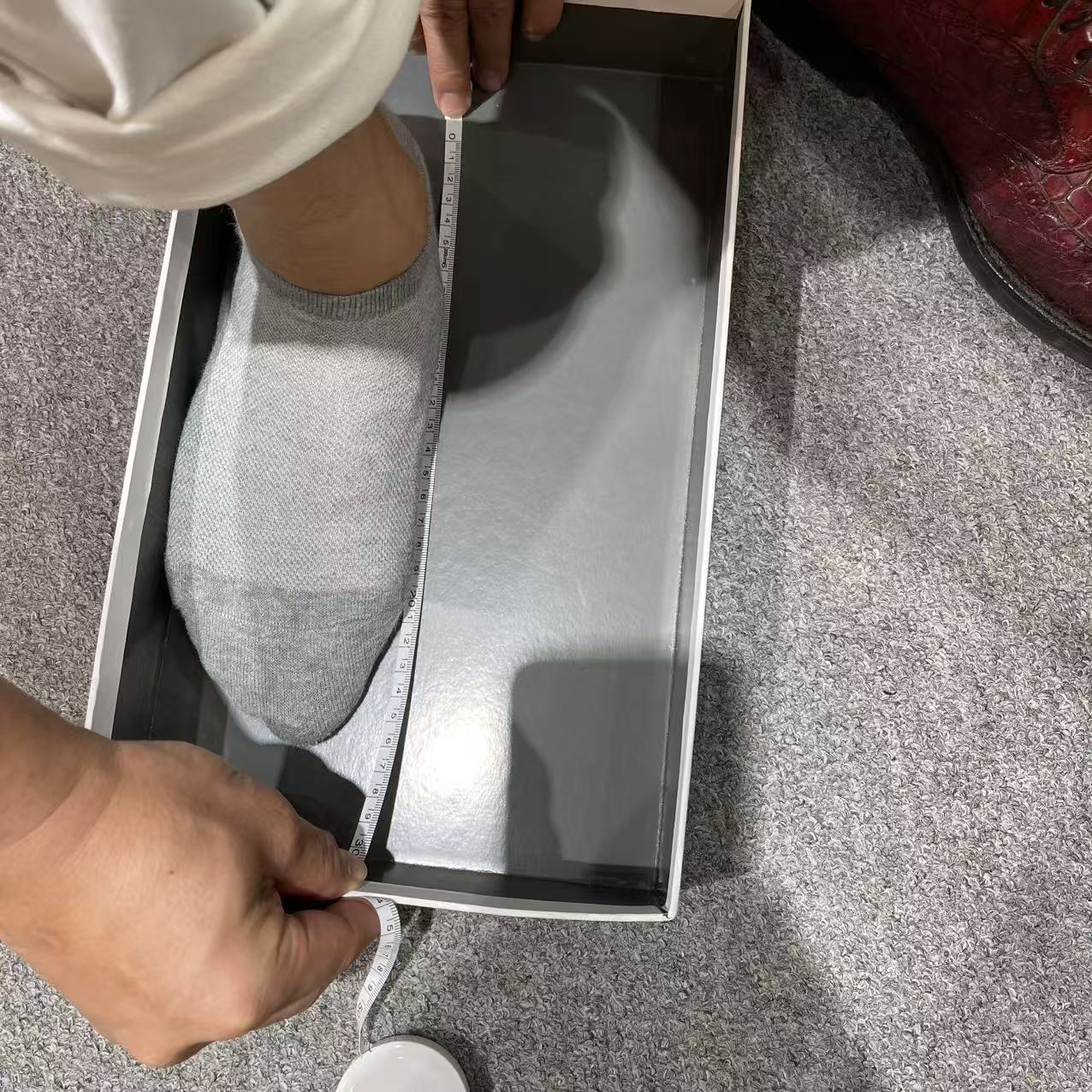
Important measurement tips:
- Measure while standing naturally, with your normal body weight on the foot.
- Wear the type of socks you expect to wear with the finished shoes.
- Measure both the left and right feet.
- Record the result in centimeters or millimeters.
- Do not add extra length yourself. Send the actual measurement and let the fitting review account for the selected style.
Dress shoes, loafers, sneakers and boots can need different internal room. A pointed toe also distributes space differently from a round or broad toe, so the foot-length number must be reviewed with the design.
2. How to measure the ball girth
The ball girth is the circumference around the widest part of your forefoot, generally passing around the joints at the base of the big toe and little toe.
Wrap the measuring tape around this area. The tape should be comfortably snug against the foot, but it should not compress the foot or pull the sock tightly.
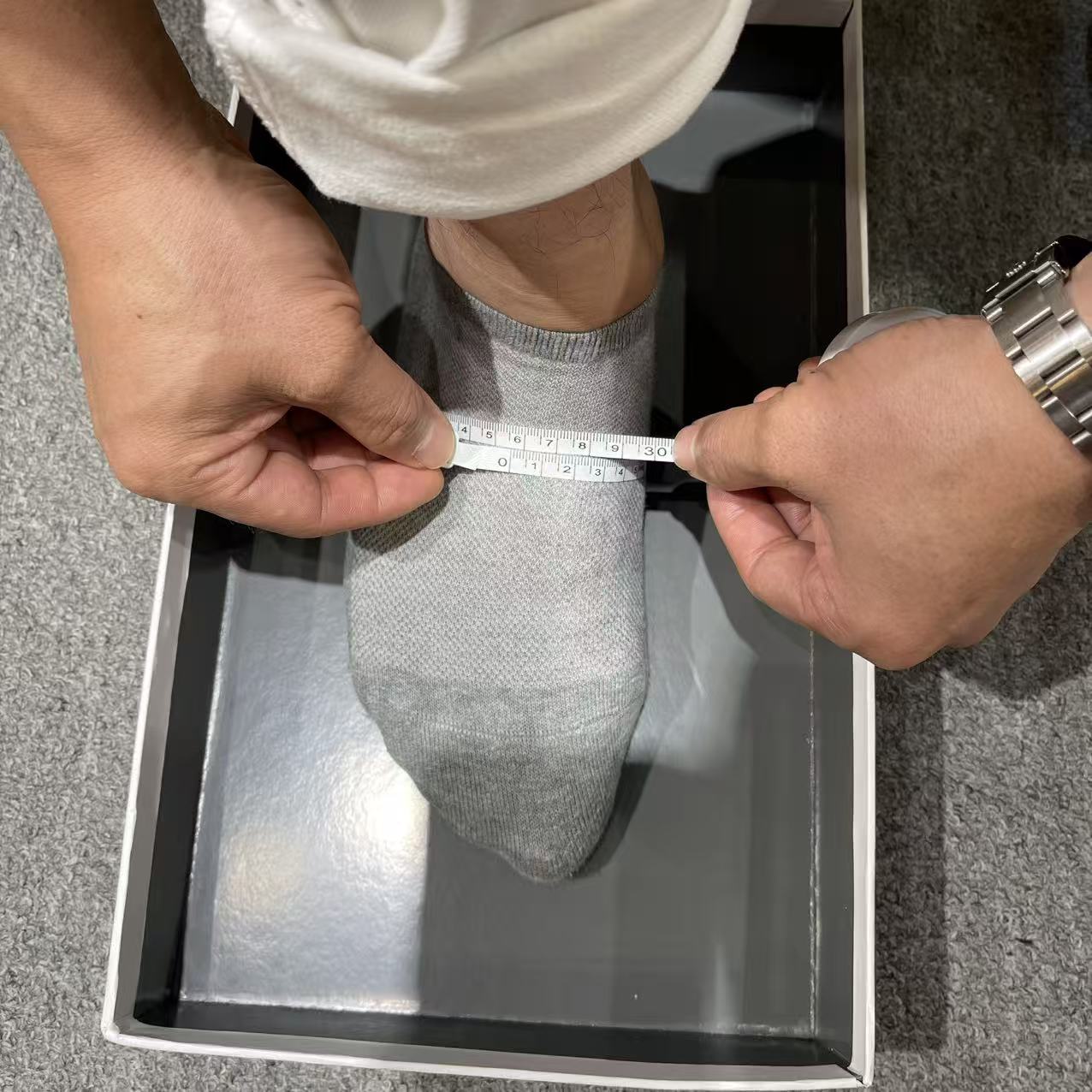
Keep the measuring tape level around the foot and make sure it is not twisted.
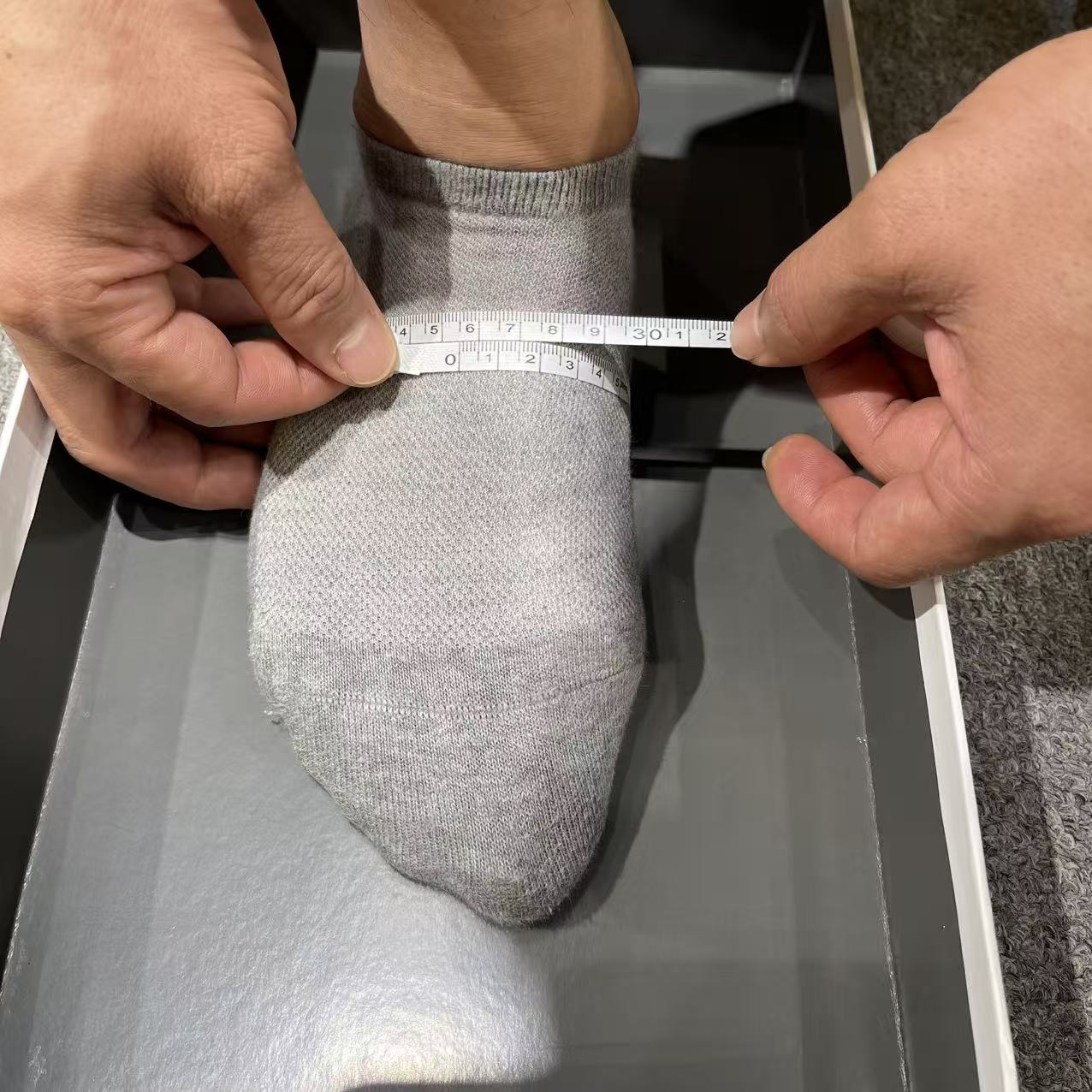
Read the measurement at the point where the tape overlaps.
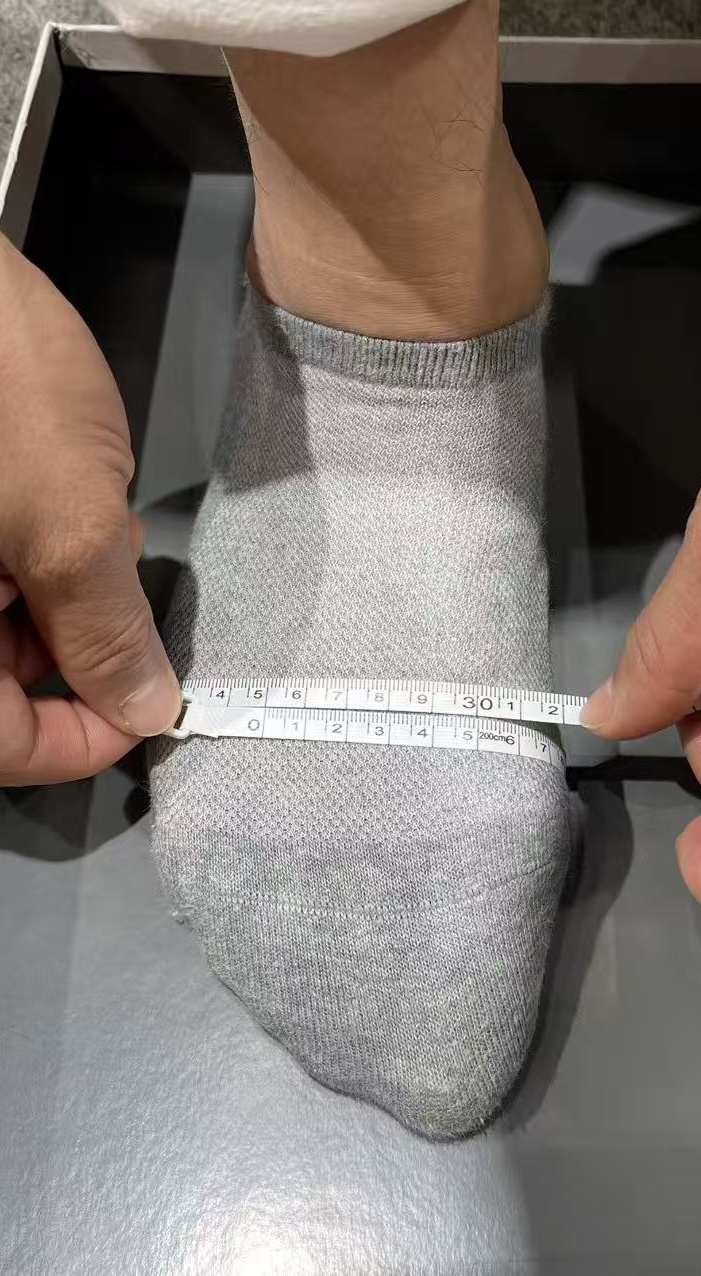
Measure both feet separately. It is normal for the left and right readings to differ slightly.
Tips for getting more accurate measurements
Measure both feet
Do not assume that both feet are exactly the same size. Send separate measurements for your left and right feet. When there is a difference, we will review how it relates to the available last, shoe construction and your stated fitting preference.
Measure while standing
Feet change shape under body weight. Measurements should normally be taken while you are standing naturally, and it is helpful to ask another person to position the tape and take the photographs.
Use the socks you plan to wear
For formal shoes or loafers, measure while wearing the thin socks you expect to use. For boots or casual shoes normally worn with thicker socks, use a similar sock during measurement and tell us what it is.
Do not pull the tape too tightly
The measuring tape should touch the foot without squeezing it. Pulling too tightly can create an artificially small reading.
Repeat each measurement
Measure each foot at least twice. If the two readings differ, repeat the process and send the most consistent result together with the photographs rather than averaging uncertain numbers.
Send clear photographs
Photographs allow the team to review whether:
- The tape appears to be positioned in the requested place.
- The tape is straight or level for that measurement.
- The foot is bearing weight.
- The reading point can be seen clearly.
This visual cross-check catches positioning mistakes that a number by itself cannot show. It is still a remote review, not a physical fitting.
Tell us about special fit requirements
Measurements are useful, but your experience in current shoes matters too. Tell us whether you normally have wide or narrow feet, a high instep, a narrow heel, different left and right sizes, regular swelling, an orthotic insole or a preference for a snug, regular or roomy feel.
Also explain where current shoes usually feel tight, loose or uncomfortable. Do not send a diagnosis; describe what you feel and where you feel it.
If you have persistent pain, diabetes-related foot risk, reduced sensation, a significant deformity, a prescribed orthosis or another medical fitting need, consult a qualified podiatrist or orthotist. Our remote custom-shoe review does not diagnose or treat a medical condition, and a fashion or made-to-order shoe should not replace prescribed footwear.
What happens after you send the measurements?
For an eligible made-to-measure order, our team will:
- Compare the measurements of both feet.
- Review the photographs for visible positioning or reading issues.
- Compare the results with your usual US, UK or EU shoe size.
- Review the selected shoe style, toe shape, construction and expected socks.
- Identify the proposed length, width direction and fitting allowance available for that order.
- Contact you if any measurement or expectation needs to be confirmed.
- Record the approved fitting information before production begins.
Different shoe designs fit differently. A pointed dress shoe, round-toe loafer, casual sneaker and ankle boot cannot all be assessed from one size label in exactly the same way.
You do not need to solve international size conversion yourself
You may normally wear US 10 in one brand, UK 9 in another and EU 43 or EU 44 in another pair. That does not necessarily mean any one label is wrong. Brands can use different lasts, width conventions and internal allowances.
Tell us the size and model that currently fit you best, then send the actual measurements requested for your order. We will use the size label as supporting information rather than asking you to choose the final production size by yourself.
Can custom shoes fit better than ready-made shoes?
Ready-made shoes are produced around standard size categories. Separate left and right measurements, photographs, the usual shoe size, preferred socks, selected design and fitting preferences provide more information than a size number alone.
That can support a more informed and personalized fit review, but it is not a guarantee. Remote measuring errors, differences between lasts, material behavior, construction and personal comfort preferences can still affect the finished result. Confirm the fitting scope, alteration or remake policy and any unresolved concern before production.
What to send us with your custom-shoe request
Copy and complete this checklist:
- Selected shoe style or product link:
- Preferred material and color:
- Usual US, UK or EU shoe size:
- Brand and model of a current well-fitting pair:
- Left foot length:
- Right foot length:
- Left ball girth:
- Right ball girth:
- Preferred fit: snug / regular / roomy
- Type of socks normally worn:
- Orthotic insole or special room requirement:
- Areas that normally feel tight or loose:
- Additional comments:
Attach clear photographs showing each requested measurement. Use the contact form for a straightforward request, or the Buyer Portal when you need to keep several images and later fitting messages in one thread.
Order custom shoes with less guesswork
Whether you are considering dress shoes, loafers, sneakers, boots or exotic-leather shoes, you do not need to rely only on an international size label. Browse the customized-shoes catalogue, choose the design direction you prefer and send the measurements and photographs requested for that style.
The goal is not simply to produce a shoe marked with your usual size. It is to review your actual measurements, selected design and fitting preferences together before production, while keeping the limits of remote fitting clear.