
Custom Crocodile Wallets: What Does Inside and Out Mean?
Part of: Exotic Leather Guide
“Crocodile inside and out” is not a complete wallet specification. Before ordering, name the material for the outer shell, the inside face, the card-pocket pieces, the note compartment and the fold separately. Then agree how the finished wallet will be checked with the cards and cash you actually carry. That gives you something useful to approve, rather than an expensive phrase to interpret later.
Start by emptying your current wallet onto a table. Keep the things you use; set aside the receipts you meant to throw away. This small exercise says more about the wallet you need than a photograph of a beautifully arranged, empty one.
You may want crocodile on every visible surface. You may prefer an exotic exterior and a quieter interior. Neither preference needs defending. The important thing is that your quotation, material list and finished piece all describe the same choice.
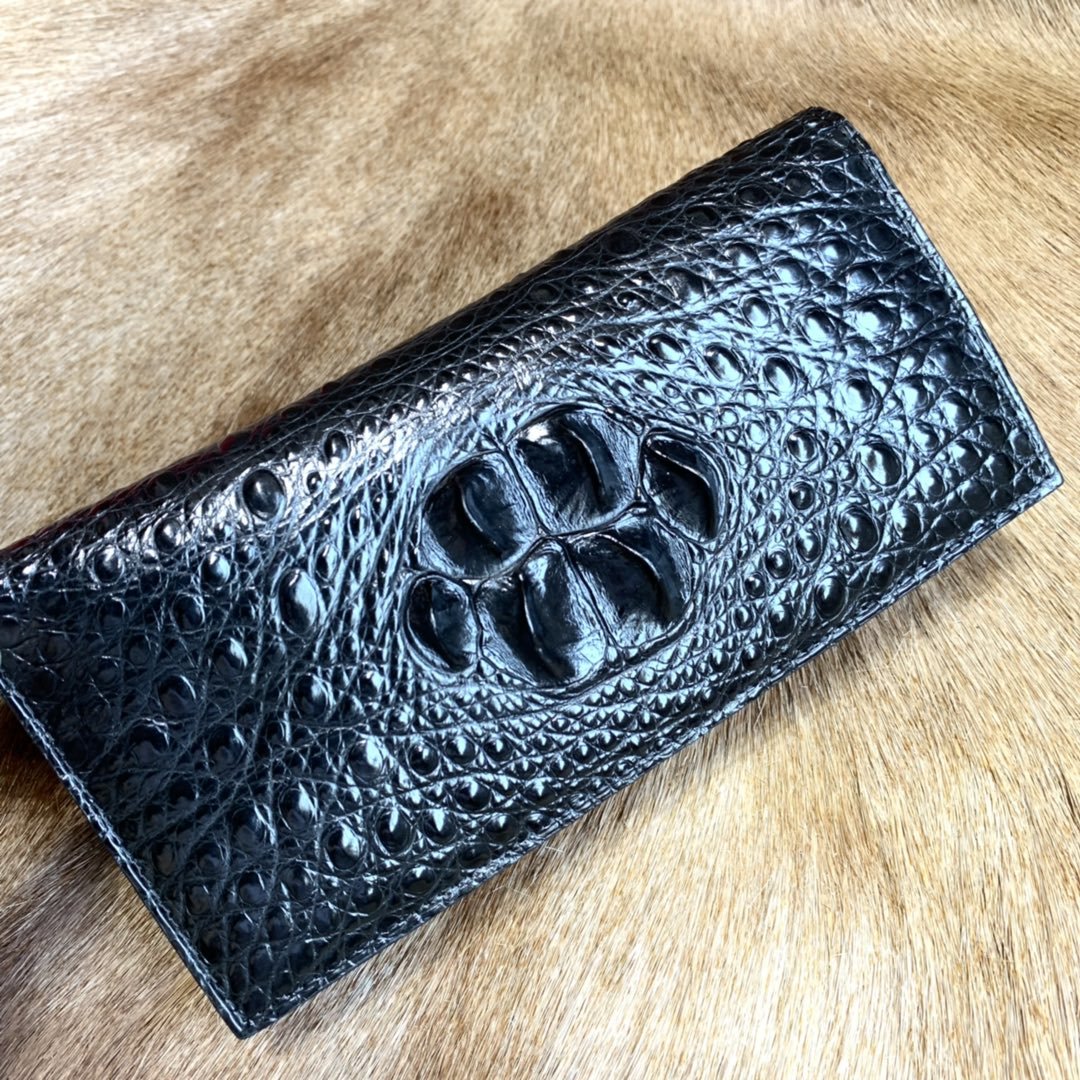
What does “full crocodile wallet” actually include?
Don't assume that the seller and buyer use “full” the same way. It might refer to the outside, the visible outside and inside, or a more extensive component list. Those are different specifications, even when the closed wallets look similar.
For a custom crocodile wallet, ask for a simple component map. A marked-up interior photograph works well: label the pocket faces, the backing behind them and the inside of the note compartment. A written list should accompany it, because some parts disappear once the wallet is assembled.
| Part | What to clarify | What to check |
|---|---|---|
| Outer shell | Named leather, finish, colour and whether the cover uses one panel or several. | Front, back and folded-side photographs of the actual piece. |
| Inside face | The material visible when the wallet opens, including any central panel. | An open view without cards hiding the surfaces. |
| Card-pocket faces | The material on each visible pocket; whether all pockets use the same specification. | Close-ups and insertion/removal with the agreed card load. |
| Pocket backs and hidden layers | What sits behind each pocket face, including any lining or backing. | A written component list; assembly evidence if agreed and available. |
| Note compartment | Material on its inner surfaces, divider and any slip pocket. | A view into the compartment and a check using the intended currency. |
| Fold or hinge area | Which material crosses the fold and how that part relates to the surrounding panels. | A side view while closing the wallet with its normal contents. |
| Optional parts | ID window, coin pocket, zipper, snap and removable insert, if required. | Confirm that each is included, not merely visible in a reference photograph. |
You don't need to prescribe adhesives or teach the maker how to sew. You do need to know where the requested leather ends. If a quotation says “crocodile outside and inside,” a useful follow-up is: “Does that include the card-pocket backs and note-compartment lining, or only the visible faces?”
Choose an interior for your routine, not just the open photograph
Think about where the wallet spends its day. A long wallet carried in a bag has different space constraints from a bifold in a fitted trouser pocket. Someone carrying a few cards and almost no cash needs a different layout from someone keeping several currencies, receipts and an access card together.
Here are three ways to frame the request. These are options to discuss, not a promise that every layout or material combination is available.
- Exotic exterior, separately specified interior. Keep the crocodile cover and choose the interior material around the desired layout and feel. Ask for its exact name; “leather lining” isn't much of an answer.
- Exotic exterior and selected interior faces. Specify the visible panels you want in crocodile, then name the remaining pocket backs, lining and fold materials. The boundaries should be clear.
- Exotic material throughout the agreed leather components. List those components individually and ask the maker to confirm feasibility, the proposed construction and how the completed wallet will be checked.
More exotic leather doesn't automatically mean a better daily wallet. Nor should an ordinary-leather interior be presented as a defect when it is exactly what you ordered. A disappointing purchase often begins with an unstated preference, not with the wrong preference.
If you're deciding between interior materials more broadly, our bag lining materials guide explains questions about feel, visibility and use. For a wallet, take the extra step of naming the small pocket components rather than treating the whole inside as one lining.
Card count is not the same as comfortable capacity
A photograph showing six slots proves that six openings exist. It doesn't tell you whether your usual cards fit comfortably, whether the lower ones remain reachable, or whether the loaded wallet closes the way you expect.
Write down your normal load: bank cards, ID, transit card, cash and anything else that genuinely lives there. Say whether you place one card in each slot or sometimes share a slot. Don't ask the maker to demonstrate a crowded arrangement unless that is the arrangement you intend to use.
Currency matters too. Name the banknotes you carry and say whether you want them flat or are happy to fold them. For multiple currencies, identify the largest notes. A wallet can meet its quoted exterior dimensions and still fail this very ordinary requirement.
Before approval, ask for three things: the empty dimensions, a side view with the agreed contents, and a short video opening the wallet and removing cards. If a closure is included, check it under that same load. You're not trying to make the wallet fail; you're checking the job it will be hired to do.
Keep a little room for reality. A wallet that works only when you discard every receipt immediately may not suit someone who won't. It is easier to admit that habit now than to argue with a beautiful object every morning.
Why the fold and layered pockets deserve a closer look
The outside can dominate a buying decision, but the pocket stack and fold are where you notice the wallet repeatedly. Ask whether the proposed layout can achieve the loaded shape you want. If it can't, discuss fewer pockets, a different format or a revised interior before committing to the design.
Leatherworking references illustrate why layering matters. Tandy Leather's wallet tutorial describes selectively thinning overlapping pocket pieces to reduce bulk. That is a general construction principle, not a thickness recipe for crocodile: leather selection, finishing and the particular design still need their own assessment.
As a buyer, you can ask for a loaded side view without specifying a machining tolerance. Is the fold forced outward? Can the wallet close normally? Do the pocket edges sit as expected? Does a card catch when it is removed? These are more useful questions than asking for the thinnest possible leather everywhere.
Don't approve a wallet solely because it lies flat while empty. Equally, don't demand that a loaded wallet look identical to an empty one. Agree the intended contents and judge it in that condition.
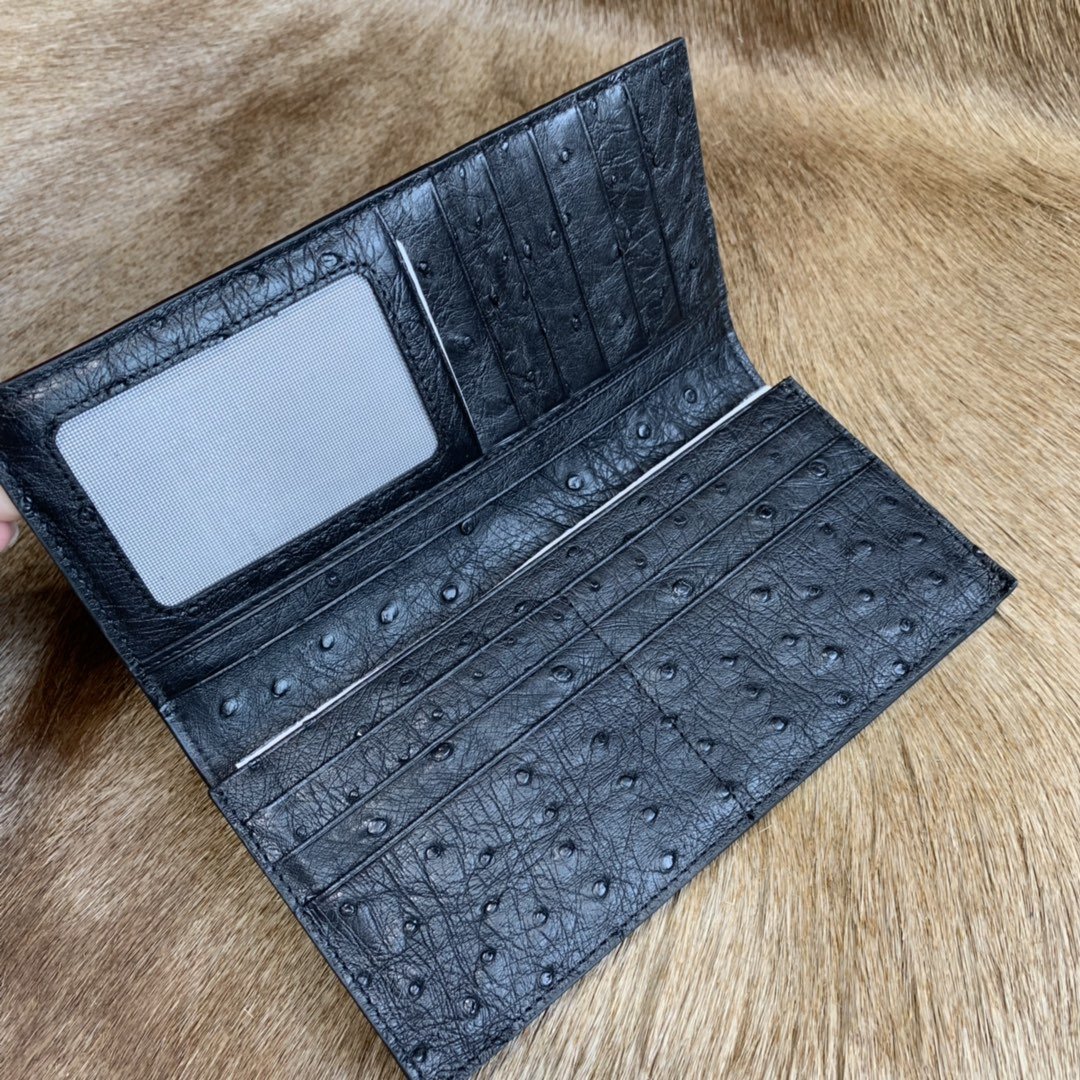
A material photograph is useful, but it isn't a material list
Ask for images of the actual material proposed for your order, not only a finished reference. For an interior with several materials, keep the material names attached to the component map. Otherwise, a photograph of one attractive piece of crocodile can leave the rest of the wallet unexplained.
If the species is part of your decision, ask for its written identification and the supporting information relevant to the transaction. Crocodile, alligator and crocodile-pattern embossed leather should not be substituted for one another without your agreement. A surface photograph alone cannot settle every question about species, source or hidden construction.
Our real versus embossed crocodile verification guide covers the evidence to request. Here, the important extra question is where each confirmed material will be used.
Colour also needs a reference. Name the exterior and interior colours separately, and ask whether the proposed finish is glazed or matte. Screen lighting can change how a colour appears; agree the reference and the method of checking it rather than assuming two photographs taken in different rooms are directly comparable.
Agree the checks before production, not after disappointment
For one personal wallet, a separate sample may not be part of the order. Ask what the maker offers and what it costs. Don't assume a sample is free, or that a photograph of an earlier wallet represents the material reserved for yours.
- Design and reference approval. Confirm the format, dimensions, pocket arrangement and normal contents. Mark what you like in a reference and what you want changed.
- Actual material and specification approval. Confirm the component map, named materials, colours, finish and any agreed substitutions before production. Record unresolved points rather than approving a vague summary.
- Pre-dispatch approval. Compare the finished wallet with that specification: outside, open interior, note compartment, pocket operation, loaded side view and closure where applicable. Keep the approval record.
These checkpoints serve different purposes. A layout approval doesn't approve an unspecified lining. A material approval doesn't prove the finished card slots work. A final photograph shouldn't be the first time you discover that the inside differs from what you imagined.
If you are buying a small group for a boutique, distinguish the first approved piece from the later pieces. Ask which details will be repeated and which natural appearances can vary. One accepted reference is not permission to change the material specification on a reorder.
Compare prices only after comparing the component maps
Two quotations for a “full crocodile wallet” may cover different interiors, pocket layouts, finishes or approval work. Before treating the lower number as a saving, check that both makers are quoting the same brief.
Ask for the item price and any separately charged development, sample, shipping and documentation work. Discuss which requested changes affect the quotation. We don't give a universal premium for crocodile interiors here: without a confirmed design and material scope, that number would sound precise while answering very little.
Our XMBAB12087 long wallet is a starting reference with a one-piece minimum, not evidence that every custom interior specification is available. For a personal order, send the changes you want and ask for their feasibility and price in writing. There is no need to pretend you are placing a factory-sized order.
Ask about colour transfer, care and cross-border delivery
Will the wallet live against light clothing or inside a pale bag? Tell the maker. Colour transfer is a question worth raising for the specified leather and finish, not something to dismiss because the item is expensive. SATRA describes colour-fastness checks under dry, wet and perspiration conditions. Ask what evidence is available for your material; this is not a claim that any pictured wallet has passed those tests.
Don't improvise a wet-rubbing test on a finished exotic wallet. Request care instructions for the exterior and interior separately, including what to do if the piece gets wet and which products to avoid. The appropriate care may depend on the finish and on the other materials used inside.
For delivery abroad, “only one wallet” is not a sufficient customs plan. The US Fish and Wildlife Service's permit FAQ says its conditional personal-effects exemption does not include items mailed or shipped separately. Requirements depend on the transaction and destination. Use our CITES and import-document checklist, and confirm the applicable route before payment. Don't assume a traveller's exception covers an online purchase.
What to send us for a useful first reply
A short, specific brief is enough. You can copy this and leave the undecided parts marked “please advise”:
I'm looking for one custom wallet for personal use. My preferred format is [bifold / long wallet / card holder / other], with approximately [dimensions]. I normally carry [cards, currency and other contents].
For materials, I want [named leather and finish] on the outside. Inside, I want it on [specific visible panels, pocket faces and other components]. Please identify the proposed material for the remaining parts and confirm what is feasible.
My colour references and layout images are attached. Please explain the approval steps, any sample or development charge, the item quotation and the delivery/document requirements for [destination country]. Please flag any part of the request that needs changing before production.
Photographs of your current wallet can help explain the layout. Remove cards or cover their details; don't send account numbers, readable identity documents or someone else's personal information. Show the part you want the maker to understand, not the private contents.
Use the custom-order inquiry form to send your brief. A request for review is not an approval to manufacture: material availability, construction scope, price and the relevant delivery requirements still need confirmation.
Questions buyers often need to settle
Does a crocodile wallet normally have crocodile inside?
Don't infer the interior from the product name. Ask for a component-by-component material list and an open view. A crocodile exterior does not by itself describe the pocket faces, pocket backs or note-compartment lining.
Can I request crocodile on both sides of the wallet?
You can request it, but define the parts you mean and ask the maker to confirm feasibility for that layout. The important point is a documented specification, not an assurance that every possible construction is available.
How do I check whether a custom wallet will hold my cards?
State your usual contents and how you distribute them. Ask for a demonstration with that agreed load, including card removal, a loaded side view and the closure if fitted. Slot count alone does not establish comfortable capacity.
Is a full exotic-leather interior automatically worth the extra cost?
Only you can decide whether that material scope matters to you. Compare the actual components, the usable layout and the confirmed quotation. A well-specified mixed-material interior may meet your routine better than an extensive exotic interior chosen only for its name.
A custom wallet should make the ordinary moments easier: finding a card, closing it without a struggle, slipping it back where it belongs. The leather is part of the pleasure. Getting those small decisions right is what lets you enjoy it.