
Buying Crocodile Shoes Online: What Your One-Pair Quote Should Include
Part of: Exotic Leather Guide
A useful crocodile-shoe quote should tell you which pair you are buying, what the price includes, how fit will be checked, and what happens if something is wrong. A price without those details is a starting point—not enough information to make a comfortable decision.
Perhaps you have found a dark brown loafer you can picture wearing to dinner. You like the shape, the colour and the texture. Then the reply arrives: “Crocodile leather, leather sole, size 42.” There is a price underneath, but you are still wondering whether these are the exact shoes in the photograph, whether they will fit, and what you might need to pay later.
Those are reasonable questions. Here is how to turn that short reply into a quote you can actually compare.
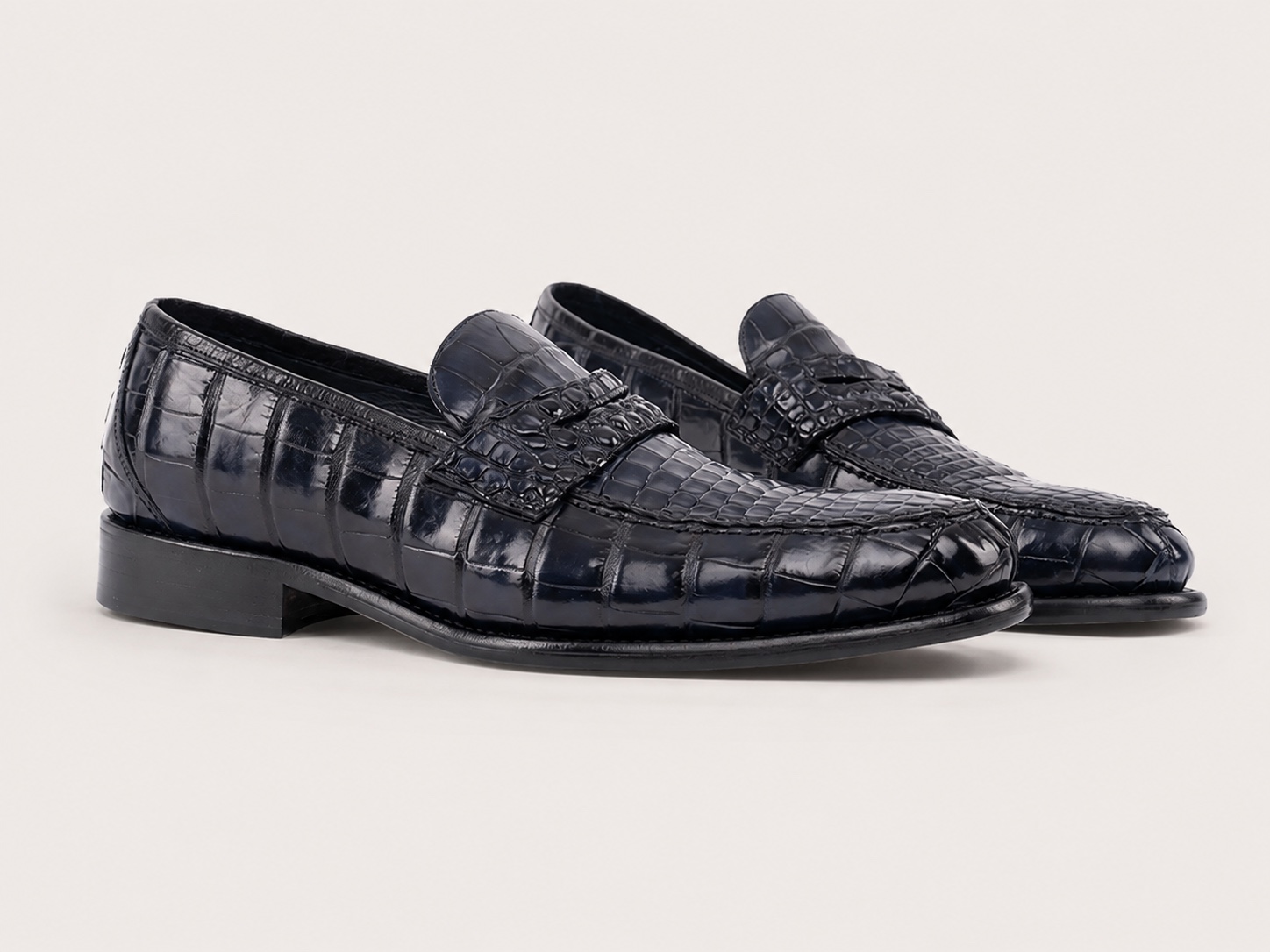
First, establish what is being offered
Before discussing a discount, ask which of these situations applies:
- An existing pair: Is the photographed pair available in your size, or does the image show another pair of the same style?
- An existing style made to order: Which details can change, and which remain tied to the original design?
- A newly developed design: Does the offer include pattern work, a trial shoe or other development—and is one pair feasible?
The difference matters when you approve the purchase. A reference photograph is not a record of shoes that have not been made yet. If a picture shows a digitally changed lining, sole or colour, ask for that proposed configuration to be named in the written specification.
You can start with the Crocodile Shoes collection. Keep the product link or SKU with your correspondence so both sides are discussing the same design.
Read the seller’s reply—not just the number
The examples below are illustrative wording, not an actual quotation or a promise about a particular product.
| If the reply says… | What remains unresolved | What to ask for |
|---|---|---|
| “Crocodile leather” | Which material is used on each part of the upper? | The material and species designation, which panels it covers, and any other upper materials. |
| “Leather lining” | Does that mean cowhide, calf leather or something else? | A specific material name, rather than only “leather-lined.” |
| “Genuine leather sole” | What is the sole material, and how is it attached? | Separate entries for outsole material and construction method. |
| “Custom size 38–46” | Is this a size selection or an adjustment to the shoe’s shape? | The size system, available fit changes, and how your measurements will be reviewed. |
| “Price per pair” | Does it cover the photographed specification and your selected changes? | Quantity: one complete pair, currency, confirmed specification and price-validity date. |
| “Shipping included” | Included to which destination, using which service, with what exclusions? | The named destination, delivery arrangement and any separately payable charges. |
The goal is not a longer quotation. It is fewer assumptions.
Give every charge a clear status
When comparing prices for crocodile shoes, separate the price of the shoes from the amount you need to budget for the order. Ask the seller to mark each relevant item as:
- Included: covered by the confirmed pair price.
- Optional: only payable if you choose the extra.
- Excluded: payable separately, with the amount or basis explained.
- Unconfirmed: still awaiting a decision or information.
Possible items to clarify include a different upper configuration, finish changes, fitting or development work, sole options, accessories and delivery. Ask whether a quoted development charge is additional to the finished pair or credited against it. Neither treatment should be assumed.
A blank shipping line is not free shipping. An unanswered fitting question is not an included fitting service.
For the budget comparison, include delivery and any separately payable taxes or fees; keep unknown amounts visible. The US Federal Trade Commission’s online-shopping guidance likewise recommends checking the total cost and keeping purchase records. It does not establish what this seller includes or which charges apply to your destination.
If two offers differ substantially, ask the sellers to explain the difference against the same specification. Do not use the higher price—or the lower one—as proof of material authenticity.
Make the material description specific without becoming a leather expert
Ask the seller to identify the upper panels, strap, lining and outsole separately. A shoe with an exotic-leather accent and smooth-leather body should not be described to you as though every upper panel uses the same material.
Keep the supplier’s material designation consistent through the quote and final confirmation. If one message says crocodile and another says alligator, resolve the discrepancy rather than treating the words as interchangeable.
For the supporting evidence to request, use our real-versus-embossed verification guide. Here, the practical question is simpler: does the quote clearly describe what you are agreeing to buy?
Ask which pictures show the actual pair or selected material and which are style references. If colour or the balance between the two shoes matters to you, name the feature you want reviewed before approval. “I prefer a quieter pattern across both toes” is easier to discuss than “make them perfect.”
Settle fit and sole questions before committing to the build
For a personal pair, explain your normal size, the size system, the socks you will wear and any recurring fit difficulty. If one foot needs more room, say so. Follow the seller’s measurement method; our foot-measurement guide explains the information to prepare.
Ask what “custom” changes on this particular order. Choosing EU 42, adjusting width and developing a different shoe shape are different requests. The reply should say what is available and what it costs.
Do not rely on a promise that tight shoes will eventually become comfortable. Crockett & Jones advises that shoes should fit from the outset; its home fitting guidance describes loafers as snug rather than tight. If a pair feels wrong, contact the seller before wearing it outdoors or attempting alterations, and check the applicable try-on conditions.
Also keep these two lines separate:
Outsole: leather. Construction: [confirmed method].
A leather outsole does not, by itself, mean Goodyear-welted construction. Goodyear welting concerns how the shoe is assembled, and it can be used with a leather or rubber outsole, as shown in Crockett & Jones’ construction explanation.
Tell the seller whether you expect short indoor outings or substantial outdoor walking. Ask which sole option suits that use and what repair service is available for the finished build. The expensive upper should not distract you from the part of the shoe that meets the ground.
Agree on checkpoints, not just “quality checked”
For a made-to-order pair, ask the seller to identify these stages:
- Before work starts: confirm the specification, fit approach and anything still undecided. If a trial shoe or sample is offered, establish its purpose, charge and approval stage.
- During making: agree how a proposed material or design change will be brought back to you. A substitute should not arrive as a surprise in the finished-pair photographs.
- Before dispatch: request clear views of both finished shoes, including the uppers, lining and soles, so you can compare them with the agreed specification. Photographs help with visible checks; they cannot establish fit, prove species or confirm hidden construction.
For an existing pair, focus on its current condition and fit terms instead of requesting a manufacturing process that has already happened. If you later buy several pairs for a shop, sample approval, checks during production and pre-shipment inspection remain separate jobs.
Ask the awkward questions while the decision is still easy
“What happens if they do not fit?” is worth asking before payment. So are these two different questions: what happens if the shoes differ from the confirmed specification, and what happens if they arrive damaged?
Ask which cancellation, return or refund arrangements apply to your order. Also establish whom to contact, what evidence to send, any time limits, and responsibility for assessment, alterations, remaking or extra shipping. Do not assume a made-to-order pair has the same arrangements as an available stock pair. This checklist is not a statement of the seller’s policy or a waiver of any applicable rights.
Have the seller distinguish the expected dispatch date from the expected arrival date. For an overseas order, clarify who will verify destination eligibility and material-related document requirements, and what must be resolved before payment. If you need the shoes for an event, give the event date—not just “as soon as possible.”
Finally, confirm the payee, available payment method, currency, payment stages and what each payment authorizes. Keep the agreed version of the quote with the product reference and correspondence.
A short reply you can send
Thank you for the quote. I’m considering one pair for personal use. Before I decide, could you confirm the upper materials and coverage, lining, outsole and construction separately? Please also mark the pair price and selected extras as included, optional, excluded or unconfirmed. I would like to understand the fit-review process, approval checkpoints, delivery arrangement to [destination], and the applicable procedure if the fit or finished specification is not right. My product reference is [link/SKU], and I plan to wear the shoes for [use].
You do not need every answer in the first message. You do need the important answers before the commitment they affect.
To discuss a pair with us, send the product link, your usual size and size system, destination and intended use. Mention the detail you are least sure about. That is a useful place to start.