
Leather, Microfiber or Fabric? Choosing a Custom Bag Lining
Part of: Exotic Leather Guide
There is no single best lining material for every custom leather bag. Choose the lining by the bag's structure, expected load, pocket design, cleaning needs, target weight and price position. Then approve the exact material and construction on a finished sample, because a swatch cannot show pocket sag, seam grin or how the lining sits inside the bag.
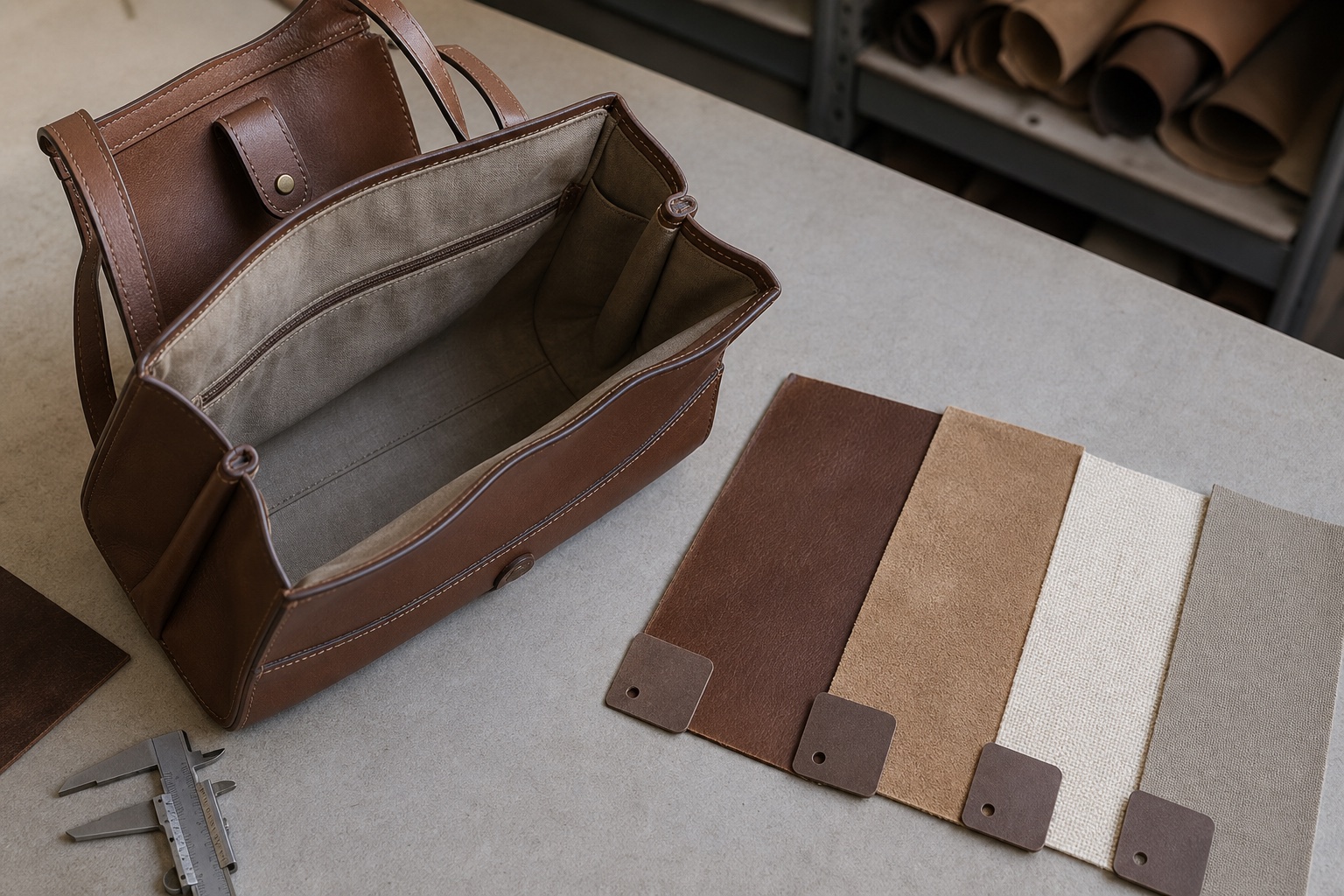
A full leather interior may suit a structured top-handle bag. A light woven lining may be more practical for a large tote. Suede-like microfiber can create a soft interior without the natural variation of suede, while polyester twill can reduce weight and simplify color matching. None of those descriptions is complete until the buyer specifies the exact article, backing, thickness or mass, color, pockets, seams and acceptance checks.
This guide was checked against current ISO and SATRA information on July 20, 2026. The applicable method and pass/fail criteria should be agreed for the actual material, bag use and destination market.
Choose the lining by function, not by prestige
| Lining option | Useful when | Buyer trade-off to check |
|---|---|---|
| Leather | A structured interior, exposed edges or a material-matched look is central to the design | More weight, natural cutting variation, thickness at turned seams, color transfer and higher material use |
| Natural suede or split suede | A soft napped interior and natural leather character are part of the product direction | Nap and shade variation, lint attraction, cleaning difficulty, rubbing color and pocket-edge finishing |
| Suede-like microfiber | A consistent soft hand, controlled color and lower weight than many leather options are priorities | Fibre content, backing, edge fray, abrasion, seam behavior and the difference between sample and bulk lots |
| Cotton twill or canvas | A casual hand, visible weave or removable pouch-style construction fits the bag | Shrinkage or wrinkling if wet, staining, seam slippage, fraying and color transfer to light contents |
| Polyester twill or woven fabric | A smooth, light, repeatable interior is needed for totes, crossbody bags or pockets | Snagging, gloss, noise, seam strength, backing delamination and whether the hand feels right for the price position |
Material names describe a family, not a result. Two polyester twills can differ in weave, yarn, mass, finish and backing. Two leathers can differ in substance, finish and surface behavior. Ask the supplier to identify the production article rather than accepting “microfiber” or “cotton lining” as the whole specification.
Match lining construction to the bag type
Structured top-handle bags: check whether the lining is fully bonded, partly bonded or made as a separate drop-in shell. Bonding can support a clean interior but may show bubbles, adhesive marks or panel distortion if materials move differently.
Large totes: weight, pocket load and bottom support matter. Review how the lining is anchored at the opening and base so it does not pull out with the contents. A loose lining can be intentional, but its movement still needs an approved limit.
Crossbody and small bags: seam bulk and pocket access can matter more than a luxurious material name. Test the finished opening with the intended zipper, flap and bag hardware specification.
Exotic-leather bags: the lining should support, not compete with, the outer material. The crocodile leather bag buyer checklist connects lining, hardware, documentation and final inspection, while the exotic-skin bag category shows the range of bag structures that may need different interior solutions.
What belongs in a lining specification?
A quotation should identify both the material and how it is used in the bag. Record these fields:
- Supplier article: supplier name or code, revision and approved production source.
- Material description: leather type or declared fibre composition, woven or nonwoven structure, and any coating or lamination.
- Physical property: agreed thickness for leather or mass and construction for fabric, using the supplier's stated measurement method.
- Color: supplier color code plus a dated physical master viewed under agreed lighting.
- Hand and appearance: smooth, napped, crisp, soft, matte or lustrous, with an approved range where natural variation is expected.
- Backing and reinforcement: foam, nonwoven, board, tape or localized reinforcement and the areas where each is used.
- Attachment: fully bonded, partly bonded, stitched shell, removable pouch or another controlled construction.
- Pockets: count, dimensions, opening, zipper, binding, facing, reinforcement and intended load.
- Seams: seam type, allowance, stitch direction, thread, turned or bound edge and visible tolerance.
- Branding and labels: label material, position, stitch method and whether the back is concealed from the bag interior.
- Testing: material, finished-component or complete-bag checks, including method, conditioning and acceptance criteria.
- Substitution control: no change to material source, backing, finish or color without written approval and a new reference.
Keep a cutting of the approved bulk-representative lining with the signed bag sample. A phone photo is useful for communication, but it cannot control hand, thickness, gloss or rubbing color.
Use tests to answer a defined failure risk
Rubbing color: ISO 105-X12:2016 covers dry and wet rubbing tests for textiles. For leather, ISO 20433:2024 determines color transferred by dry and wet rubbing. These methods do not select the buyer's acceptance grade; the project specification still needs a result and test condition.
Abrasion: ISO 12947-2:2016 describes a Martindale procedure for determining textile specimen breakdown. SATRA's TM31 provides leather-goods context for dry or wet abrasion assessment of flexible materials. Agree which face, backing and condition represent the bag.
Seams: ISO 13935-2:2026 covers maximum seam force using a grab method for suitable straight sewn fabric seams. It is not a complete finished-bag test and does not apply equally to every material. Pocket pull, zipper opening and anchor points should also be reviewed on the assembled sample.
Do not order a test because its name sounds comprehensive. Start with the likely failure: dark lining staining a light wallet, keys abrading a pocket, a loaded pocket pulling from the wall, or a bonded lining lifting at a curve. Then ask a qualified laboratory or technician to confirm the method, specimen and acceptance rule.
Approve lining quality at three stages
1. Sample approval
Inspect the material swatch and finished bag together. Check color, hand, odor, surface marks, pocket access, zipper movement, seam appearance, edge finishing, bonding, wrinkles and whether the lining pulls out during normal use. Put representative contents inside the sample and inspect high-stress pocket and base areas. Record every approved change using the same revision control described in the sample approval workflow.
2. Bulk incoming and production control
Identify each lining lot before cutting. Compare shade, hand, visible defects, width or usable area, backing and the agreed physical property against the approved reference. During assembly, check cut direction, pocket placement, seam allowance, reinforcement, adhesive application and contamination from edge paint or hardware. Stop unapproved substitutions before the lining is closed into the bag.
3. Pre-shipment inspection
Inspect finished bags from sampled cartons. Open every pocket and zipper in the inspection sample; compare lining color within and between bags; look for holes, skipped stitches, exposed raw edges, glue, puckering, loose lining, trapped debris and marks from hardware or packaging. Confirm labels, pocket count and interior layout against the specification, then record defects with location-specific photos.
What changes lining cost and MOQ?
Cost and MOQ are driven by the material source, custom dye or print, minimum roll or skin purchase, usable cutting yield, color count, backing or lamination, pocket count, zipper and binding details, reinforcement, labor for turned interiors, test scope and rejected shade or defect allowance. Leather interiors usually require more cutting selection and can add seam bulk and weight. A stock woven article may simplify a first order, but only if its performance and appearance fit the bag.
Ask for the lining MOQ separately from the finished bag MOQ. If the supplier must purchase a full roll or custom color lot, agree who owns surplus material, how it will be labeled and whether storage could change its condition. Do not divide a small order into many lining colors before checking the material supplier's actual lot requirements.
Email-ready lining quotation checklist
Subject: Custom leather bag lining quotation and sample request
- Bag type, dimensions and reference drawing or photos
- Upper material, target structure and expected bag weight direction
- Destination market, intended use and expected quantity by color
- Preferred lining family and supplier article if already selected
- Color reference and whether a custom dye or print is required
- Required thickness or mass, backing, hand and surface appearance
- Bonded, partly bonded, loose-shell or removable construction
- Pocket count, dimensions, zippers, bindings and intended loads
- Seam, edge, label and reinforcement details
- Logo, repeat pattern or artwork file where applicable
- Required rub, abrasion, seam, chemical or finished-bag checks
- Sample stage, approval deadline and replacement-material rule
Ask the supplier to reply line by line with the proposed production article, stock or custom status, lining MOQ, setup or testing items, sample availability and any detail that still needs a physical reference.
What to send us
Send the bag reference, dimensions, upper material, target structure, lining direction, color, pocket layout, branding, destination market, expected quantity, testing needs and current sample stage. If you already have a lining swatch, include its supplier code and a photo of both faces, then arrange a physical reference when color or hand is critical.
Use the contact form for the initial brief. If the project includes tech packs, lining artwork, pocket drawings, swatch records, test reports or several sample revisions, open a thread in the Buyer Portal so the approved files stay attached to one sourcing discussion.
Lining choices behave differently against a soft, quill-marked surface, so review the ostrich leather bags range when planning an ostrich program.
Ostrich behaves differently again — softer, with quill follicles that move under pressure — which is why our ostrich leather shoes use a firmer lining stack than a bag of the same leather would.