
Crocodile Leather Bags Wholesale: A Practical Buyer Checklist
Part of: Exotic Leather Guide
The front photo is the easy part of buying a crocodile leather bag. The expensive surprises usually hide somewhere less glamorous: a handle anchor that flexes under load, a gusset corner that wrinkles after two openings, a zipper that catches at the end, a lining pocket that is too narrow for a phone, or paperwork that was discussed only after the cartons were ready.
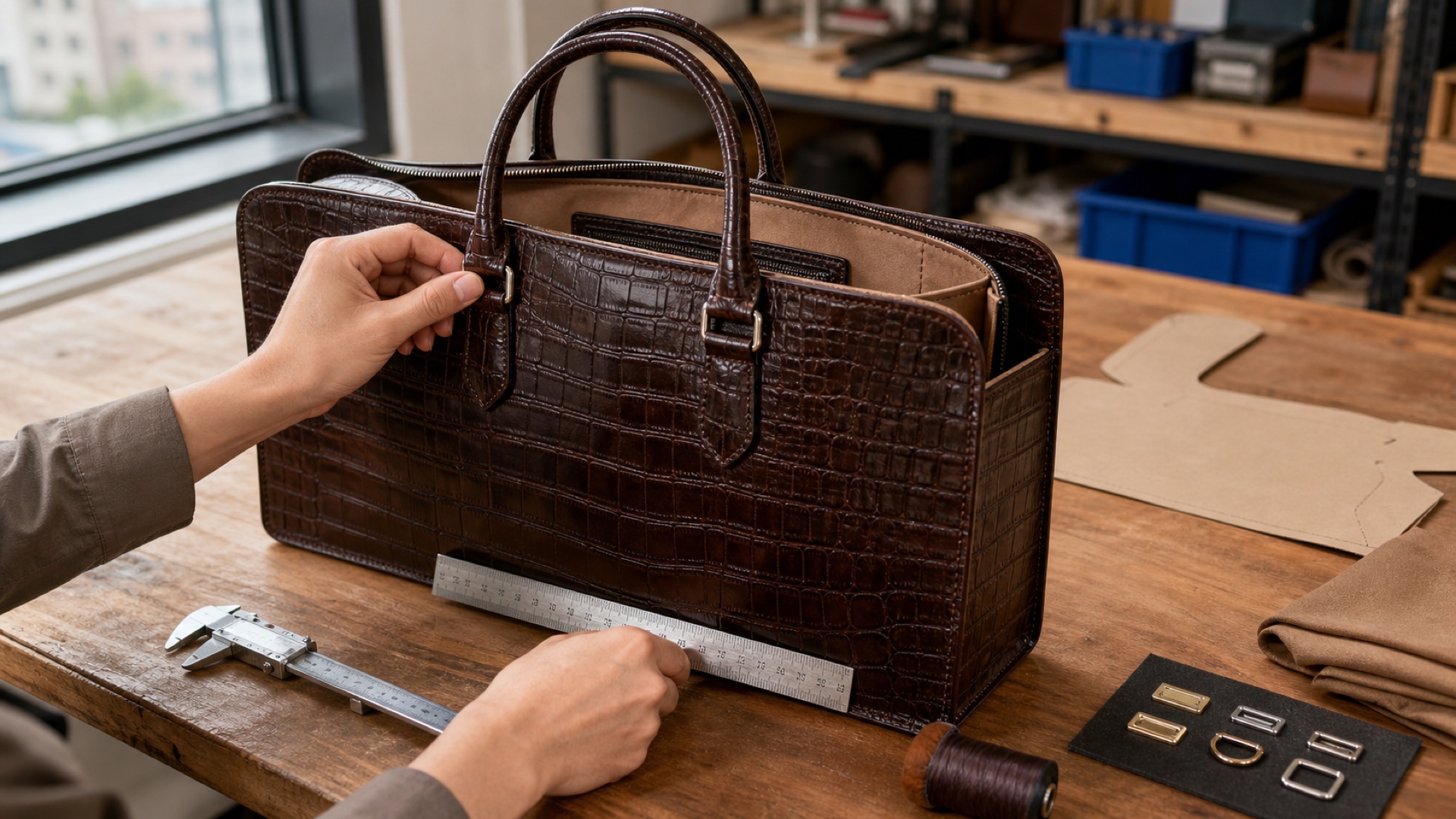
This guide is for buyers searching for crocodile leather bags wholesale, a custom crocodile bag manufacturer, or a small private label production partner. It focuses on what to put in the first inquiry, what to inspect on the sample table, and what to settle before production and shipment.
Start by naming the material correctly
The words "crocodile bag" are sometimes used for very different products. One may be made from genuine crocodilian leather. Another may use cowhide embossed with a crocodile pattern. A lower-cost version may use synthetic material with a similar surface. These are not interchangeable descriptions.
For genuine material, ask the supplier to state the species information available for the material and the exact material used on the outside, trim, handles, and bottom. For an embossed option, the quotation should say "crocodile-pattern embossed cowhide" or name the synthetic material clearly. The same wording should carry through the specification sheet, sample approval, invoice, and product label.
A photograph can help you compare scale layout and finish, but it should not be the only basis for identifying material. If this is your first exotic leather project, read the practical guide on how to distinguish exotic skin, then ask for written material details and close-up sample photos.
Ten details that make a wholesale quote useful
A bag factory can quote faster when the first message answers the basic production questions. You do not need a finished tech pack, but you should send enough information to stop the sales team from guessing.
- Bag type: handbag, tote, briefcase, laptop bag, shoulder bag, clutch, crossbody, or travel bag.
- Finished dimensions: width, height, depth, handle drop, strap range, and expected weight limit.
- Material wording: genuine species direction or crocodile-pattern embossed material, plus any cow leather reinforcement.
- Cut and scale direction: belly, hornback, mixed panel plan, or a reference photo with the preferred front-panel layout.
- Color and finish: matte, semi-gloss, glossy, two-tone, hand-finished, or another approved effect.
- Lining and structure: leather, microfiber, textile, pocket layout, padding, base board, and laptop protection if needed.
- Hardware: zipper brand or grade, lock, buckle, feet, rings, plating color, and logo hardware.
- Branding: embossing, metal logo, lining print, dust bag, hang tag, and carton marks.
- Quantity: total units, color split, and whether the order is a test run or repeat program.
- Market details: destination country, sales channel, sample deadline, delivery window, and document requirements already given by your broker.
A message with these ten points will not lock every detail. It will, however, produce a much more useful discussion about material availability, sample cost, MOQ, construction, packaging, and lead time.
Scale layout is a design decision, not a small detail
Every genuine skin has its own scale pattern. That is part of the appeal, but it also means the cutting plan needs agreement. The front panel may use a centered belly section, a hornback feature, or a less formal layout depending on the style and budget.
Do not ask only whether the scales are "perfectly symmetrical." Ask whether the sample follows the approved panel plan. Check the front, back, side gussets, flap, handles, and small trim pieces together. Abrupt changes can look accidental when the buyer expected a calm, balanced front, while visible variation may be entirely appropriate for a more natural design.
Useful sample photos include the full front and back in straight light, both side panels, the base, and close-ups where two pieces join. Our crocodile bags wholesale category shows different handbag, briefcase, shoulder bag, tote, and clutch directions that can help you explain the shape you want.
Seven areas to inspect on a crocodile leather bag sample
1. Handles and strap attachment
Handles carry more stress than their size suggests. Open the bag, feel behind the handle bases, and ask how the attachment is reinforced. Check whether the handle stands evenly, whether the two sides match, and whether the leather creases sharply when a modest load is added.
For a detachable shoulder strap, check the rings, hooks, leather tabs, stitching, and the direction of pull. A polished hook does not help if the leather tab underneath is too soft.
2. Gussets, corners, and base structure
Open and close the bag several times. Watch the gusset folds and bottom corners. They should move without collapsing into an unintended crease. Put the bag on a flat table and check whether it stands as agreed, whether the feet sit evenly, and whether the base board can be felt through the lining.
3. Zipper and hardware operation
Run every zipper slowly and then at normal speed. Pay attention to the end stops and curved sections. Test locks, magnetic closures, buckles, rings, and feet. Compare the plating color under daylight, because mixed tones are easier to miss in warm indoor photos.
Ask whether the approved sample hardware is the same grade planned for bulk production. Small hardware substitutions can change weight, color, and durability.
4. Edge paint, stitching, and panel joins
Look along the handle edges, flap, strap, gusset, and zipper opening. Edge paint should be smooth and flexible enough for the area. Check skipped stitches, loose ends, wavering seam lines, needle marks, and adhesive residue. A single clean-up point is different from a repeated construction problem, so note both the defect and how often it appears.
5. Lining, pockets, and daily use
Put real objects inside. Try the phone pocket, zipper pocket, laptop section, key holder, and card slots. Check whether the opening is wide enough and whether the lining pulls when the bag is full. A beautiful exterior can still become a frustrating product if the buyer never tests how it is used.
6. Measurements, weight, and balance
Measure the finished width, height, depth, handle drop, strap length, and opening. Record the empty weight. Then carry the bag with a realistic load. A briefcase can match the drawing and still feel poorly balanced if the handles, base, or internal divider are positioned badly.
7. Color and finish consistency
Review the sample in daylight and indoor light. Compare the front, back, handles, gussets, and trim rather than judging one panel. Natural variation is expected, but the acceptable range should be written down before bulk cutting.
If you plan any rub or surface test, agree on the method with the supplier first and use an inconspicuous area. Finishes behave differently, and an improvised harsh test can damage a good sample without telling you much about normal use. The care guide on cleaning crocodile leather explains why gentle handling matters.
Documents should be discussed before the deposit
International trade in crocodilian products can involve CITES and destination customs requirements. The exact route is not the same for every bag. It can depend on species, source, country of origin, destination, commercial purpose, and whether the shipment is an export or re-export.
Before paying for production, ask the supplier what species and source information supports the material, what export or re-export documents are expected for the shipment, and how the goods will be described on the invoice and packing list. Then check that plan with the destination country's CITES Management Authority or an experienced customs broker.
CITES uses a universal tagging system to trace many crocodilian skins upstream. The identifying information includes country of origin, a unique serial number, year, and species code. A finished bag does not simply need a raw-skin tag attached to it; what matters to the buyer is that the commercial shipment has the correct traceability and permit or certificate path for its actual route.
Do not treat a personal luggage allowance as a wholesale import rule. For example, current UK guidance describes a limited personal-effects allowance for certain worked Crocodylia items carried for personal use, while commercial trade follows its own permit and customs requirements.
Useful official starting points include the CITES uniform marking system information, the UK government CITES import and export guidance, the U.S. Fish and Wildlife Service permits FAQ, and the European Commission wildlife trade overview. Requirements change, so use these as starting points and confirm the shipment itself with the responsible authority.
QC photos to request before shipment
Ask for evidence from normal production, not only the best finished sample. A practical photo set should include:
- Front, back, left, right, base, and top views of selected finished bags.
- Close-ups of the approved scale and panel layout.
- Handle bases, strap tabs, rings, hooks, and reinforced load points.
- Zipper ends, locks, feet, buckles, and plating color.
- Edge paint, stitching, corners, and panel joins.
- Full interior, lining seams, labels, pockets, and dividers.
- Ruler photos for width, height, depth, handle drop, and strap range.
- Weight reading for a finished empty bag.
- Logo, hang tag, dust bag, care card, barcode, and carton mark.
- Defects found during inspection, with quantity and planned correction.
The last point matters. If a QC report shows only perfect bags, you still do not know how the factory handled the imperfect ones.
Packaging that protects the shape
A structured crocodile leather bag should arrive looking like the approved sample. Ask how the body and gussets will be supported, how handles and hardware will be protected, and how bags will be separated inside the carton.
- Use clean, suitable stuffing that supports the approved shape without overfilling it.
- Protect handles, straps, locks, feet, and exposed hardware from rubbing.
- Use the agreed dust bag and keep printed material away from finished surfaces where transfer is possible.
- Keep cartons dry and confirm the moisture-control plan for the route and season.
- Check carton strength, quantity, marks, dimensions, and gross weight before booking shipment.
A first inquiry that is easy to answer
Hello, we are sourcing a private label crocodile leather business bag for the US market. Finished size should be about 40 x 30 x 10 cm, dark brown semi-gloss finish, structured base, reinforced top handles, detachable shoulder strap, tan lining, laptop divider, silver-color hardware, and an embossed inside logo. Initial target is 30 samples/test units followed by a larger order after approval. Please advise suitable material options, species information available for genuine material, sample cost, MOQ, sample time, bulk lead time, packaging, and the export documents you expect for this route. We can send reference photos and logo artwork.
This message is specific without pretending every decision is final. It gives a manufacturer enough information to reply with options instead of another list of questions.
Useful crocodile bag references on this site
For a business shape, compare the proportions and handle structure of this crocodile leather briefcase and this crocodile skin laptop bag. For a women's collection, review the format of this crocodile handbag and the capacity of this crocodile leather tote bag. Use product photos as design references, then confirm current material, construction, dimensions, MOQ, and availability in the quote.
Final crocodile leather bag buyer checklist
- The material is named clearly and consistently in the quote and specification.
- Bag type, dimensions, finish, lining, hardware, logo, quantity, and market are confirmed.
- Front and back scale layout follows the approved panel plan.
- Handles, straps, gussets, corners, base, zipper, and hardware have been tested in use.
- Edge paint, stitching, lining, pockets, dimensions, weight, and balance are recorded.
- Bulk QC photos include normal production, measurements, packaging, and found defects.
- Species, source, invoice wording, and destination-specific document route are checked before payment and shipment.
- Packaging supports the bag shape and protects handles and hardware in transit.
If you are preparing a crocodile bag collection, send the style, dimensions, material direction, quantity, destination, and reference files through the contact form. For an active project with several images or documents, use the Buyer Portal so sample comments, files, and sales replies stay in one thread.
This article is practical sourcing information, not legal advice. Wildlife trade and customs requirements vary by shipment. Confirm current requirements with the relevant CITES Management Authority and customs broker before payment or shipping.
The same checks apply to other skins: compare the panel layout and construction on our ostrich leather bags if your assortment mixes species.
The same checks transfer to other exotics with one change: on ostrich leather shoes you are judging quill density and spacing rather than tile symmetry.
Buyer FAQ
Crocodile Leather Bag Buyer FAQ
Does every crocodile leather bag shipment need the same CITES documents?
No. The required permit, certificate, declaration, or supporting record can depend on the species, source, country of origin, destination, commercial purpose, and whether the movement is an export or re-export. Confirm the planned shipment with the destination CITES Management Authority or customs broker before payment and shipping.
How should genuine crocodile leather and crocodile-pattern bags be described?
The quotation and specification should name genuine crocodilian material separately from crocodile-pattern embossed cowhide or synthetic material. For genuine material, ask for the species and source information available for the shipment. Do not rely on a product photo alone to identify the material.
What QC photos should a crocodile leather bag buyer request?
Request front, back, sides, base, interior, scale-layout close-ups, handle and strap attachments, zipper ends, hardware, edge paint, stitching, lining, pockets, measurement photos, weight, logo, packaging, carton marks, and any defects found during inspection with the planned correction.