Goodyear Welt Shoes Manufacturer in China: A Practical Buyer Checklist
Part of: Private Label Shoe Manufacturing
Goodyear welt shoes sound serious, and in many ways they are. They take more decisions than a simple cemented dress shoe. The leather, last, welt line, outsole, edge finishing, stitching, lining, heel, logo, and packaging all have to work together. If one of those details is vague, the sample can still look expensive, but not like the shoe you meant to make.
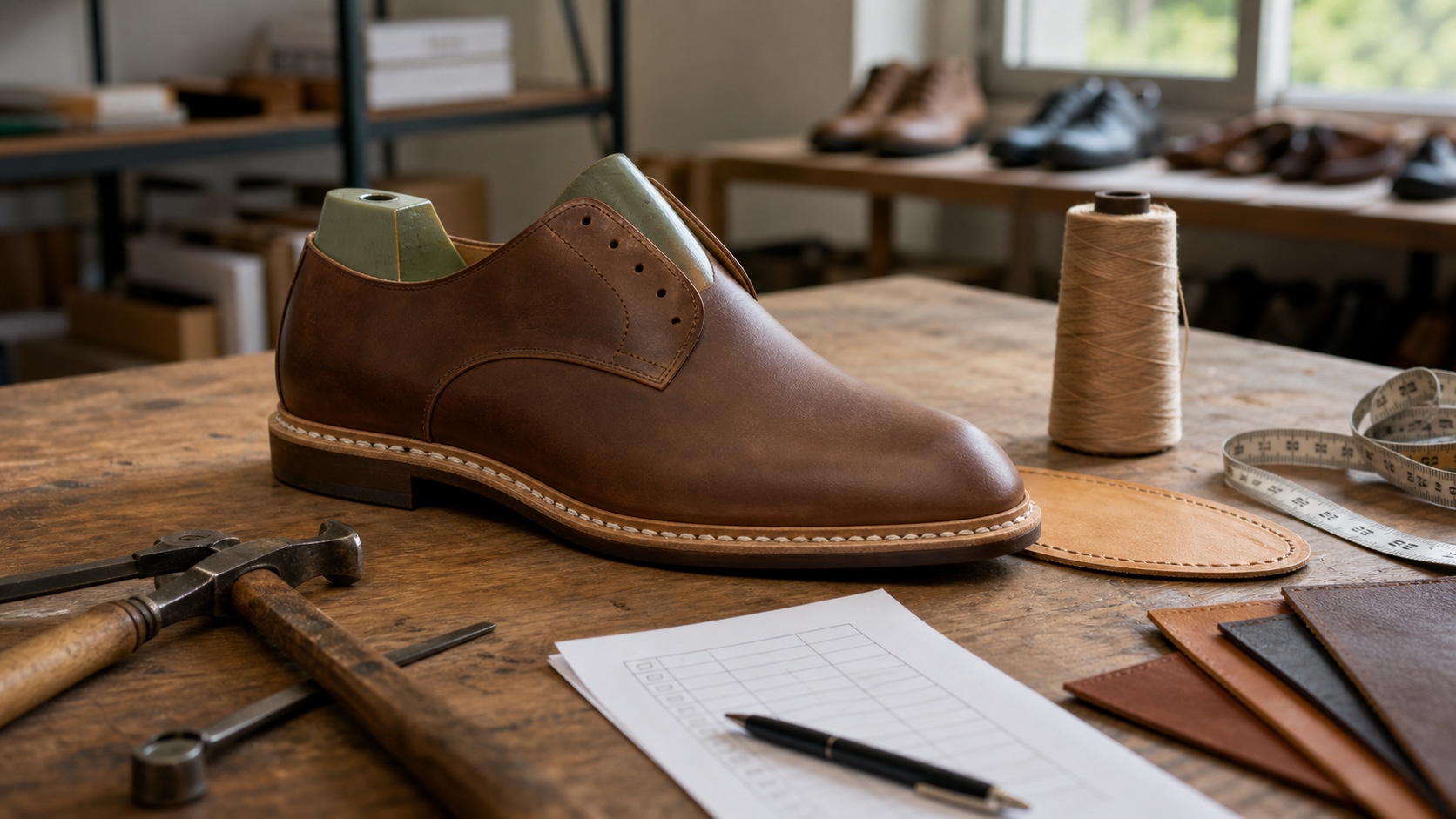
This guide is for buyers who are thinking about custom Goodyear welt shoes from China. It is written from the practical side: what to ask, what to prepare, where costs move, and which details should be checked before a bulk order leaves the factory.
First, be clear about why you want Goodyear welt
Some buyers ask for Goodyear welt because they want a premium shoe. That is a fair starting point, but it is not enough for production. The factory needs to know what the construction is meant to do for your product.
- You may want a stronger dress shoe with a structured shape.
- You may want a boot with a more traditional, durable build.
- You may want a premium private label product that feels different from a cheaper cemented shoe.
- You may want a thicker sole edge and visible welt stitching as part of the design.
Those are not the same project. A formal Oxford, a casual derby, a boot, and a heavy outsole shoe need different choices. Before asking for price, decide what Goodyear welt is supposed to achieve for your customer.
When Goodyear welt is a good choice
Goodyear welt construction can be a good fit when the product needs structure, a more substantial edge, better perceived craftsmanship, and a longer-lasting dress or boot feeling. It often works well for:
- Men's dress shoes and formal leather shoes.
- Derby shoes, Oxfords, monk straps, and loafers with a premium build.
- Leather boots for boutique or private label brands.
- Small collections where craftsmanship is part of the story.
- Buyers who can spend more time on sample approval and QC.
It may not be the best choice if the target price is very low, the shoe needs to be very light, the order has too many colors in a small quantity, or the buyer needs a rushed sample for a fast launch. In those cases, a different construction may be more practical.
The details a factory needs before giving a useful quote
A Goodyear welt quote based only on one reference photo is usually rough. It may help you start a conversation, but it will not protect the final cost. A better inquiry includes these details.
1. Reference style and product type
Tell the factory whether the shoe is an Oxford, derby, loafer, monk strap, boot, or another style. Send front, side, back, top, and sole references if you have them. If you want to change something, say it clearly.
For example: keep the round toe, use a leather sole, make the edge darker, remove the brogue pattern, and add a private label insole logo. This kind of note saves time because the factory knows what to follow and what not to copy.
2. Leather direction
Leather choice is one of the biggest cost and quality drivers. Say whether you want calf leather, cow leather, suede, patent, pull-up leather, grain leather, corrected grain, or another direction. If you are not sure, describe the look and handfeel you want.
- Formal and smooth.
- Soft and slightly casual.
- Glossy and polished.
- Rugged and waxy.
- Structured enough to hold shape.
If the shoe is for a premium line, ask for material photos in natural light and keep the approved swatch record. Leather color can look very different under factory lights, phone cameras, and daylight.
3. Last shape and fit market
The last decides the shoe's shape and a large part of the fit. It controls toe shape, instep, width, heel grip, and the way the upper sits on the foot. For Goodyear welt shoes, this is especially important because the construction has a more structured feel.
Tell the factory if you prefer round toe, almond toe, chisel toe, wider fit, standard fit, formal narrow shape, or a more comfortable commercial fit. Also mention the target market. A US boutique buyer, a European dress shoe buyer, and a Middle East retailer may not expect the same fit.
4. Outsole and edge finishing
A Goodyear welt shoe can look completely different depending on the outsole and edge. Confirm whether you want:
- Leather sole.
- Leather sole with rubber insert.
- Full rubber sole.
- Commando-style or heavier boot sole.
- Natural edge, brown edge, black edge, or antique edge finish.
If the buyer says only "good quality sole," the factory still has to guess. A sole that feels right for a formal dress shoe may be wrong for a daily walking shoe.
5. Welt stitching and visual details
In Goodyear welt shoes, the welt line is visible and customers notice it. Ask about stitch color, stitch density, edge shape, welt width, and whether the look should be clean, chunky, casual, or formal.
A slightly heavier welt can work for boots. A slimmer edge may be better for formal dress shoes. This should be discussed before sampling, not after the sample is finished.
6. Logo and private label options
Most private label buyers need branding. Common places include insole print, outsole mark, tongue or lining stamp, heel pad, box label, dust bag, care card, and carton mark. Send the logo artwork early and ask which methods are realistic for the first sample.
Do not leave branding until the end. A logo that looks tasteful on a box may be too large on an insole or too shallow on leather.
7. Size range and first order quantity
Goodyear welt shoes are usually not the easiest product for a very scattered first order. A first run with too many sizes and colors can make production inefficient and push the cost up.
Before asking for a final quote, decide your main size range and likely size ratio. If you are new to footwear orders, read the shoe MOQ guide before spreading the order across too many SKUs.
8. Packaging and retail presentation
Premium shoes need packaging that matches the product. Buyers may need a standard shoe box, custom box, dust bag, tissue paper, care card, hang tag, barcode label, and carton mark. Packaging affects sample approval, packing work, carton size, and warehouse receiving.
If the shoes are going to retail or marketplace channels, label accuracy matters. Wrong size labels or barcodes can create more trouble than a small cosmetic defect.
9. Destination country and documentation
Tell the factory where the shoes will be shipped. Destination country can affect labeling, material questions, shipping method, and documents. If your market has special import or material requirements, raise them early.
10. Sample deadline and launch schedule
Goodyear welt sampling should not be planned like a quick photo sample. Give the factory a real deadline, but also leave room for one correction round. The first sample is often where the buyer adjusts shape, leather, edge color, logo, or sole choice.
If you are planning a launch, work backward from the selling date. The shoe production timeline guide can help you avoid approving too many things at the last minute.
What changes MOQ and price?
Buyers often ask, "What is your MOQ for Goodyear welt shoes?" The honest answer is that MOQ depends on the project. These are the common reasons it changes:
- Last availability: if an existing last works, the project is easier. A new or unusual shape adds work.
- Outsole choice: existing soles are easier. New tooling or special soles change cost and timing.
- Leather grade: better leather needs stricter cutting selection and may have higher minimum purchasing quantity.
- Color spread: one color is simpler than three colors in a small order.
- Size spread: too many sizes with low pairs per size can make production less efficient.
- Logo and packaging: custom boxes, stamps, outsole logos, and dust bags all have their own setup needs.
For a first order, it is often smarter to make one strong style in one or two colors than to launch a whole collection with weak quantity behind each item.
How to approve a Goodyear welt shoe sample
When the sample is ready, do not approve it only because it looks nice in photos. Check it like a buyer who has to sell the same product again and again.
- Shape: does the toe, waist, heel, and side profile match the target customer?
- Fit: is the instep, width, heel grip, and walking feel suitable for the market?
- Leather: does the color, grain, shine, and handfeel match the approved direction?
- Welt line: is the stitching clean, even, and suitable for the style?
- Sole and edge: is the thickness, color, finish, and balance right?
- Branding: is the logo position, size, color, and clarity acceptable?
- Packaging: does the box, label, and presentation match your selling channel?
The sample approval should be written down. If something is approved with changes, list the changes clearly. The sample approval checklist is useful here because it keeps the conversation from becoming vague.
QC photos to request before shipment
With Goodyear welt shoes, QC photos should show more than a pretty pair on a table. Ask for photos that help you make a decision.
- Pair view: front, side, back, top, inside, and bottom.
- Welt close-up: stitching, edge, heel area, and toe area.
- Leather close-up: color, grain, surface, and any natural variation.
- Logo close-up: insole, outsole, lining, box label, and other branding points.
- Size check: size label and measurement photos for selected sizes.
- Packaging check: box, tissue, dust bag, care card, barcode, and carton mark.
- Defect photos: any scratches, stains, loose stitches, glue marks, edge issues, or packing problems.
A strong photo set makes it easier to approve shipment, request repair, or hold a batch for sorting. The pre-shipment quality checklist gives a broader QC structure.
Common mistakes buyers can avoid
Most problems are not dramatic. They are small details that were never written down.
- Choosing Goodyear welt only because it sounds premium, without checking target price and product use.
- Approving a sample photo without checking fit and pair balance.
- Changing leather after sample approval without updating the written record.
- Adding custom packaging too late.
- Using too many colors and sizes in a small first order.
- Not confirming edge color, stitch color, or outsole finish before sampling.
- Letting logo files and barcode labels arrive after production has already started.
None of these mistakes are rare. They happen because everyone is busy and the project feels clear in someone's head. A checklist makes the invisible details visible.
A ready-to-send inquiry template
If you want a factory to give a useful answer, send a message like this:
Hello, we are developing a private label Goodyear welt derby shoe for a men's boutique line. We want a brown full-grain leather look, round toe, leather lining, leather sole with a rubber insert, clean welt stitching, insole logo, standard box with custom label, and EU sizes 40-45. First order target is 200-300 pairs after sample approval. Please check whether you have a suitable last and sole, sample cost, MOQ, sample time, bulk lead time, and what files you need from us.
This message is simple, but it gives the factory enough information to check real options. It is much better than sending one photo and asking for the best price.
How Marcusius can help with the process
Marcusius works with buyers who need Goodyear shoes, custom leather shoes, and private label footwear projects. The smoother projects usually have one thing in common: the buyer sends enough detail at the beginning, then keeps sample comments and approval notes organized.
If you are still planning the product, start with the custom leather shoes buyer guide. If you already have references, you can send your style photos, quantity, size range, leather direction, outsole preference, logo plan, packaging needs, destination country, and timeline through the contact form or continue the discussion in the Buyer Portal.
Final buyer checklist
- You know why Goodyear welt is needed for this shoe.
- The product type, reference style, and changes are clear.
- Leather direction, color, and handfeel are described.
- Last shape and target market fit are discussed.
- Outsole type, edge finish, and welt stitching direction are chosen.
- Logo placement and artwork requirements are prepared early.
- Size range, quantity, deadline, and destination country are included.
- Packaging and label requirements are not left until the end.
- Sample approval checks shape, fit, leather, welt line, sole, logo, and packaging.
- Pre-shipment QC photos are requested before final approval.
Goodyear welt shoes reward patience. You do not need to make the process complicated, but you do need to make the important details visible. When buyer and factory are looking at the same checklist, the sample improves faster, the quote is more realistic, and the bulk order has fewer surprises.