
Buying Wholesale Shoes From China: Your First Order, Step by Step
Part of: China Footwear Sourcing Guide
The first order is the one that teaches you the vocabulary, and it's the one most likely to go wrong for reasons nobody warned you about. Not scams — those are rarer than the internet suggests. The usual failures are quieter: a sample approved by photo that arrived different, a size run nobody checked against the destination market, a shipment that cost more to clear than expected. We're a shoe factory in Guangzhou, and we've walked a lot of first-time buyers through this. Here's the version we'd give a friend, in the order the decisions actually arrive.
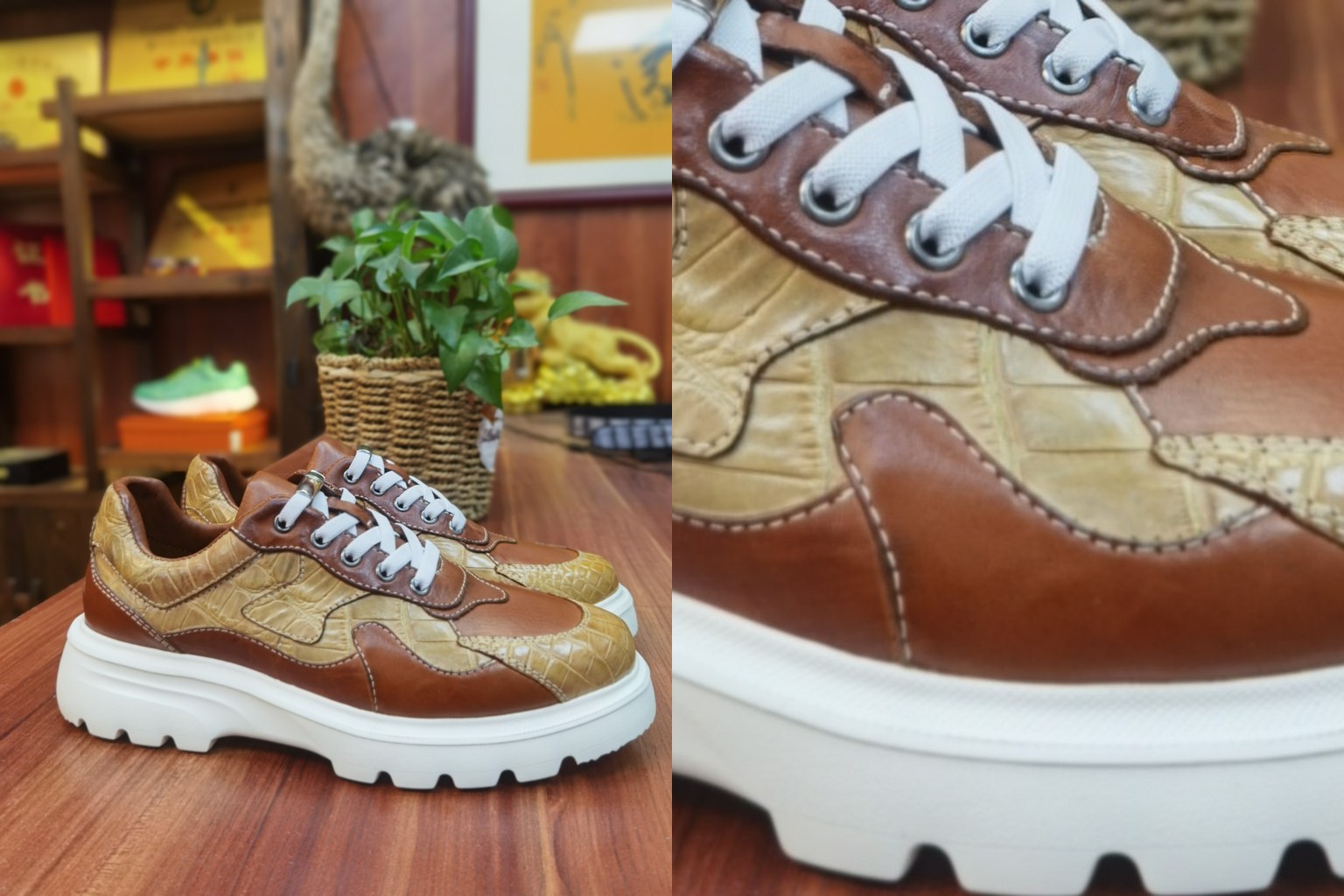
Start with one style, not a catalogue
The instinct is to launch with fifteen styles so the shop looks stocked. The reality is that fifteen styles means fifteen sample rounds, fifteen size curves, fifteen chances for something to go wrong, and capital spread so thin that none of them get reordered.
One style, done properly, teaches you everything: how this factory communicates, how close their sample lands to your spec, how long production really takes, how the shipping actually works, and — most importantly — whether your customers want it. That knowledge is worth more than a wide first order, and it costs a fraction as much to acquire.
Pick the style your market is most likely to repeat. Not the most exciting one; the most repeatable one.
Understand MOQ before you ask about price
Minimum order quantity is the number that decides whether a factory is even a candidate, and it varies enormously by what you're making. In our own workshop, exotic leather shoes and bags start at a single pair or piece because each one is cut individually anyway, while casual and dress styles in ordinary leather start at 20 pairs, since those run on a line where setup has to be worth doing. A factory quoting 500 pairs isn't being difficult — they're built for a different customer.
Two things worth knowing: MOQ is usually per colour and per style, not per order, which surprises people. And a low MOQ is not automatically better for you — very low minimums can mean higher unit cost, so what matters is whether the total first-order investment is one you can afford to learn from. Our MOQ and first-order guide goes through how minimums are actually calculated.
What a real first-order timeline looks like
Compress this at your peril — almost every first-order disaster is a schedule problem in disguise.
- Specification and quotation: a few days of back-and-forth if your brief is clear, weeks if it isn't.
- Sampling: 7-15 days for us depending on complexity, plus shipping the sample to you, plus your review time. Expect at least one revision round; two is normal and not a bad sign.
- Bulk production: 15-21 days after you confirm, for ordinary orders. Belts and small leather goods run 7-12 days.
- Inspection and shipping: inspection before the cartons seal, then sea freight measured in weeks or air freight in days at several times the cost.
Add it up honestly and a first order from first email to goods-in-hand is comfortably two to three months. If you're buying for a season, count backwards from the date you need stock on shelves, not forwards from today.
The sample stage is where the order is won
Everything that goes wrong later was decided here. Three rules that prevent most of it:
Never approve from photographs. Colour is unreliable on screens, and photos hide weight, flexibility, smell and finish. Hold the sample.
Write down what you approved. A confirmed sample plus a written specification — materials, colour references, lining, sole, size range, logo placement, packaging — is the standard your bulk gets measured against. Approval by email saying "looks good" gives you nothing to point at later. Our sample approval guide covers the mechanics.
Keep the approved pair. It's called a golden sample or sealed sample, and it stays with you unopened until the bulk arrives. It's the only physical evidence of what was agreed.
Sizing: the mistake that's expensive and invisible
Shoe sizes are not universal. EU, UK, US men's and US women's all differ, and "size 42" means an internal length, not a feeling. Two things to settle before production:
First, agree the size chart by internal measurement, not by number alone, and check it against what your market expects — a US buyer selling EU-graded shoes without conversion will drown in returns. Second, plan the size curve: how many pairs of each size. A flat split across the run is almost always wrong; sales cluster in the middle sizes. Guess conservatively on the extremes for a first order, because unsold size 46s are dead capital.
Money, honestly
Standard terms in this industry are a deposit to start production with the balance before shipping, and the usual payment routes are T/T bank transfer or L/C, with Western Union and MoneyGram sometimes used for samples. What matters for a first-timer is less which method and more this: your first order costs more than the unit price times quantity. Add sampling, shipping, customs duty in your country, and whatever bank charges appear. Buyers who budget only for the goods get an unpleasant surprise at clearance.
Check your own country's duty rate on footwear before you commit — it varies widely and it's your responsibility, not the factory's.
The five mistakes we watch first-timers make
- Ordering breadth instead of depth. Covered above, and it's the biggest one.
- Choosing purely on unit price. The cheapest quote usually differs in materials or construction, not in generosity. Compare quotes against the same written spec or you're comparing nothing.
- Vague briefs. "Good quality leather, nice sole" produces a sample nobody can evaluate. Name materials, thicknesses, constructions and colours — the tech pack checklist is a template for what a usable brief contains.
- Skipping pre-shipment inspection to save time. The one stage where problems are still cheap to fix. Our defects guide shows what to look for.
- Treating the factory as an adversary. The suppliers who do their best work for you are the ones who believe you'll reorder. Being specific and reliable buys more than being tough.
How to open the conversation
A first email that gets a useful reply contains: the reference style (photo or link), rough quantity, target market country, size range, materials direction, whether you need your logo, and roughly when you need stock. That's it — seven lines, and it lets a factory tell you immediately whether they're a fit, what it costs, and how long it takes. Vague enquiries get vague answers, and it isn't evasiveness; there's genuinely nothing to say yet. Our inquiry email guide has a template you can copy.
Questions first-time buyers ask
How do I buy wholesale shoes from China as a small business?
Start with one repeatable style rather than a broad range, find a factory whose minimum order quantity matches your budget, and settle the specification in writing before sampling. Approve a physical sample rather than photographs, keep the approved pair as your reference, agree the size chart by internal measurement and plan a realistic size curve, then inspect before shipping. Budget two to three months from first enquiry to stock in hand, and for costs beyond the unit price — sampling, freight, duty and bank charges.
What is a typical MOQ for shoes from a Chinese factory?
It depends entirely on how the product is made. Exotic leather shoes and bags can start at a single pair or piece because each is cut individually, while ordinary leather casual and dress styles typically start around 20 pairs, and factories geared to volume production may quote several hundred. Minimums usually apply per style and per colour rather than per order, and a very low minimum can carry a higher unit price.
How long does a first shoe order take?
Realistically two to three months end to end: specification and quotation over days to weeks, sampling in 7-15 days plus shipping and your review with at least one revision round, bulk production in 15-21 days after confirmation, then inspection and freight — weeks by sea or days by air at much higher cost. Count backwards from when you need stock rather than forwards from today.
Ready when you are
We make leather shoes, sneakers and exotic-leather footwear to order in Guangzhou, and a fair share of what leaves here is somebody's first import. If that's you, send the seven lines above and we'll tell you plainly whether we're the right fit — including when we're not. When you've done this once and you're ordering volume, the economics change and so does the advice: our guide to buying shoes in bulk picks up exactly where this one ends.
Buyer FAQ
First Order FAQ
How do I buy wholesale shoes from China as a small business?
Start with one repeatable style rather than a broad range, find a factory whose minimum order quantity matches your budget, and settle the specification in writing before sampling. Approve a physical sample rather than photographs, keep the approved pair as your reference, agree the size chart by internal measurement and plan a realistic size curve, then inspect before shipping. Budget two to three months from first enquiry to stock in hand, and for costs beyond the unit price — sampling, freight, destination duty and bank charges.
What is a typical MOQ for shoes from a Chinese factory?
It depends on how the product is made. Exotic leather shoes and bags can start at a single pair or piece because each is cut individually, ordinary leather casual and dress styles typically start around 20 pairs, and factories geared to volume production may quote several hundred. Minimums usually apply per style and per colour rather than per order, and a very low minimum can carry a higher unit price.
How long does a first shoe order take?
Realistically two to three months end to end: specification and quotation over days to weeks, sampling in 7-15 days plus shipping and review time with at least one revision round, bulk production in 15-21 days after confirmation, then inspection and freight — weeks by sea or days by air at much higher cost. Count backwards from the date you need stock rather than forwards from today.
Bulk Order FAQ
How much cheaper is buying shoes in bulk?
The savings come from costs fixed per production run rather than per pair — line setup, pattern and cutting preparation, tooling and order administration — so the biggest per-unit drop happens early, moving from a small run to a moderate one. Materials and labour barely change with volume. Consolidating styles that share a last, sole and leather often saves more per pair than simply increasing quantity, because those styles share the same setup.
How far ahead should I place a bulk shoe order?
Work backwards from the date stock must be on shelves: subtract customs clearance, shipping transit, production of 15-21 days after confirmation, and sampling and approval time. Then add margin for Chinese New Year, when factories close for roughly two to four weeks with congestion in the surrounding weeks — orders needed in the first quarter should be confirmed months rather than weeks in advance.
How do you control quality on a large shoe order?
Replace inspection-by-eye with a system: a sealed golden sample plus a written tolerance standard agreed before production, inline inspection while production runs rather than only at the end, and final inspection using honest random sampling across cartons and the size curve with the acceptable defect level agreed in writing. Watch specifically for material substitution between sample and bulk, and name materials precisely in the specification so any change becomes visible.