
Why Are Chinese Shoe Factories Cheaper? An Honest Answer
Part of: China Footwear Sourcing Guide
The assumption is cheap labour. That hasn't been the main reason for a long time, and believing it will cost you money. If low wages were the answer, production would simply move to wherever wages were lowest — and for some products it has. Footwear largely hasn't, and understanding why tells you something practical: which cost advantages are real and will hold, and which "cheap" quotations are actually a warning. We run a factory in Guangzhou. Here's the honest version, including the part that isn't flattering to us.
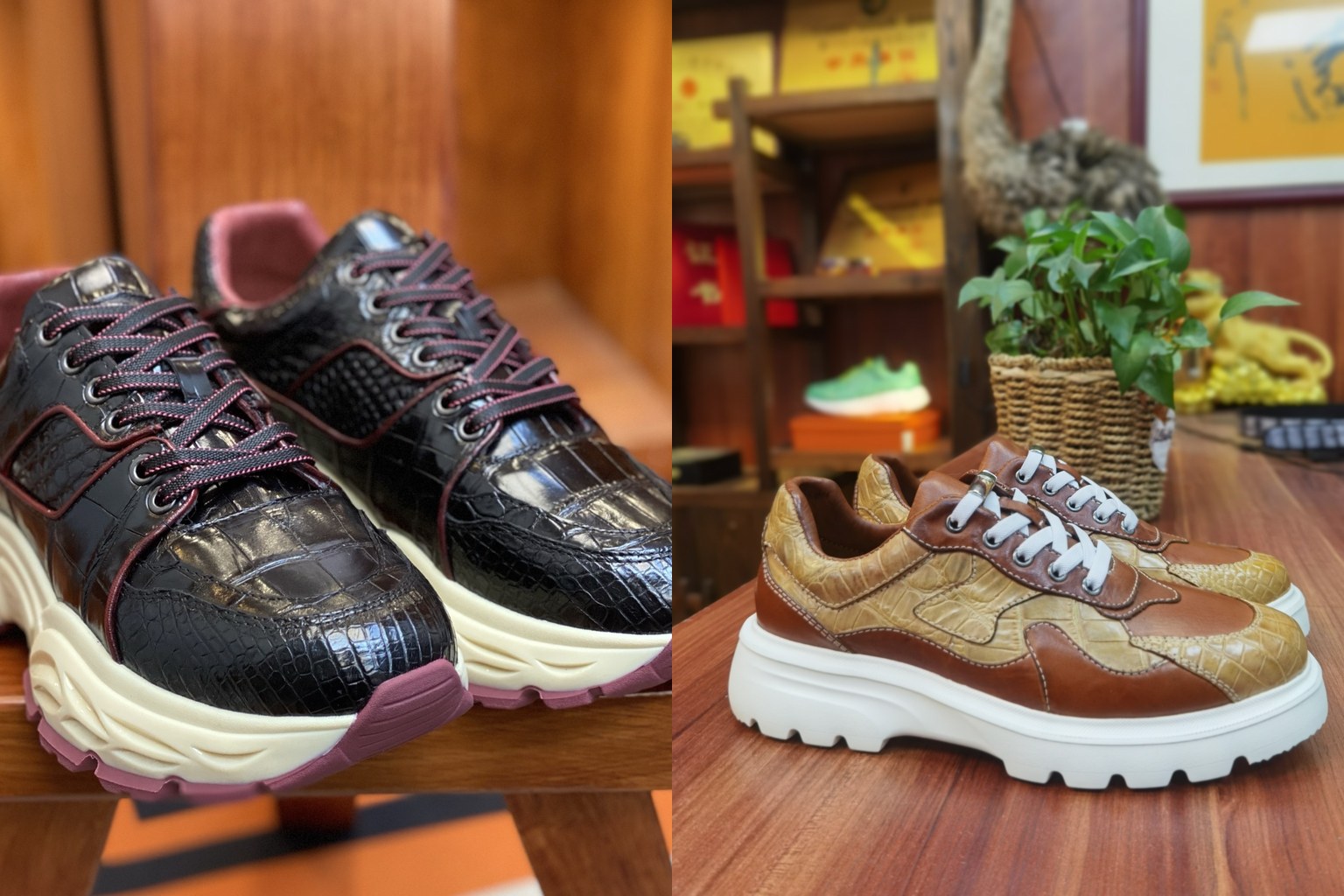
1. Everything is within an hour's drive
This is the real answer, and it's geography rather than economics. Around the manufacturing clusters of Guangdong and Fujian sit the tanneries, the sole and outsole makers, the hardware and buckle suppliers, the lace and thread mills, the lasting and moulding workshops, the box and packaging printers — and they're close enough to visit in the same day.
What that buys is not a discount but speed of iteration. When a sample needs a different sole hardness, that's a phone call and a same-week revision, not an international purchase order with a lead time. When a leather batch runs short, an alternative can be inspected in person tomorrow. Every one of those saved cycles is money and, more importantly, time.
A factory somewhere without that ecosystem might have lower wages and still quote higher, because it's importing components, holding more inventory to cover lead times, and absorbing the cost of slower revisions. Density beats wage rates, and it's the advantage least likely to disappear.
2. Volume has already paid for the equipment
Shoemaking is capital-heavy: lasts, cutting dies, moulds, stitching and lasting machines, finishing lines. In a mature cluster that equipment already exists and has been paid off across years of production, so a new order pays to use it, not to buy it.
The exception is worth knowing because it's the one place startups get surprised: anything genuinely custom needs its own tooling. A bespoke outsole means a new mould, and moulds are a real cost that has to be amortised across your order. This is why an existing sole in your chosen colour can be dramatically cheaper than a custom one that looks nearly identical — and why a good factory will tell you when the difference isn't worth paying for.
3. Specialisation lets small orders exist at all
Factories here tend to specialise narrowly — one does women's dress shoes, another does vulcanised sneakers, another does exotic leather. That focus is why a small order can be quoted sensibly instead of being refused.
Our own numbers show the shape of it: exotic leather shoes and bags start at a single pair or piece, because each one is hand-cut individually and there's no line setup to spread; casual and dress styles in ordinary leather start around 20 pairs, because those run on a line where setup has to be worth doing. A general factory that tries to make everything can't quote either of those numbers well.
For a startup this matters more than unit price. The ability to test a style at 20 pairs rather than committing to 500 is what makes launching possible at all — the MOQ guide covers how those minimums are actually calculated.
4. Competition is brutal, and it's in your favour
There are a great many shoe factories in these clusters, most of them chasing the same buyers. That pressure is why quotations come back quickly, why sample fees are modest or waived on serious enquiries, and why margins are thin enough that factories genuinely need repeat customers rather than one-off wins.
The flip side of the same coin: the pressure that makes prices competitive also pushes weaker factories toward corner-cutting, which brings us to the part of this page that matters most.
When "cheap" is a warning sign
Everything above explains why a fair price here is lower than you'd expect. None of it explains a quote that's dramatically below everyone else's — and after enough years you learn what that usually means:
- Different materials than you think you're buying. "Genuine leather" as a phrase covers a wide quality range, and split leather costs a fraction of full-grain. In exotics the gap is starker — embossed calf priced as crocodile is the version of this we see most, which is why our verification guide exists.
- Construction shortcuts. Cemented where welted was quoted, thinner outsole, board insole instead of leather, unlined where lining was specified. All invisible in a photo, all obvious in month six.
- Quality control removed from the budget. Inspection costs money and the cheapest quotes have often deleted it. You find out when the cartons open.
- A trading company reselling an unknown factory. Not inherently bad — good agents add real value — but if nobody in the chain will tell you which factory is making your shoes, nobody is accountable when something goes wrong.
The protection isn't paying more. It's comparing quotes against one written specification — same leather grade, same construction, same lining, same sole — so the numbers are actually comparable. When a quote is far below the others against an identical spec, ask which line item is different. A good factory will answer; the answer itself is the test. Our factory verification checklist covers the rest of the diligence.
What this means for a startup
The cost advantage is real and it's structural, so you can plan around it. But it shows up as value for a given specification, not as a magic number. Two habits capture it:
Specify before you shop. Decide the materials and construction you actually need, write them down, then collect quotes against that. Shopping price-first invites everyone to quote a different product.
Use flexibility rather than volume. The genuine startup advantage here isn't the lowest price per pair — it's being able to test one style at a small quantity, learn from real customers, and reorder. That option is worth more than a few points of unit cost, and it's the thing this manufacturing base does better than most.
Common questions
Why are Chinese shoe manufacturers cheaper?
Mostly supply-chain density rather than wages: tanneries, sole makers, hardware suppliers and packaging printers sit close together in the manufacturing clusters, so revisions and material substitutions happen in days instead of weeks. Add equipment already amortised across years of production, narrow specialisation that makes small orders quotable, and intense competition between factories. Labour cost is a factor but no longer the decisive one, which is why production has not simply moved to the lowest-wage country.
Are cheap shoes from China good quality?
Quality tracks the specification and the factory, not the country. The same cluster produces both high-end welted footwear and disposable goods, and a fair price for a well-specified shoe is genuinely lower here than most buyers expect. A quote dramatically below others for the same written specification usually means different materials, construction shortcuts, or quality control removed from the budget — so compare quotes against one identical spec and ask which line item differs.
What is a realistic minimum order for a startup?
It depends on how the shoe is made. Exotic leather shoes and bags can start at a single pair or piece because each is cut individually with no line setup to spread, while casual and dress styles in ordinary leather typically start around 20 pairs. Minimums usually apply per style and per colour rather than per order, and the ability to test one style at a small quantity is generally worth more to a startup than a marginally lower unit price.
Working with us
We make leather shoes, sneakers and exotic-leather footwear to order in Guangzhou — exotic styles from one pair, ordinary leather styles from 20, samples in 7-15 days and repeat production in 15-21 days after confirmation. If you're comparing quotations right now, the most useful thing we can do is quote against your written specification and tell you plainly where a cheaper number elsewhere is likely coming from. Send the spec and the destination market; if you're placing a first order, the first-order guide walks through the whole sequence.
Buyer FAQ
Sourcing Cost FAQ
Why are Chinese shoe manufacturers cheaper?
Mostly supply-chain density rather than wages: tanneries, sole makers, hardware suppliers and packaging printers sit close together in the manufacturing clusters, so revisions and material substitutions happen in days instead of weeks. Add equipment already amortised across years of production, narrow specialisation that makes small orders quotable, and intense competition between factories. Labour cost is a factor but no longer the decisive one, which is why footwear production has not simply moved to the lowest-wage country.
Are cheap shoes from China good quality?
Quality tracks the specification and the factory rather than the country: the same cluster produces both high-end welted footwear and disposable goods. A fair price for a well-specified shoe is genuinely lower than most buyers expect, but a quote dramatically below others for the same written specification usually means different materials, construction shortcuts, or quality control removed from the budget. Compare all quotes against one identical specification and ask which line item differs.
What is a realistic minimum order for a startup?
It depends on how the shoe is made. Exotic leather shoes and bags can start at a single pair or piece because each is cut individually with no line setup to spread, while casual and dress styles in ordinary leather typically start around 20 pairs. Minimums usually apply per style and per colour rather than per order, and the ability to test one style at a small quantity is generally worth more to a startup than a marginally lower unit price.