
How to Lace Sneakers: 6 Different Lacing Methods
Part of: Private Label Shoe Manufacturing
Nobody buys a second pair of shoes to fix a heel that slips. They buy insoles, they buy thicker socks, they tie the laces tighter until their instep aches — and almost none of them try the one free adjustment that solves it in thirty seconds. We make shoes for a living, and the single most useful thing we can tell an owner is that lacing is a fit tool, not a decoration. Here are the six methods worth knowing, each with a diagram we drew ourselves, the steps to do it, and an honest note about what it actually changes.
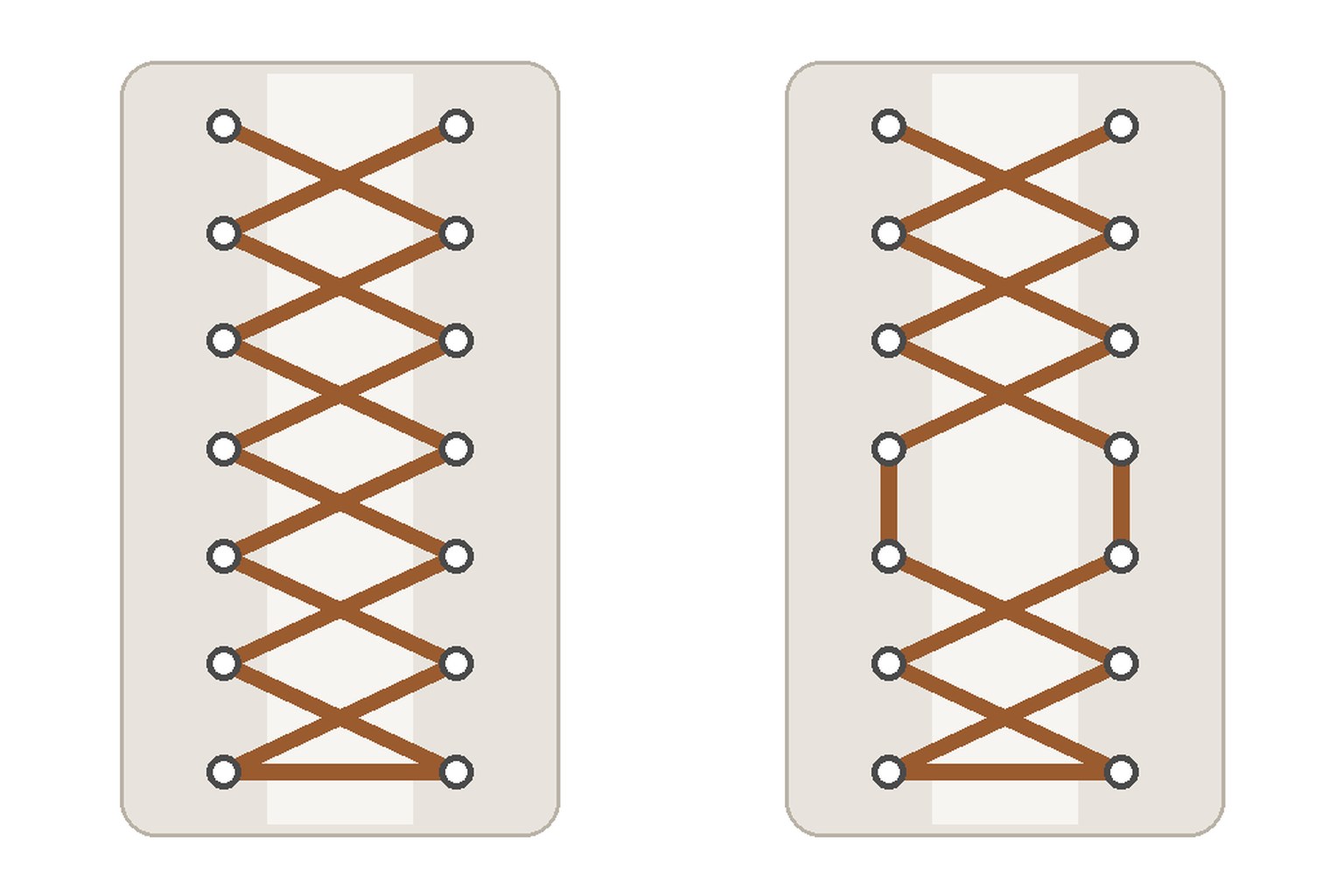
Before the methods: two things that decide everything
Count your eyelet pairs first — most sneakers have six or seven, and a few of these methods need the spare top pair that people never use. Second, remember that lacing tension should be even across the whole shoe rather than cinched hard at the top. If you're pulling the last crossing tight to stop heel slip, you're compensating for a fit problem that the heel-lock method below fixes properly.
1. Criss-cross lacing — the default, done right
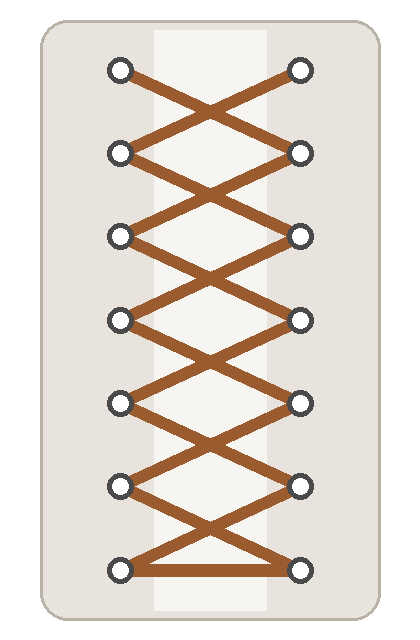
Steps: run the lace straight across the bottom eyelet pair, then cross each end diagonally up to the next eyelet on the opposite side, threading from underneath. Repeat to the top, keeping the ends the same length.
What it does: spreads tension evenly and grips well — which is why it's standard on nearly every sneaker sold. The detail most people get wrong: thread from underneath rather than over the top. Under-threading lets the lace slide freely when you tighten, so tension self-distributes across all rows; over-threading makes each crossing bind, which is why some shoes feel tight at the toe and loose at the ankle no matter how you pull.
2. Straight bar lacing — flat, clean, and the dress-shoe standard
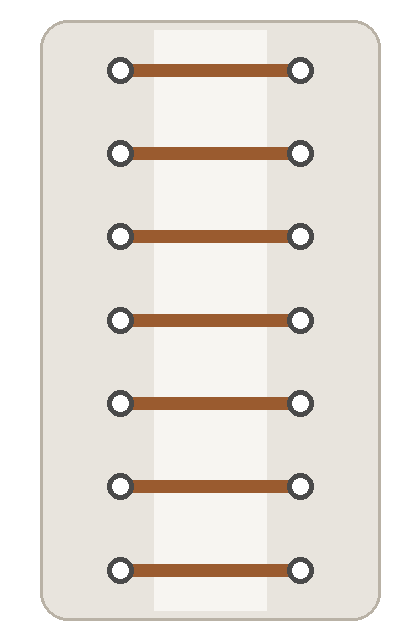
Steps: across the bottom pair, then each end goes straight up underneath to the next eyelet on the same side and straight across to the other. Alternate which side steps up so the two ends finish level.
What it does: the cleanest look there is, and the one to use on leather sneakers and anything dressy — the reason it's standard on oxfords is that hidden diagonals sit flatter under a trouser break. It also relieves pressure across the top of the foot, because there are no crossings stacking on the instep. Trade-off: it's slower to loosen, so it suits shoes you slip on more than shoes you unlace daily.
3. Sawtooth lacing — pull the shoe to one side
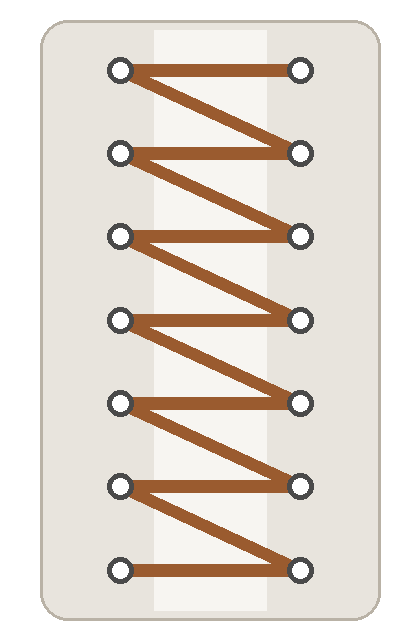
Steps: straight across a pair, then one end diagonally up one row while the other stays; cross straight again; repeat. The pattern alternates bar, diagonal, bar, diagonal.
What it does: pulls the upper slightly toward one side. That sounds like a novelty, but it's genuinely useful if one of your feet sits differently in the shoe than the other — asymmetric feet are extremely common, and lacing the two shoes differently is legitimate. It also just looks good on a chunky sneaker.
4. Window lacing — the fix for a pressure point
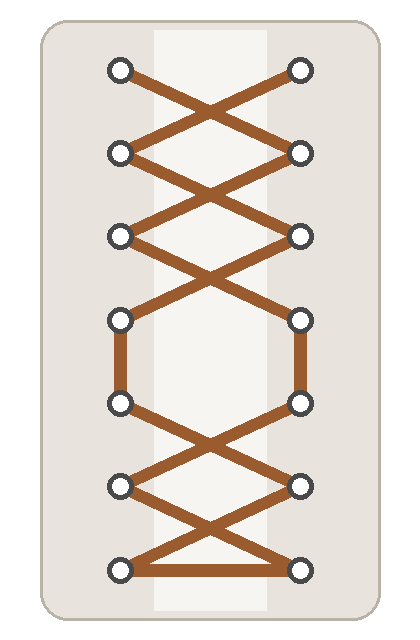
Steps: lace criss-cross until you reach the sore spot. At that row, take each end straight up its own side to the next eyelet — no crossing — then resume criss-cross above.
What it does: opens a gap exactly where the pressure is. This is the method for anyone with a high instep or a bony ridge on the top of the foot, and it's the one we recommend most often to customers who tell us a pair pinches "right in the middle." Move the window up or down a row until the pressure disappears. It costs nothing and it saves shoes that would otherwise sit in a closet.
5. Ladder lacing — maximum hold, boot territory
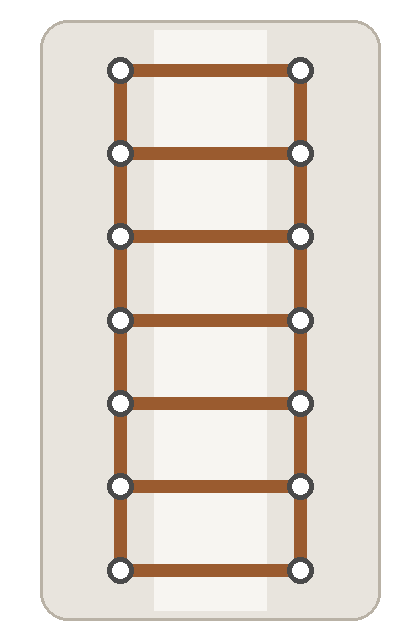
Steps: straight across the bottom, then each end goes vertically up its own side to the next eyelet, then across horizontally, threading under the vertical segment on the opposite side. Repeat.
What it does: locks the foot down harder than any other pattern here — it's the military-boot method for good reason. The trade-off is real: it's slow to lace, slow to loosen, and unforgiving if your foot swells during the day. Use it on boots and high-top sneakers where you want zero movement, not on shoes you take on and off.
6. Heel lock — the thirty-second fix for slipping heels
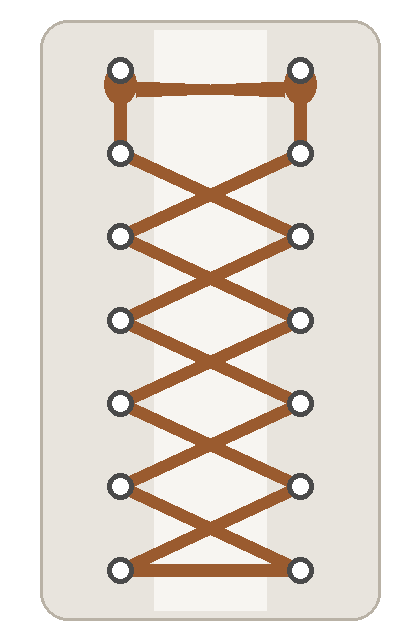
Steps: lace criss-cross up to the second-to-last eyelet pair. Now take each end straight up its own side into the top eyelet, leaving a small loop rather than pulling tight. Cross each end over and thread it through the opposite loop, then pull both down and outward — you'll feel the collar cinch around your ankle. Tie normally.
What it does: this is why that extra top eyelet exists, and most people never use it. It locks the heel into the back of the shoe without needing extra tension across the rest of the foot — which is exactly the problem people try to solve by over-tightening. If your heel lifts when you walk, if you get blisters on the back of your heel, or if you're wearing a pair for long days on your feet, do this one first. It's the single highest-value entry on this page.
Which one should you use?
- Heel slips, blisters at the back: heel lock. Nothing else comes close.
- Pressure or pain across the top of the foot: window lacing, with the gap moved to the sore row.
- Leather sneakers, dressy look, or wide-fitting comfort: straight bar.
- Boots or anything needing zero foot movement: ladder.
- One foot fits differently from the other: sawtooth on that shoe only.
- Everything else: criss-cross, threaded from underneath.
Lace length, and the small stuff that matters
Method changes how much lace you need. Straight bar and ladder consume more than criss-cross, so a pattern change can leave you unable to tie a bow — if you're switching to either on a six- or seven-eyelet sneaker, you may want a longer pair of laces. Flat laces hold a knot better than round ones on most sneakers; round laces slide more freely, which suits ladder and heel lock where you want the lace to move as you cinch. And if your aglets have frayed off, a wrap of clear tape rethreads eyelets far more easily than fighting a splayed lace end.
One last thing worth saying plainly: none of this fixes a shoe that's the wrong size. Lacing can rescue a shoe that's slightly roomy, relieve a pressure point, or stop a heel lifting. It cannot make a half-size-too-small shoe fit, and it cannot fix a last shape that's wrong for your foot. If you've tried the heel lock and the window and the shoe still fights you, the shoe is the problem.
Questions we get about lacing
How do you lace sneakers to stop heel slipping?
Use the heel lock, sometimes called a runner's loop. Lace normally to the second-to-last eyelet, then take each lace end straight up its own side into the top eyelet, leaving a small loop instead of pulling tight. Cross each end and thread it through the opposite loop, then pull down and outward before tying. The collar cinches around the ankle and holds the heel down without needing extra tension across the rest of the foot.
What is window lacing for?
It relieves a pressure point on the top of the foot. Lace criss-cross until you reach the sore spot, then take each end straight up its own side without crossing, and resume criss-cross above — this leaves an open gap at that height. It's the standard fix for a high instep or a bony ridge, and the gap can be moved up or down a row until the pressure disappears.
What is the difference between straight bar and criss-cross lacing?
Criss-cross runs the laces diagonally across the shoe at every row, spreading tension evenly and gripping well — the default on most sneakers. Straight bar hides the diagonals underneath so only horizontal bars show, giving a cleaner, flatter look that suits leather and dress styles and puts less pressure across the instep. Straight bar uses more lace length and is slower to loosen.
Where this comes from
We build leather sneakers and dress shoes to order in Guangzhou, which means we hear about fit problems directly from the people wearing them — and a surprising share of those problems end at this page rather than in a return. If you're specifying sneakers for a brand or a shop, the fit conversation starts earlier, at the last and the size grading: our last development and size grading checklist covers that, and the durable leather sneaker specification covers building a pair that's worth lacing properly. Browse the custom sneaker range if you want a pair made to your spec.
Buyer FAQ
Shoe Lacing FAQ
How do you lace sneakers to stop heel slipping?
Use the heel lock, also called a runner's loop. Lace normally to the second-to-last eyelet, then take each lace end straight up its own side into the top eyelet, leaving a small loop instead of pulling it tight. Cross each end over and thread it through the opposite loop, then pull down and outward before tying. The collar cinches around the ankle and holds the heel down without needing extra tension across the rest of the foot.
What is window lacing for?
Window lacing relieves a pressure point on the top of the foot. Lace criss-cross until you reach the sore spot, then take each lace end straight up its own side without crossing, and resume criss-cross above — leaving an open gap at that height. It is the standard fix for a high instep or a bony ridge, and the gap can be moved up or down a row until the pressure disappears.
What is the difference between straight bar and criss-cross lacing?
Criss-cross runs the laces diagonally at every row, spreading tension evenly and gripping well, which is why it is standard on most sneakers. Straight bar hides the diagonals underneath so only horizontal bars show, giving a cleaner flat look suited to leather and dress styles while putting less pressure across the instep. Straight bar consumes more lace length and is slower to loosen.