
Buying Shoes in Bulk: How Ordering Changes When You Scale
Part of: China Footwear Sourcing Guide
The second order is a different job from the first, and buyers who run it the same way get squeezed. The first order was about learning: one style, small quantity, find out whether the factory and the market both work. Once that's answered, the questions change completely — how much cheaper does volume actually get, how do you plan a season instead of a shipment, how do you keep quality steady across a thousand pairs instead of fifty, and how do you avoid tying up cash in stock that sells in March. We make footwear in Guangzhou and see both stages constantly. This page is the second one. If you haven't placed a first order yet, start with our first-order guide instead.
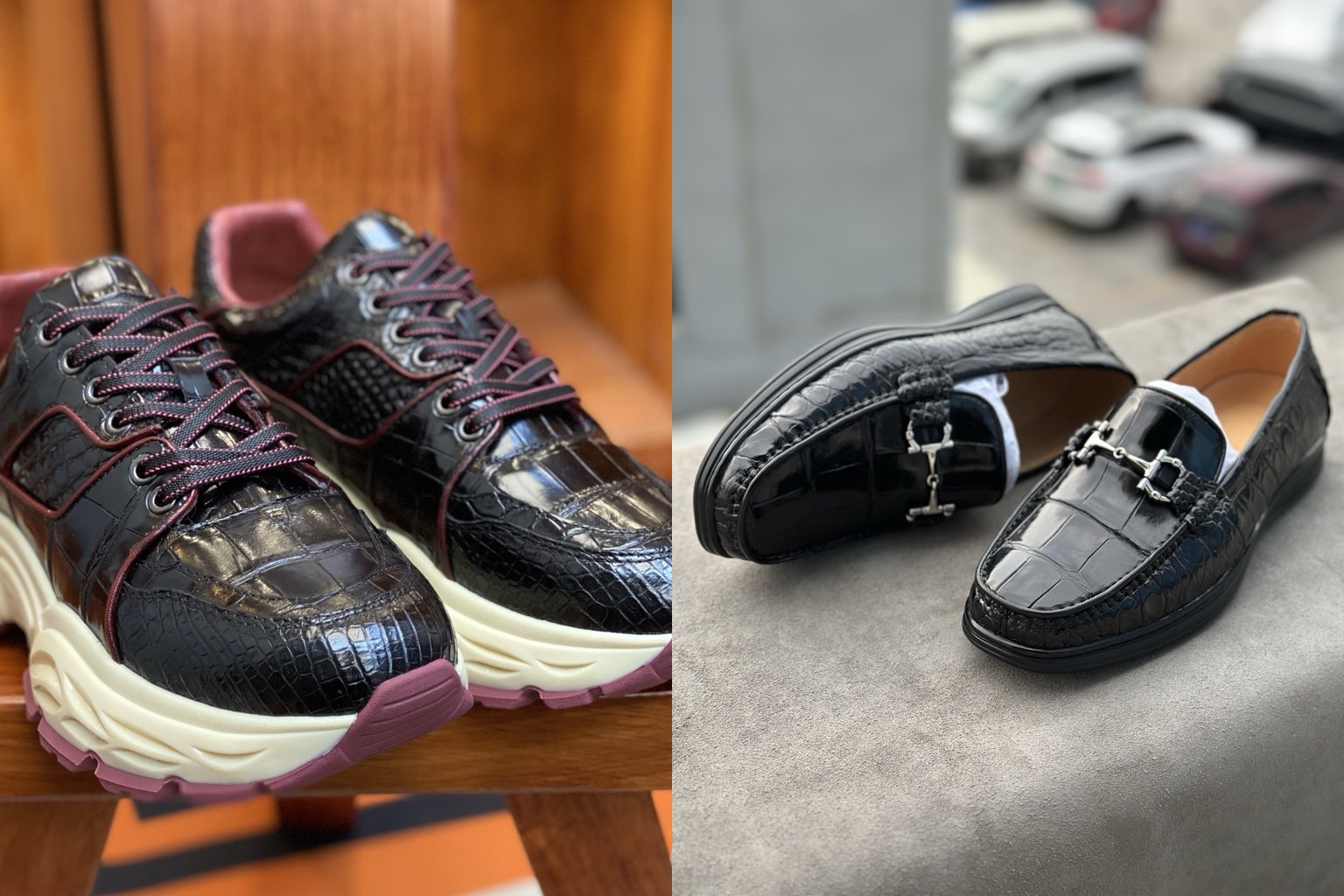
Where volume discounts actually come from
Buyers often approach price as pure negotiation. It's mostly arithmetic, and understanding the arithmetic gets you better prices than pushing does.
The costs that shrink with volume are the ones that are fixed per production run rather than per pair: line setup, pattern and cutting-die preparation, mold or tooling costs if your sole is custom, and the administrative overhead of an order. Spread across 50 pairs those are heavy; across 500 they nearly vanish. What does not shrink much is material and labour — leather costs what it costs whether you buy 50 pairs or 5,000.
Two practical consequences. First, the biggest per-unit savings come early — going from a small run to a moderate one moves price far more than doubling an already-large order. Second, consolidating styles beats inflating quantity: ordering three styles that share a last, a sole and a leather is cheaper per pair than three unrelated styles at the same total volume, because they share setup. That's a design decision, and it's worth making before you ask for a quotation.
Plan the season, not the shipment
At volume the schedule becomes the constraint. Bulk production runs 15-21 days after confirmation for us, but that clock starts after sampling, approvals and deposit — and it sits in a queue with other orders. Two timing realities to build around:
Chinese New Year. Factories across the country close for roughly two to four weeks, and the weeks either side are congested with everyone trying to ship before the shutdown and restaffing after it. Orders that need to land in Q1 should be confirmed well before this, and "well before" means months, not weeks. This single factor causes more missed seasons than any other.
Sea freight is slow and variable. Weeks in transit plus port handling plus customs clearance, and any of those can slip. Air freight fixes the timeline at several times the cost, which is a reasonable emergency tool and a terrible plan.
The habit that works: pick the date stock must be on shelves, subtract clearance, subtract transit, subtract production, subtract approvals — and place the order at whatever date that arithmetic produces, even if it feels absurdly early.
Quality control changes shape at volume
On 50 pairs you can look at everything. On 1,000 you can't, so the system replaces the eyeballs. Three things need to be in place:
A sealed golden sample and a written tolerance standard. At volume, "close enough" needs a definition agreed in advance — what counts as acceptable variance, what's repairable, what's rejected. Our footwear defects guide sets out that framework in detail.
Inline inspection, not just final. The economics flip with quantity: a stitching problem caught on day two of production costs a machine adjustment, while the same problem found in packed cartons costs the run. Ask for inspection while production is running — any factory doing it properly already is.
Honest random sampling at final. Pairs pulled across cartons and across the size curve, not from whatever's on top. Whether your agent, a third-party inspector or the factory's own QC does it, the sampling method and the acceptable defect level should be agreed in writing per order rather than assumed.
One volume-specific risk worth naming: material substitution between sample and bulk. It's rarely malicious — a leather batch runs out, a hardware supplier changes — but at 1,000 pairs the consequences are large. Name materials specifically in the specification and re-check them at bulk rather than assuming the sample settles it.
Size curves and the money you leave on the shelf
At small quantity a wrong size curve is annoying. At volume it's the difference between a profitable order and dead stock. Middle sizes sell; the extremes sit. If you have sales history, use it — your own data beats any general chart. If this is your first volume order, weight conservatively toward the middle and treat the extremes as a small experiment rather than a symmetric split.
The same logic applies to colour. Ordering a new colourway at volume before it's been tested at small scale is one of the more expensive ways to learn something. Many of our repeat customers run new colours as a small addition to a proven-style order — a low-risk way to test without a separate production run.
Payment, cash flow and the shape of a volume order
The standard structure is a deposit to start production and the balance before shipping, with T/T bank transfer and L/C the usual routes for volume, and Western Union or MoneyGram sometimes used for smaller amounts like samples. What changes at scale is the cash-flow shape rather than the mechanism: money leaves months before goods arrive and considerably longer before they sell.
Buyers who scale successfully tend to do two things. They stagger deliveries where the schedule allows — splitting a large order into two shipments so stock and cash both arrive in stages. And they budget the full landed cost: unit price, freight, insurance, destination duty, clearance fees and bank charges. Landed cost, not unit price, is the number that determines whether the order works.
Making the supplier relationship do work for you
At volume the relationship becomes an asset, and it's worth being deliberate about it. Factories allocate their best capacity and attention to buyers who are predictable — clear specifications, decisions that don't reverse, payments on schedule, honest forecasts. That's not sentiment; it's scheduling. A buyer who says "roughly 800 pairs in September" and means it gets planned for. One who changes the spec twice during production gets fitted around.
Two things worth asking for once you're a repeat customer, because they cost the factory little and help you a lot: production photos at agreed stages, and early warning on material changes. Both are normal requests between people who expect to keep working together.
Common questions on bulk orders
How much cheaper is buying shoes in bulk?
The savings come from costs that are fixed per production run rather than per pair — line setup, pattern and cutting preparation, tooling and order administration — so the biggest per-unit drop happens early, when moving from a small run to a moderate one. Materials and labour barely change with volume. Consolidating styles that share a last, sole and leather often saves more per pair than simply increasing quantity, because those styles share the setup cost.
How far ahead should I place a bulk shoe order?
Work backwards from the date stock must be on shelves: subtract customs clearance, subtract shipping transit, subtract production of 15-21 days after confirmation, and subtract sampling and approval time. Then add margin for Chinese New Year, when factories close for roughly two to four weeks and the surrounding weeks are congested — orders needed in Q1 should be confirmed months rather than weeks in advance.
How do you control quality on a large shoe order?
Replace inspection-by-eye with a system: a sealed golden sample plus a written tolerance standard agreed before production, inline inspection while production runs rather than only at the end, and final inspection using honest random sampling across cartons and the size curve with the acceptable defect level agreed in writing. Watch specifically for material substitution between sample and bulk, and name materials precisely in the specification so any change is visible.
When you're ready to scale
We produce leather shoes, sneakers and exotic-leather footwear to order in Guangzhou, with ordinary leather styles from 20 pairs and exotic styles from a single pair — which means the same factory can carry you from a first test order through to repeat volume without changing suppliers mid-growth. Send your styles, quantities, target dates and destination market, and the quotation comes back with the schedule attached rather than just a price. If the specification side is what you want to tighten first, the tech pack checklist is the place to start.
Buyer FAQ
Bulk Order FAQ
How much cheaper is buying shoes in bulk?
The savings come from costs fixed per production run rather than per pair — line setup, pattern and cutting preparation, tooling and order administration — so the biggest per-unit drop happens early, moving from a small run to a moderate one. Materials and labour barely change with volume. Consolidating styles that share a last, sole and leather often saves more per pair than simply increasing quantity, because those styles share the same setup.
How far ahead should I place a bulk shoe order?
Work backwards from the date stock must be on shelves: subtract customs clearance, shipping transit, production of 15-21 days after confirmation, and sampling and approval time. Then add margin for Chinese New Year, when factories close for roughly two to four weeks with congestion in the surrounding weeks — orders needed in the first quarter should be confirmed months rather than weeks in advance.
How do you control quality on a large shoe order?
Replace inspection-by-eye with a system: a sealed golden sample plus a written tolerance standard agreed before production, inline inspection while production runs rather than only at the end, and final inspection using honest random sampling across cartons and the size curve with the acceptable defect level agreed in writing. Watch specifically for material substitution between sample and bulk, and name materials precisely in the specification so any change becomes visible.