
Shoe MOQ Explained: How Small Brands Can Plan a First Order
Part of: Private Label Shoe Manufacturing
MOQ is one of the first questions every new shoe buyer asks. It is also one of the easiest questions to misunderstand.
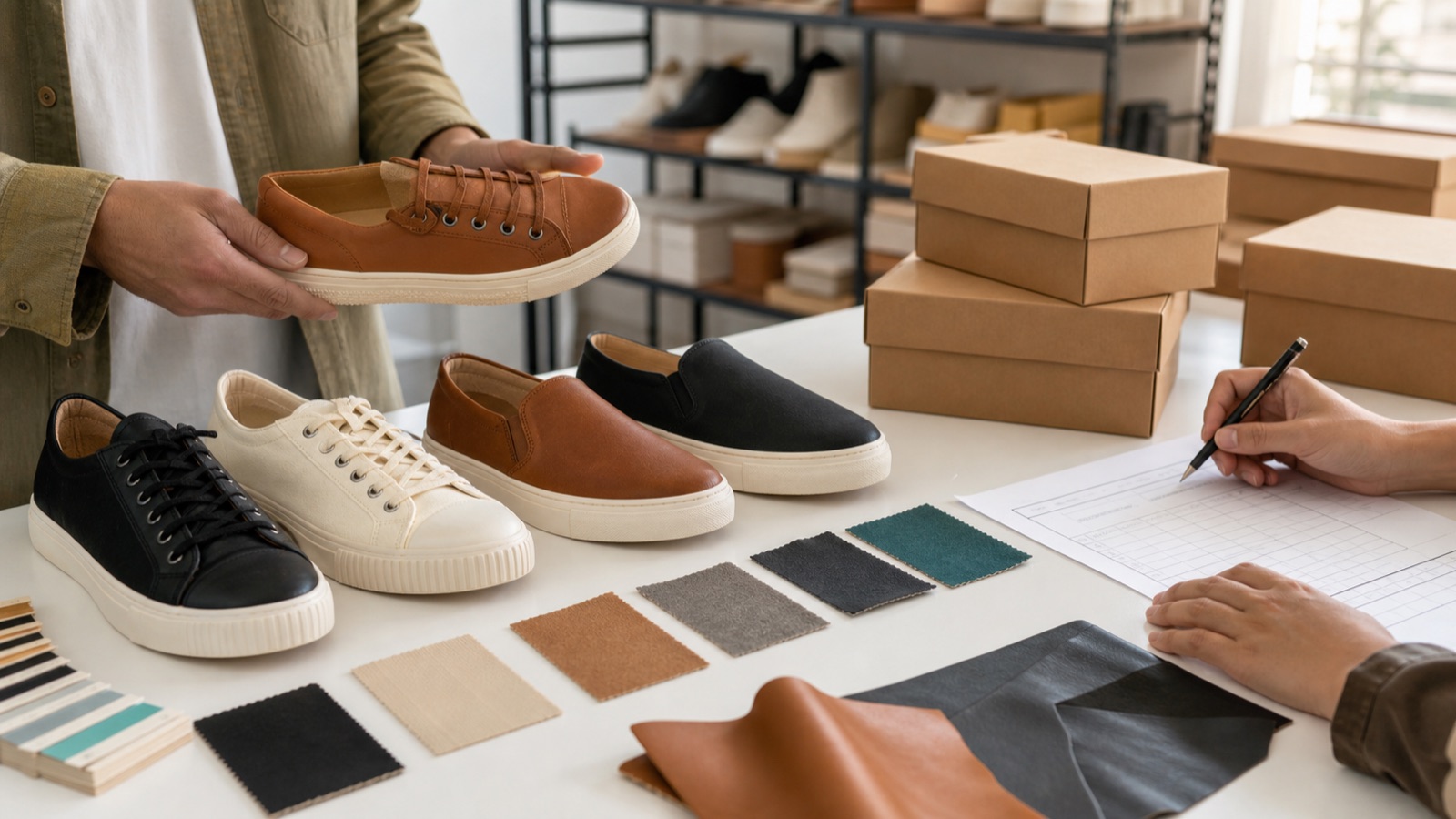
A buyer may write, "What is your MOQ?" and expect one clean number. From the factory side, that number changes quickly once the shoe type, material, outsole, logo method, color split, size run, and packaging become clear. A canvas slip-on using stock fabric is not the same project as a new leather sneaker with a custom outsole and printed retail box.
This guide is for small brands and first-time private label buyers who want a realistic first order, not just the lowest possible number on paper.
What MOQ really means
MOQ means minimum order quantity. In footwear, it is the smallest quantity that makes a production order practical for the factory and its suppliers.
That does not mean the factory wants to make life difficult. It usually means several things have to happen before one pair can be made in bulk:
- Materials need to be bought in workable rolls, sheets, hides, or batches.
- Outsoles, insoles, labels, boxes, and trims may have supplier minimums.
- Cutting, stitching, lasting, finishing, packing, and QC teams need a stable production plan.
- Machines and molds may need setup time before the line becomes efficient.
For a buyer, the practical question is not only "Can you do 100 pairs?" A better question is "What is the best way to structure the first order so quality, cost, and delivery stay under control?"
Why there is no single MOQ for all shoes
A factory may say one style starts from 100 pairs, another from 300 pairs, and another from 500 pairs. That can feel inconsistent until you look at the production details.
For example, custom sneakers often depend on outsole availability, upper material, color matching, and logo placement. leather shoes may depend more on leather selection, lining, last shape, outsole finishing, and handwork. wholesale shoes from existing catalog styles can sometimes move faster because the base design is already proven.
This is why a serious MOQ answer usually comes after the buyer shares enough product detail.
Six details that change shoe MOQ
When you ask a factory for MOQ, these six details matter more than most buyers expect.
1. Material choice
Stock materials are usually easier for small orders. Custom material, custom color, special texture, reflective material, recycled material, or imported leather can raise the MOQ because the material supplier has its own minimum.
If your first order is small, ask whether there is an existing material close to your target. You may get to market faster with a good available option and improve the material in the second order.
2. Outsole and mold
An existing outsole is usually the simplest route for a first order. A new outsole mold can be useful for a long-term product, but it changes cost, timing, and minimum quantity.
If you are testing a new brand, think carefully before starting with a fully custom outsole. It may be better to use an existing outsole first, confirm the product direction, then invest in tooling after you see demand.
3. Logo method
Logo setup can be simple or complicated. A printed insole logo, woven label, tongue patch, heat transfer, embossing plate, metal logo, or outsole logo all have different setup needs.
For a first order, keep branding clean and focused. A shoe does not need a logo on every surface to feel like a private label product. One or two well-placed brand details are often better than five rushed ones.
4. Color split
MOQ is often calculated by style and color, not only total order quantity. A 300-pair order in one color is easier than 300 pairs split into six colors.
If you are new, start with your strongest color. Black, white, brown, beige, navy, or one brand color may be enough for the first run. Too many colors make material control, QC, and inventory planning harder.
5. Size run
Shoes are not like T-shirts. Size runs affect outsole size, last size, insole size, box label, carton planning, and stock risk.
Before ordering, decide which market you are selling to and build a size ratio around that market. A casual guess like "just make equal quantity in every size" often creates leftover inventory in slow sizes.
6. Packaging
Custom boxes, tissue paper, hang tags, dust bags, inserts, barcode labels, and carton marks all affect the order. Packaging can make a brand feel professional, but it should match the stage of the business.
For a first order, standard box structure with clean custom labels may be enough. Upgrade packaging after you know the product sells.
How small brands can plan a smarter first order
A good first order is not always the smallest order. It is the order that gives you enough product to test the market while keeping quality and cash pressure under control.
Here is a practical way to think about it:
- Choose one hero style instead of developing too many styles at once.
- Use one or two colors, not a full seasonal palette.
- Use an existing outsole unless your product idea truly depends on a custom sole.
- Keep logo and packaging professional but simple.
- Build a realistic size ratio based on your selling country and channel.
- Leave budget for sample revisions, shipping, inspection, and reorder timing.
This kind of planning makes your MOQ conversation much easier. The factory can see that you are not just asking for a low number; you are building a workable production plan.
What not to do when asking for lower MOQ
It is normal to ask whether MOQ can be adjusted. The problem is how some buyers ask.
Try not to send only this message:
Can you do 50 pairs with custom logo, custom box, three colors, and many sizes?
The answer will usually be difficult because the request has several small-order problems inside it. A better message is:
We are planning a first test order. We can use an existing outsole, one stock upper material, one color, standard box with our label, and a focused size run. What MOQ would be realistic for this setup?
That second message gives the factory room to help. It also shows that you understand production trade-offs.
Five MOQ questions to ask before sampling
Before you pay for a sample, ask these questions. They can prevent disappointment later.
- Is the MOQ calculated by style, color, material, or total order?
- Does the quoted MOQ assume existing outsole and stock material?
- What changes would increase the MOQ?
- Can the first order use standard packaging, with custom packaging added later?
- If the first order sells well, what reorder quantity and lead time should we plan for?
These questions are more useful than pushing for a number before the product is defined.
MOQ and sample approval should work together
MOQ should not be separated from sample approval. A factory might agree to a small order, but the buyer still needs to approve the shoe properly before bulk production starts.
If fit, material, logo, or packaging is still unclear, do not rush into production just because the MOQ looks attractive. Review the sample carefully, mark changes, and keep written approval records. You can use our shoe sample approval checklist if you need a practical review flow.
What information helps the factory answer MOQ quickly
If you want a useful MOQ answer, prepare a short requirement note. It does not need to be a perfect technical file, but it should be clear.
- Shoe type: sneaker, loafer, sandal, boot, slipper, or another category.
- Reference photos or existing catalog style direction.
- Upper material and color direction.
- Outsole preference: existing outsole or custom outsole.
- Logo position and logo method.
- Packaging requirement.
- Target market and size range.
- Expected first-order quantity and reorder plan.
If you already have a technical file, compare it with our shoe tech pack checklist. If you are still writing your first inquiry, this guide on how to email a shoe manufacturer for a useful quote will help you avoid vague messages.
How Marcusius handles MOQ discussions
At Marcusius, we prefer to talk about MOQ after we understand the product direction. Sometimes the best advice is to simplify the first version. Sometimes the better choice is to invest in a stronger sample before discussing bulk quantity. It depends on the shoe and the buyer's sales plan.
If you are building a private label line, you can start with our private label shoe manufacturer checklist. For a new requirement, use the Buyer Portal so product notes, attachments, and follow-up questions stay in one thread. If your request is simple, the contact form is enough.
First-order MOQ checklist
- Pick one main style before adding extra styles.
- Decide whether you can use an existing outsole.
- Choose stock or available material when possible.
- Start with fewer colors and a focused size run.
- Keep logo placement simple and clear.
- Use practical packaging for the first order.
- Ask MOQ by style, color, material, size run, and packaging.
- Confirm sample approval steps before bulk production.
- Plan reorder timing before the first order sells out.
MOQ is not just a barrier to get past. It is a planning tool. When buyer and factory talk about it clearly, the first order becomes easier to price, easier to produce, and easier to improve for the next run.
For the starting order quantities by product category, see our low MOQ ordering guide.
Buyer FAQ
First Order FAQ
How do I buy wholesale shoes from China as a small business?
Start with one repeatable style rather than a broad range, find a factory whose minimum order quantity matches your budget, and settle the specification in writing before sampling. Approve a physical sample rather than photographs, keep the approved pair as your reference, agree the size chart by internal measurement and plan a realistic size curve, then inspect before shipping. Budget two to three months from first enquiry to stock in hand, and for costs beyond the unit price — sampling, freight, destination duty and bank charges.
What is a typical MOQ for shoes from a Chinese factory?
It depends on how the product is made. Exotic leather shoes and bags can start at a single pair or piece because each is cut individually, ordinary leather casual and dress styles typically start around 20 pairs, and factories geared to volume production may quote several hundred. Minimums usually apply per style and per colour rather than per order, and a very low minimum can carry a higher unit price.
How long does a first shoe order take?
Realistically two to three months end to end: specification and quotation over days to weeks, sampling in 7-15 days plus shipping and review time with at least one revision round, bulk production in 15-21 days after confirmation, then inspection and freight — weeks by sea or days by air at much higher cost. Count backwards from the date you need stock rather than forwards from today.
Sourcing Cost FAQ
Why are Chinese shoe manufacturers cheaper?
Mostly supply-chain density rather than wages: tanneries, sole makers, hardware suppliers and packaging printers sit close together in the manufacturing clusters, so revisions and material substitutions happen in days instead of weeks. Add equipment already amortised across years of production, narrow specialisation that makes small orders quotable, and intense competition between factories. Labour cost is a factor but no longer the decisive one, which is why footwear production has not simply moved to the lowest-wage country.
Are cheap shoes from China good quality?
Quality tracks the specification and the factory rather than the country: the same cluster produces both high-end welted footwear and disposable goods. A fair price for a well-specified shoe is genuinely lower than most buyers expect, but a quote dramatically below others for the same written specification usually means different materials, construction shortcuts, or quality control removed from the budget. Compare all quotes against one identical specification and ask which line item differs.
What is a realistic minimum order for a startup?
It depends on how the shoe is made. Exotic leather shoes and bags can start at a single pair or piece because each is cut individually with no line setup to spread, while casual and dress styles in ordinary leather typically start around 20 pairs. Minimums usually apply per style and per colour rather than per order, and the ability to test one style at a small quantity is generally worth more to a startup than a marginally lower unit price.