
How Custom Crocodile Shoes Go From a Reference Image to an Approved Sample
Part of: Exotic Leather Guide
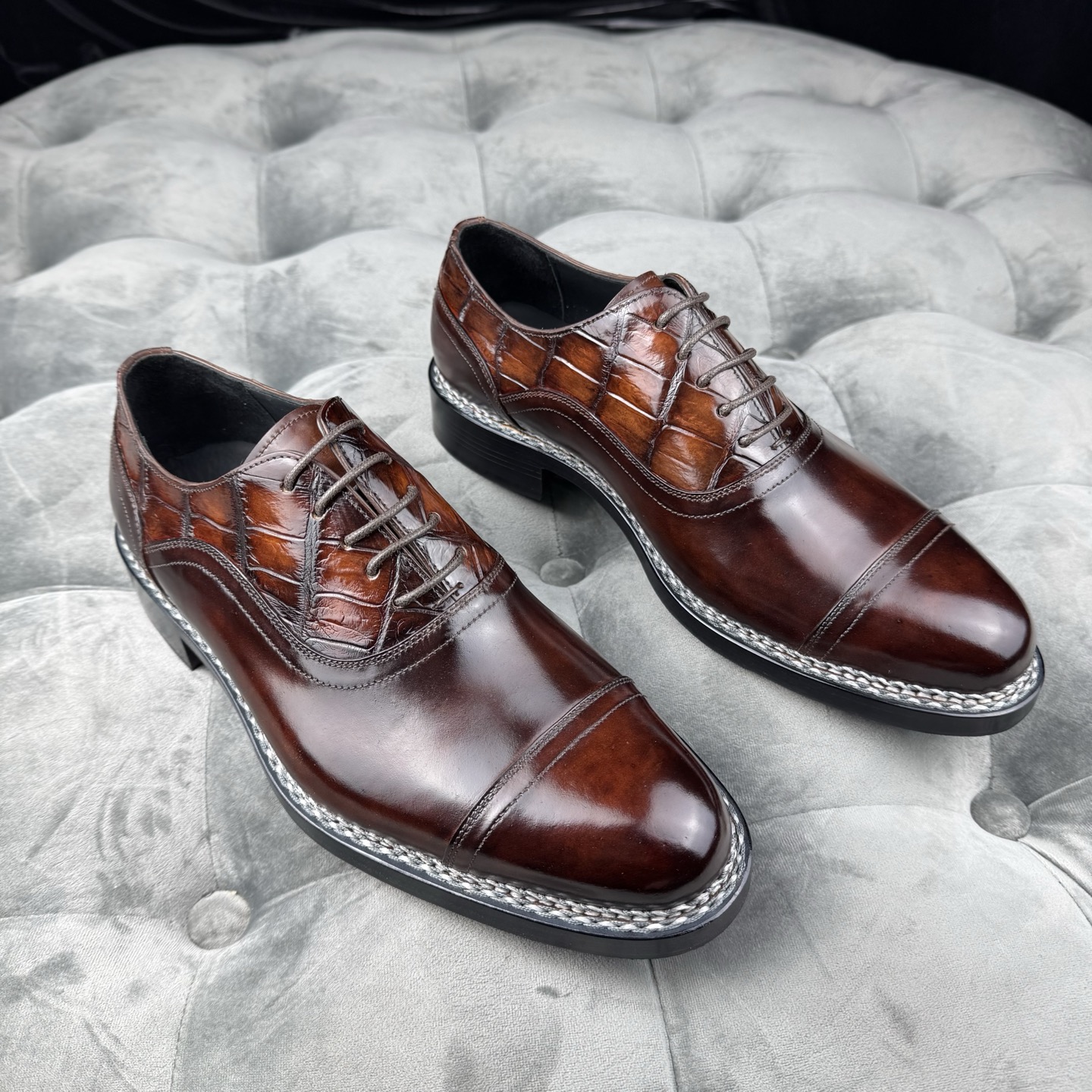
A reference image is a useful beginning, but it is not a production specification. To develop custom crocodile shoes without expensive misunderstandings, the buyer and supplier need to turn that image into a written brief covering the exact material, destination, shoe last and fit, panel placement, construction, finish, and approval rules. The physical sample and the written specification should be approved together; neither one is enough on its own.
That is the short answer. The rest of this guide shows what to decide, what to ask for, and what to check before a sample becomes a bulk order.
The current crocodile shoe styles can provide a visual starting point. Mark only the silhouette or surface details relevant to your project; do not infer internal construction or material identity from photographs.
Why “make this shoe” is not a complete instruction
Three photographs of a loafer—a side view, top view, and vamp close-up—may look detailed, but they leave key production decisions unresolved. They do not identify the original last, internal volume, reinforcement, construction, sole specification, accepted variation, or even whether the visible grain is crocodilian leather or an embossed alternative. Lighting can also change the apparent color and gloss.
Use only reference material that you have the right to share. Mark the design intent—a slimmer toe, a quieter finish, a broad central scale pattern, or a dressier sole—then convert it into measurements, material references, and approval points. Do not request third-party logos or exact copies without authorization.
Step 0: confirm the material and destination
Before design work, record either the proposed common and scientific species name or, for embossed material, the true base material. Crocodile, alligator, and caiman are not interchangeable. Before final sample approval, use the practical guide to choose alligator or crocodile before approving the sample. Requirements vary by species, source, origin, export or re-export country, product form, and destination. Check the current taxon record in Species+, then consult the CITES Management Authorities in the exporting and importing countries, plus any customs or wildlife authority responsible for stricter domestic controls, before payment or cutting; recheck documents before dispatch. The CITES documents checklist is a planning aid, not a transaction approval.
Choose the type of custom project
The word “custom” is used for several very different jobs. Clarifying which job you mean prevents both over-quoting and under-scoping.
| Project route | What is usually being changed | What the buyer must settle early | Main risk if left vague |
|---|---|---|---|
| Existing style with selected options | Color, finish, sole, lining, logo, or packaging on an established pattern | Which elements are fixed and which can change | Expecting a new shape from an existing pattern |
| Existing last with a new upper | Upper design is developed around an available last and construction | Last reference, size, width, pattern details, material placement | Approving the look without confirming fit |
| New last or fit development | Toe shape, volume, width, instep, heel hold, and grading may be developed | Fit target, measurements, wearer feedback, size range, testing plan | Treating remote measurements as a fit guarantee |
| Small-batch product development | A sample becomes the reference for a repeatable size run or assortment | Size range, quantities, tolerances, components, labels, packaging, QC | Assuming one attractive sample automatically scales to bulk |
For a personal pair, fit and appearance lead. For a small batch, repeatability matters just as much. The routes can share a design brief, but not an undefined approval standard.
Do not assume that a personal order, a fitting sample, or a low-volume commercial run is available at a fixed minimum. Material access, tooling, last work, component minimums, and documentation can change feasibility. Ask for a project review before treating any quantity, price, or delivery date as confirmed.
Turn the image into a written shoe specification
A practical specification does not need to be beautiful. It needs to stop two people from imagining different products while using the same words.
Start with the silhouette:
- shoe type: Oxford, derby, loafer, monk strap, boot, or another style;
- toe shape: round, almond, chisel, square, or a marked reference profile;
- heel height and visible heel shape;
- topline, throat, vamp, quarter, and counter proportions;
- fastening details, including eyelet count, buckle shape, or elastic placement;
- outsole edge, welt appearance, stitch color, and bottom finish.
Then define the parts a photograph cannot settle:
- last reference and intended fit;
- size and width for a personal pair, or the full size run for a batch;
- upper, lining, and sock materials; reinforcement; and toe-puff and heel-counter specifications;
- construction and outsole material;
- color standard and surface finish;
- authorized logo or brand artwork, including location, method, and size;
- packaging, labels, and any destination-specific marking questions.
If a dimension matters, mark the datum and measurement method on a drawing. Replace “make the vamp slightly shorter” with an agreed line or dimension after the pattern and last are reviewed; do not estimate dimensions from a photograph.
Build a panel map for the crocodile leather
Scale layout in crocodilian leather can make panel orientation visually important. A technically sound shoe can still miss the approved look if prominent panels use a different scale character or direction from the brief.
A panel map records placement priorities without assuming that every skin will match exactly.
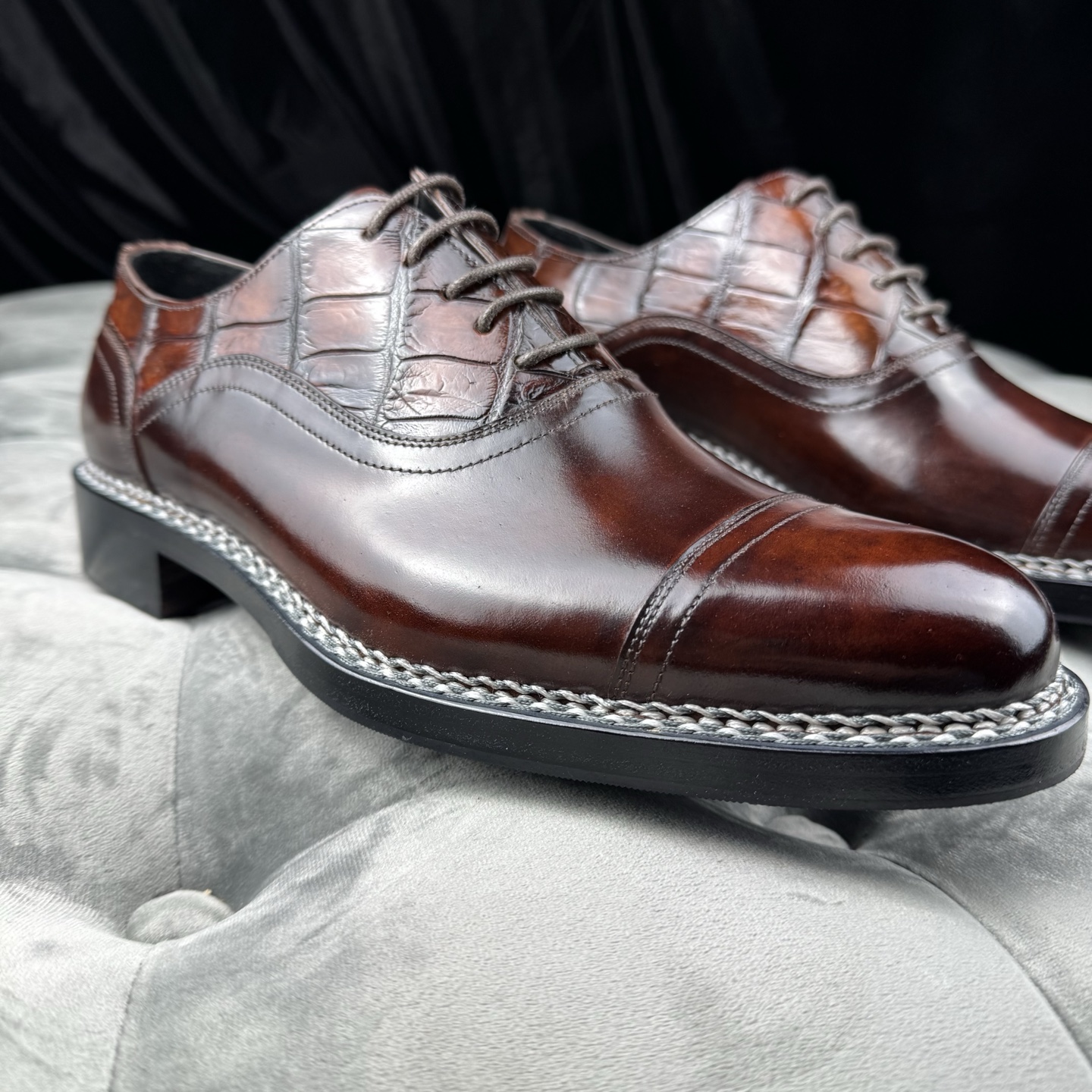
For a shoe, discuss at least these areas:
- Vamp: Is this the main visual panel? Should it have a calmer, broader appearance or a more pronounced texture?
- Toe: How should the pattern run as the leather curves over the last?
- Quarters: Should left and right sides feel closely related, or is more natural variation acceptable?
- Tongue or strap: Is it intended to blend with the vamp or act as a contrast?
- Back and heel area: What level of scale and color variation is acceptable here?
- Pairing: Which features should be visually balanced between the left and right shoe?
Terms such as belly, flank, and hornback can describe commercial cuts or visual zones, but they should not be turned into a universal quality ladder. The desired section depends on the species, the individual skin, the design, the panel size, and the effect the buyer wants. A strongly textured section may be perfect for one boot and completely wrong for a formal loafer.
Ask for a marked proposal before cutting when placement is commercially important. For a one-off pair, this may be a photograph of the available material with approximate pattern positions. For a repeat order, it should become a written rule that explains both the ideal and the acceptable range of natural variation.
Scale shape and repetition are screening clues, not species proof. ISO 17131:2020 can distinguish leather from non-leather but explicitly does not identify a particular leather type. Evaluate a species claim against the supplier’s declaration and available chain-of-custody and transaction records. If these conflict or remain insufficient for the risk, ask the competent wildlife authority or a specialist laboratory which identification method is appropriate for the processed material. Use the separate real-versus-embossed crocodile buyer guide when material identity is the main question.
Specify color and finish in conditions that can be repeated
“Dark brown, medium shine” sounds clear until four people view it on four screens.
Record the finish category—matte, satin, semi-gloss, or gloss—and use an agreed physical swatch or color standard where practical. If photographs are used, keep the lighting, background, and camera setup consistent and send unedited files; photographs are comparison aids, not calibrated proof of color. Record whether small tone differences are accepted or grounds for rejection.
Finish can change how strongly the pattern reads and how surface differences appear. Approve it on a swatch or sample with the intended finish, not an unrelated raw skin or old catalog image. Decide whether you want visible character or a quieter, more matched appearance. For a batch, define an inspectable range instead of demanding that every pair look identical.
Fit cannot be approved from the upper alone
The most beautiful crocodile leather will not rescue a shoe that pinches the toes or slips at the heel.
For a personal pair, measure both feet before last and fit confirmation, then provide the requested measurements using the supplier’s method and state any known fit issues: wide forefoot, high instep, narrow heel, orthotic use, or a preference for more toe room. A familiar size in another brand is helpful context, not a universal measurement. If the project includes a fit sample or try-on stage, define what can be changed afterwards and who is responsible for new shipping, alterations, or a remake.
For a small batch, approve the base size and grading plan separately. One good sample size does not prove every graded size. Record the market, size system, width, last code, critical measurements, and checking method. The shoe last, fit, and size-grading checklist covers those decisions in more detail.
Remote measurements can narrow the brief but cannot guarantee fit. The order agreement should state the measurement method, buyer inputs, fit-approval stage, and alteration, remake, return, and shipping responsibilities before work begins.
Use a crocodile-specific approval matrix
A comment such as “looks good” does not define acceptance criteria. Give the sample a dated ID, photograph it under consistent conditions, and record the approved features and permitted deviations in writing. Then keep each approval gate separate:
| Gate | Crocodile-specific evidence to retain | Decision before moving on |
|---|---|---|
| Sample approval | Declared common and scientific species name—or actual base material if embossed—material reference, panel map, left-right pairing photos, color and finish reference, accepted natural variation | Does this sample represent the intended look, and which points are still open? |
| Pre-production | Allocated material or lot reference, current panel plan, approved sample ID, written substitutions, document responsibilities | Is the available production input consistent with what was approved? |
| Bulk or in-line review | Comparison photos across more than one pair, panel placement, pairing, finish, and signs of material drift | Is production staying inside the approved appearance range while correction is possible? |
| Pre-shipment | Finished-pair comparison, recorded deviations, and the agreed material/document references | Do the finished goods match the approved reference, and have the responsible exporter and importer completed the separate document review required before dispatch? |
This matrix covers the material-specific questions. Use the full shoe sample approval checklist for fit, construction, branding, measurements, and packaging, and the pre-shipment inspection checklist for shipment-level controls.
Approval covers only the recorded criteria. It does not establish that bulk uses the same material allocation, that every size fits, that all route-specific permissions have been obtained, or that production is defect-free. It creates a dated reference for later checks.
Feasibility variables to confirm
Material allocation and panel yield, last or tooling work, components, size range, quantity, testing, destination requirements, and sample revisions can all change feasibility. Ask the supplier to state the quote basis and every assumption that remains conditional. If a number changes, the changed specification should be visible. For a fuller cost discussion, use the crocodile shoes and bags price guide.
Email-ready custom crocodile shoe brief
Copy this into an inquiry and delete anything that does not apply:
Subject: Feasibility review — custom crocodile shoe project
I am requesting a feasibility review for: [one personal pair / sample for a possible small batch].
Product type: [Oxford / derby / loafer / boot / other]
Reference files: [files I own or am authorized to use; mark the features and design intent rather than requesting an unauthorized copy]
Material requested: [exact material if known; please confirm common and scientific species name if genuine crocodilian leather is proposed]
Source/origin and documentation questions: [what must be confirmed before payment or cutting]
Destination country: [country, plus state/province where relevant]
Color and finish: [reference plus matte/satin/gloss direction]
Panel priorities: [vamp/toe/quarters/strap; desired scale direction and acceptable natural variation]
Size and fit: [size system, length/width information, known fit issues, or proposed size run]
Construction and sole: [known requirement or request for options]
Authorized branding, lining, hardware, labels, and packaging: [details]
Quantity range: [personal pair or estimated batch by size]
Sample approval needed: [fit / material / color / panel map / packaging / other]
Please identify missing information, what can be verified before sampling, the proposed approval stages, project-specific minimums, and which costs or timelines remain conditional.
This format gives the supplier enough context to identify missing inputs and conditional assumptions before quoting.
What to send for a useful feasibility review
Send reference images with notes; shoe type and use; personal fit information or a size run; the material request; color and finish; panel priorities; construction, sole, lining, and hardware direction; branding and packaging; quantity range; destination; and any compliance, testing, or inspection questions that must be resolved before approval.
If some answers are unknown, say so. “Please propose two constructions and explain the trade-off” is far better than choosing a technical term you do not mean.
Choose the inquiry type explicitly:
- One personal pair: request a feasibility review and put
Personal-pair feasibilityin the subject line. Include fit information and ask whether a try-on or fit-sample stage is available, what can be changed afterward, and who bears alteration, remake, and shipping costs. - Small-batch development: request a development review and put
Small-batch developmentin the subject line. Include the proposed size run, quantity range, repeat-order needs, and bulk inspection questions.
These labels express the request; they do not promise availability. Minimums, price, timing, and shipment eligibility must be confirmed for the actual project.
The decision to make before you pay
Ask whether the supplier can turn the authorized design reference into a written specification, sample record, and inspection criteria—not merely whether the image can be reproduced.
Before payment, confirm the exact material claim and destination requirements. Then document fit, panel priorities, the approved sample, permitted deviations, and the separate pre-production, bulk, and pre-shipment checks.
Natural crocodilian leather varies within and between skins. The specification should define which variations are acceptable and which count as deviations from the approved reference.
Fact-checking sources
- CITES Species+ database and national authorities directory — current species information and contacts for route-specific advice and permit applications.
- ISO 17131:2020 — microscopy can distinguish leather from other materials but is not intended to identify a specific leather species.
- 16 CFR § 24.2(b), FTC Leather Guides — when leather is embossed or processed to simulate a different leather type, disclose the actual leather type.