
Shoe Last Development: A Buyer's Fit and Size Grading Checklist
Part of: Private Label Shoe Manufacturing
A shoe last is ready for bulk production only after the buyer has approved both the base-size fit and the way the fit behaves across the intended size range. The last is the three-dimensional form around which a shoe is made. It influences internal space, toe shape, heel hold, flex position, stance, and how the upper meets the sole.
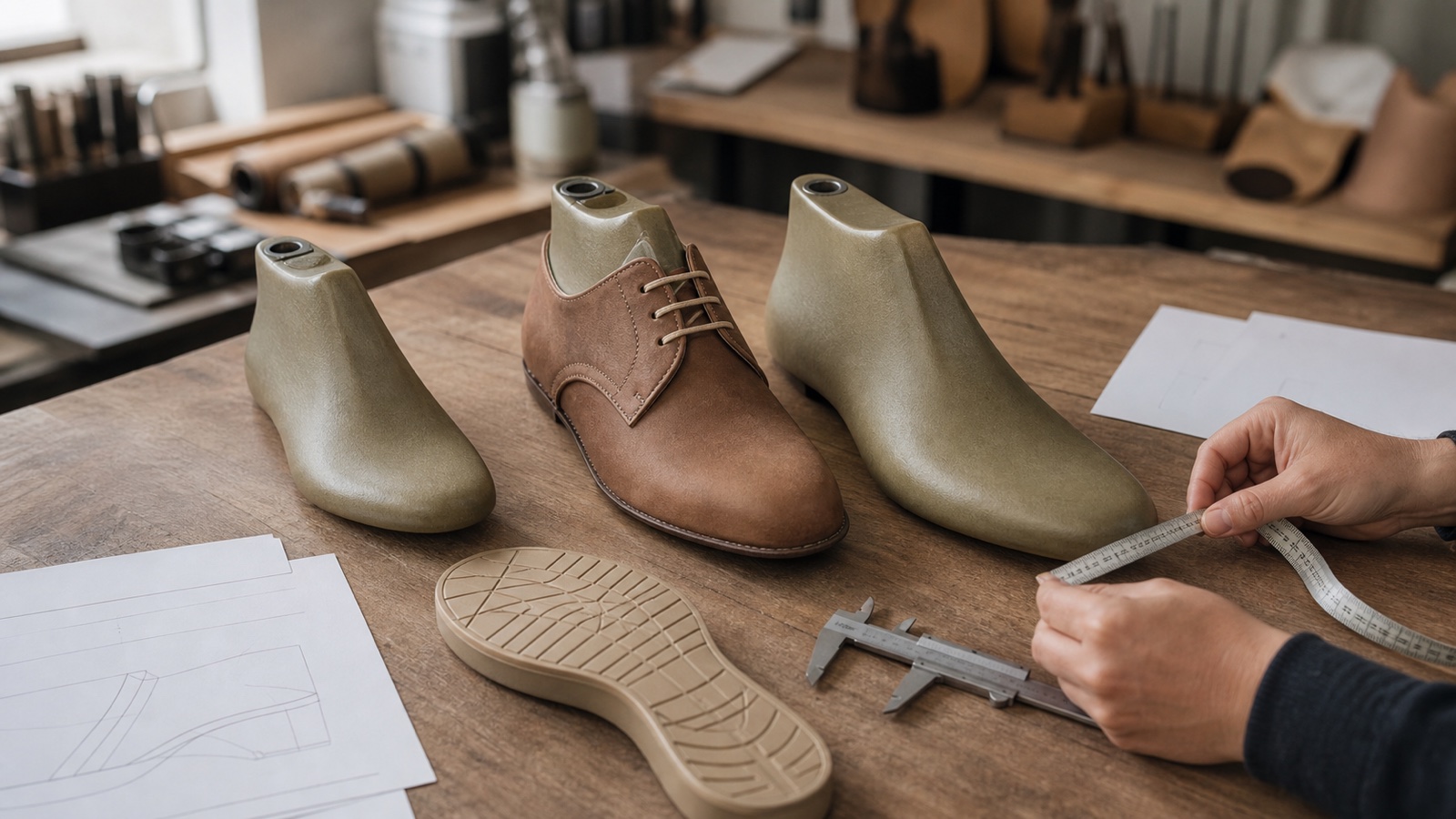
This is why a familiar size number cannot rescue the wrong last. Two shoes marked with the same size can feel different because their lasts, widths, upper allowances, padding, sockliners, and constructions are different. A conversion chart can help with labeling, but it does not prove fit.
This guide gives private label and wholesale footwear buyers a practical approval process. It was checked against current ISO sizing publications and SATRA guidance on July 16, 2026. It does not replace a footwear technician, fit specialist, or testing plan for the actual product.
What are you approving when you approve a shoe last?
You are not approving an attractive piece of plastic or wood in isolation. You are approving a repeatable fit platform for a particular consumer, category, construction, and size range. The evidence should connect the last to a real fitting sample.
| Approval area | Buyer decision | Useful evidence |
|---|---|---|
| Target fit | Who will wear the shoe, for what use, with which sock and width strategy? | Fit brief, target foot measurements, reference shoe, tester profile |
| Base-size last | Are length, girth, instep, heel, toe shape and bottom profile suitable? | Last measurement sheet, left-right comparison, sole or bottom check |
| Fitting sample | Does the complete shoe hold and flex correctly without unwanted pressure? | Wear notes, photographs, marked pressure areas, sample revision record |
| Size grading | Do representative smaller and larger sizes retain the intended fit and proportions? | Graded last measurements, size-set samples, pattern and sole alignment checks |
| Repeatability | Can the same approved platform be identified and reused? | Last codes, revision, ownership terms, storage record, approved sample ID |
Choose an existing last, modify one, or develop a new last
An existing factory last can be the sensible starting point when its category, bottom shape, heel height, size range, and target fit are close to the brief. It can shorten development because patterns and compatible sole options may already exist. Ask to see a finished reference shoe made on that exact last, not only a last catalogue image.
A modified last is useful when the basic platform works but the toe character, instep volume, width, heel hold, or bottom needs controlled adjustment. Record every change against a revision. Informal instructions such as “make it more comfortable” are difficult to reproduce; a marked fit note and agreed measurement are much clearer.
A new last makes sense when the brand needs a distinct fit platform or when no available last supports the product. That decision can affect patterns, sole tooling, fitting rounds, graded sizes, and ownership of digital or physical last assets. Confirm those dependencies before approving the development route. Do not assume that paying for a sample automatically transfers ownership of a custom last or its files.
Start with a fit brief before measuring the last
The factory needs more than a sketch. Define the target consumer, selling region, gender or unisex strategy, size system, base size, full size range, width plan, intended use, typical sock, and any fit promise the brand makes. A structured shoe tech pack checklist helps keep these inputs with the construction details.
For a personal-pair brief, use the remote foot measurement guide for custom shoes before last and fit review. Record both feet, the requested size system, forefoot width, instep or heel notes, usual-brand size and any known fit issue. These details support a fit discussion; they do not replace an approved fitting sample.
Also state the upper type, lining, padding, toe reinforcement, sockliner thickness, lasting method, heel height, and sole direction. A padded sneaker, unlined loafer, formal Oxford, and work boot can require different internal volume even when the label shows the same nominal size.
A reference shoe is valuable only when the brief says what to keep and what to change. Record whether the reference feels right in length, ball width, instep, heel grip, toe room, flex, and underfoot support. Note its condition and sockliner. A worn shoe or a replacement insole can mislead the development team.
A seven-gate shoe last development workflow
1. Freeze the base-size brief
Choose the base size used for pattern and fitting development. Name the size system rather than writing a number alone. Record the target width and the fit testers who represent the intended consumer. If the product is unisex, decide whether one width and grade truly serves the range or whether separate platforms are needed.
2. Measure and identify the last
ISO 19409:2022 specifies ways to measure basic last dimensions on a physical last or a digital 3D model. It also cautions that last dimensions do not necessarily correspond with anatomical foot positions and dimensions. In practical terms, a last sheet is a control record, not a promise of comfort by itself.
Ask the developer to identify left and right lasts, size, width, revision, heel height or pitch, toe spring, key girths, length reference, and bottom or sole reference. The exact measurement method should stay consistent across revisions.
3. Check the last, upper, sockliner, and sole as one system
A last may look correct and still fail when the upper pattern, padding, strobel board, insole, or outsole is added. Check whether the sole sits squarely, the feather edge follows the bottom, the flex area makes sense, and the upper can be lasted without distorting key design lines.
For a private label sneaker, the custom sneaker development guide shows how the last decision connects to upper materials, cushioning, outsole construction, logos, and testing.
4. Fit a production-representative base-size sample
Use the intended upper material, lining, padding, sockliner, closure, and sole wherever possible. During fitting, check standing and walking, heel movement, instep pressure, toe clearance, ball position, flex, collar contact, tongue movement, and left-right balance. Separate comfort observations from cosmetic corrections so the factory knows what must change.
Use more than one suitable tester when the target market is broader than one person's foot. Record tester foot length and relevant width or girth information, socks, time worn, and exact pressure or looseness locations. “Size 42 feels bad” is not a corrective instruction.
5. Correct the cause, then refit
Decide whether a problem comes from the last, upper pattern, material, reinforcement, padding, sockliner, sole, or assembly. Adding a thicker sockliner to hide excess volume can change heel hold and toe clearance. Stretching the upper may hide a pressure point without fixing the next production batch.
Approve the revised physical sample and update the controlled measurement or pattern record. The shoe sample approval workflow is useful for separating must-fix fit issues from finish comments and optional preferences.
6. Grade the range and validate representative sizes
Size grading is not simply enlarging every dimension by the same percentage. Length, girth, bottom shape, pattern lines, hardware position, collar height, and sole components have to remain coherent. Review at least a representative size toward the small end and another toward the large end, in addition to the approved base size. Add more checkpoints when the range is wide or the construction is sensitive.
Check whether toe shape becomes bulky, the heel becomes loose, the vamp breaks in the wrong place, decorative lines drift, or the upper no longer aligns with the graded sole. A size-set review is especially important for slip-on shoes. Buyers comparing a laceless construction can also inspect the wholesale loafer category while preparing a focused fit brief.
7. Freeze production identifiers and ownership
The release record should identify the last family, base size, size and width range, left and right, revision date, matching sole or mould code, approved pattern, approved fitting sample, and any production tolerances the technical team has defined. Record who owns the physical lasts and digital data, where they are stored, who may use them, and what happens if the factory relationship changes.
Why a shoe size conversion chart is not a fit specification
ISO 19407:2023 provides conversion tables covering major systems and bases them on foot length. The ISO summary also describes the adult tables as guidance because the systems developed and have been interpreted differently. A buyer can use a recognized conversion reference to plan labeling, but still needs an approved fit for the brand's actual product.
ISO 19410-1:2022 addresses measurement of effective shoe length for accommodating the foot and excludes open-heel and open-toe shoes from its scope. This distinction matters: the last length, effective space inside a finished closed shoe, and printed size are related controls, not interchangeable numbers.
Common mistakes that create fit problems in bulk
- Choosing a last from its toe shape without reviewing a finished shoe or fit evidence.
- Writing only “US 9” or “EU 42” without naming the width, target consumer, base-size logic, and conversion reference.
- Changing padding, lining, sockliner, reinforcement, or upper material after fit approval.
- Approving the base size and releasing all graded sizes without representative size-set checks.
- Using one fit tester whose foot does not represent the intended consumer.
- Correcting every pressure point by changing the last when the pattern or component is the cause.
- Failing to link the last revision to the matching pattern, sole, and signed fitting sample.
- Leaving ownership, storage, maintenance, and transfer of last assets undefined.
SATRA's overview of measuring feet, lasts, and footwear is a useful reminder that finished fit depends on the user's foot, the last, the product design, upper materials, pattern, and shoemaking processes. A last number alone cannot control all of those variables.
Buyer checklist before releasing a last set
- Target consumer, market, use, sock, size system, width, base size, and full range are written.
- The reference shoe or foot data is identified, with clear keep-and-change notes.
- Every physical or digital last has a family code, size, width, side, and revision.
- The base-size fitting sample uses production-representative components.
- Fit comments identify location, movement, tester, sock, and required correction.
- The sole, upper pattern, sockliner, and last revisions match.
- Representative small and large sizes have been checked for fit and appearance.
- The approved measurement sheet, fitting sample, photographs, and decision record are stored together.
- Ownership, permitted use, storage, maintenance, and transfer terms are documented.
What to send a shoe manufacturer
Send the shoe category, target consumer, destination market, size and width range, base size, reference fit, intended sock, upper and lining materials, padding, sockliner, construction, heel height, outsole direction, fit priorities, logo and packaging needs, expected quantity, and current sample status. If you already have a last, include its code, measurements, revision, ownership status, and one finished reference shoe if available.
For a production-focused discussion with Marcusius, use the contact form for the initial brief. If the project has drawings, last sheets, fit notes, sole files, or several sample revisions, open a thread in the Buyer Portal so the approved files stay attached to the same sourcing conversation.