
Shoe Outsole Materials Explained: Rubber, EVA, TPR, TPU and PU
Part of: Private Label Shoe Manufacturing
A buyer writes "rubber sole" in a tech pack and expects the decision is finished. Then the sample arrives heavier than expected, the tread feels too stiff, and the factory explains that the outsole is, in fact, rubber. Nobody necessarily lied. The brief was simply not specific enough.
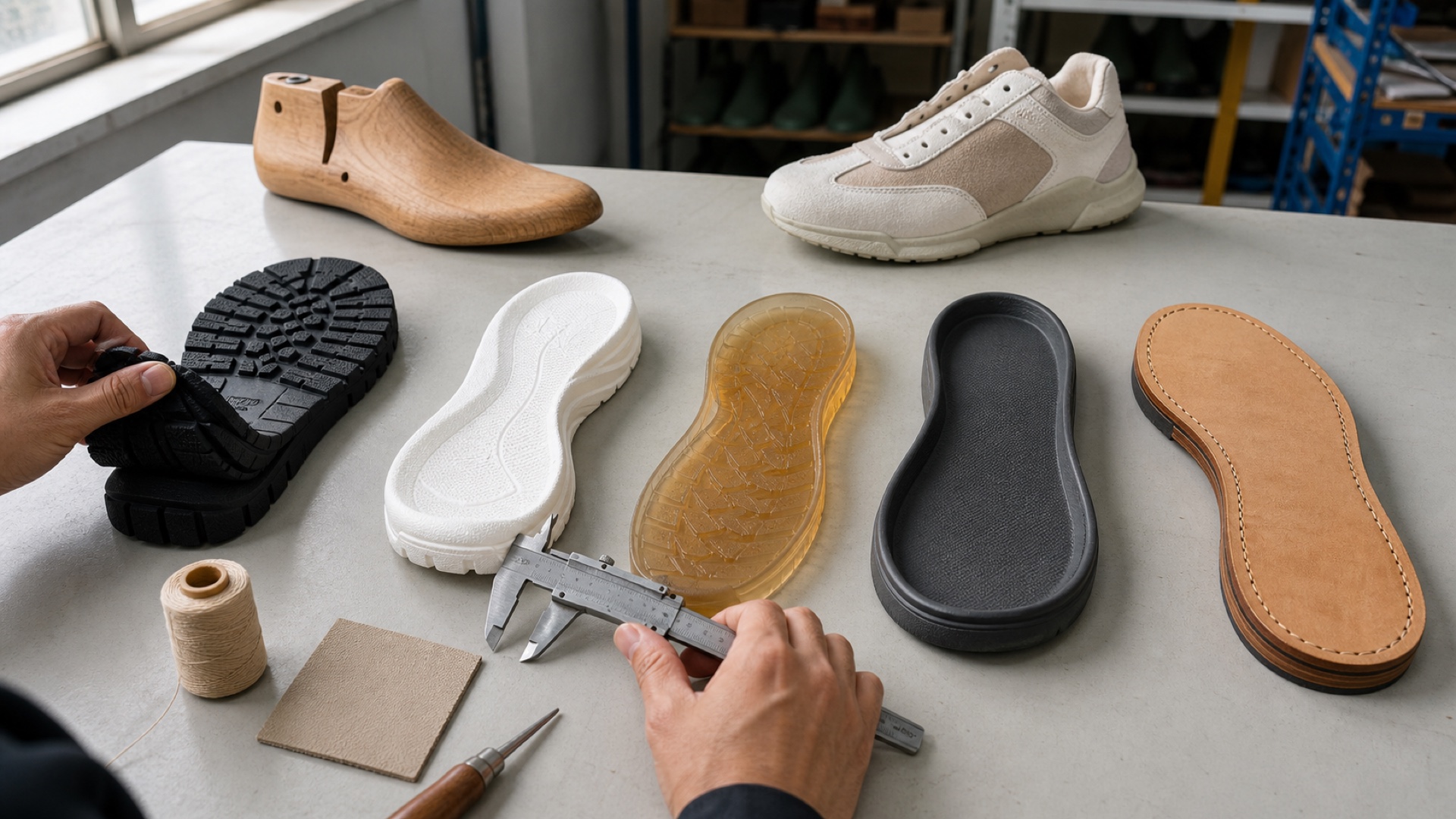
Shoe outsole materials are often reduced to a list of names: rubber, EVA, TPR, TPU, PU, leather, maybe PVC. In production, the material name is only the beginning. Compound, density, hardness, thickness, tread, mold, bonding method, and the shoe's real use all change the result.
This guide is for footwear buyers who need to choose a sole for a new sample, compare factory suggestions, or write a clearer private label inquiry. It will not tell you that one material is always best, because that is rarely true. It will help you ask better questions before you pay for a mold or approve bulk production.
First: midsole and outsole are not the same thing
This sounds obvious inside a factory, but it causes a surprising number of confused quotations.
- Midsole: the layer mainly responsible for cushioning, support, step feel, and sometimes stability.
- Outsole: the ground-contact layer mainly responsible for wear, traction, tread, and protection.
- Unit sole: a single molded bottom that may combine the visual and functional jobs of several layers.
EVA is widely used for cushioning, so buyers often see it in a midsole. Rubber is commonly used on ground-contact wear zones. But a lightweight casual shoe may use a one-piece EVA bottom, while a dress shoe may use leather with a rubber forepart or heel piece. The right language is not just "EVA sole" or "rubber sole." It is the location, construction, and job of each component.
The existing guide to EVA in shoes explains midsoles, footbeds, and one-piece EVA units in more detail. This article stays focused on how buyers compare the whole bottom package.
Shoe sole material comparison for buyers
| Material | Useful strengths | What buyers should check | Common directions |
|---|---|---|---|
| Rubber | Ground-contact wear, tread options, grip potential, familiar processing | Compound, weight, odor, abrasion, slip claim, color, bonding | Sneakers, work shoes, outdoor shoes, dress-shoe inserts |
| EVA | Low weight, cushioning, flexible shaping, comfort | Density, hardness, compression, exposed wear areas, shrinkage, color | Midsoles, slippers, sandals, lightweight unit soles |
| TPR | Rubber-like feel with thermoplastic molding, flexible styling | Cold flex if relevant, abrasion, weight, surface finish, bonding | Casual shoes, fashion shoes, boots, cupsole-style bottoms |
| TPU | Mechanical strength, abrasion resistance, thin or detailed parts, transparency options | Hardness, flex point, noise, grip requirement, tooling, bonding | Outsoles, heel parts, support pieces, sports and outdoor details |
| PU | Comfort, flexibility, lightweight soling options, direct-injection possibilities | Formulation, density, aging, hydrolysis risk, surface, bond strength | Casual, comfort, safety, work and direct-injected footwear |
| Leather | Traditional dress-shoe appearance, refined profile, repairable constructions | Thickness, grade, wet traction, wear zone, edge finish, rubber insert | Dress shoes, Goodyear welt shoes, formal loafers and boots |
The table is a starting point, not a purchase order. A well-developed rubber compound can behave very differently from a cheap one. EVA density changes weight and step feel. TPU covers a wide hardness range. PU performance depends heavily on formulation and aging conditions. Ask for the actual production specification and test plan, not only the family name.
Rubber outsole: familiar, but not one fixed material
Rubber is common because it can be compounded for different levels of flexibility, wear, color, and traction. It works well as a full outsole or as smaller wear pieces under an EVA midsole.
The tradeoff is often weight and cost compared with a foam component. A deep lugged rubber outsole can also change how the shoe flexes. When a factory offers "rubber," ask whether it is solid or blown, what tread and thickness are planned, and whether the sample uses the same compound as bulk production.
Do not approve a slip claim from a hand rub on a showroom floor. Tread geometry, compound, surface, water, oil, temperature, and test method all matter. If the product will carry a performance claim, agree on a proper laboratory method and acceptance requirement.
EVA sole: light and comfortable, with a job to define
EVA is useful when weight and cushioning matter. It may be molded as a midsole, used in a footbed, or made into a one-piece bottom for slippers and casual footwear. The practical buyer question is whether EVA will touch the ground everywhere or whether rubber pieces will protect high-wear zones.
An EVA bottom that feels soft in the hand is not automatically better. Very soft foam can change stability, compression, edge definition, and long-term appearance. Ask for the target density, hardness, finished component weight, and the approved sample itself. If the factory changes the foam formula after sampling, the shoe may feel different even when the mold is unchanged.
TPR sole: a practical molded option for casual footwear
TPR means thermoplastic rubber. It is often chosen for flexible molded bottoms in casual shoes, fashion footwear, and some boots. It can offer a rubber-like feel while using thermoplastic processing, which supports repeatable molding and many surface effects.
Buyers should check more than the top view. Bend the forefoot, look at the sidewall, inspect the parting line, and check whether the sole returns cleanly after flexing. For products sold into cold conditions, discuss the relevant low-temperature flex requirement. Performance varies by formulation, so do not treat all TPR as the same grade.
TPU outsole: strong detail and design freedom
TPU, or thermoplastic polyurethane, is used in outsoles, heel parts, support pieces, transparent components, and sports-shoe structures. Material suppliers describe TPU as useful for mechanical strength and abrasion resistance across a broad hardness range.
That range is exactly why a buyer needs a clear sample. A hard TPU piece may support the shoe well but feel wrong at a forefoot flex point. A translucent outsole may look excellent but need careful discussion about color, surface marks, grip, and bonding. Ask where TPU is used, what hardness direction is intended, and whether it is a full outsole or one component in a combined sole.
PU shoe sole: comfort and formulation matter
PU, or polyurethane, can be used for lightweight and flexible soling, including direct-injected constructions. It is common in comfort, casual, safety, and work footwear. It can be a sensible solution when the factory already has the right process and formulation for the shoe.
A buyer should ask about density, aging, storage, surface quality, and hydrolysis testing when relevant to the market and expected product life. This is especially important for shoes that may sit in warehouses or be used in warm, humid conditions. Do not rely on a generic statement that "PU is durable." Ask what the supplier will test for this exact construction.
Leather outsole: still useful for the right dress shoe
A leather outsole gives a traditional profile and is closely associated with formal and welted footwear. It can be finished cleanly, repaired in suitable constructions, and paired with a rubber heel or forepart for added wear and traction.
It is not the automatic choice for every customer or climate. Buyers should discuss thickness, leather grade, edge finish, channel work, wet-surface expectations, and whether a rubber insert is needed. For this route, the Goodyear shoes category and the Goodyear welt buyer checklist show how outsole choice connects with construction and sample approval.
Which shoe outsole material is best?
The honest answer begins with the shoe.
- Lightweight sneaker: an EVA midsole with rubber wear pieces is a useful starting direction, but weight, cushion, tread, and bonding still need a sample.
- Rubber cupsole sneaker: an existing rubber or TPR cupsole may reduce mold work for a first order.
- Dress shoe: leather, rubber, TPR, or a combination can work depending on profile, climate, price position, and repair expectations.
- Slipper or sandal: EVA, PU, TPR, and rubber combinations can serve different weight, comfort, and wear targets.
- Work or outdoor shoe: choose the construction around the actual safety, traction, abrasion, chemical, temperature, and environment claims.
For upper and lining choices as well, use the broader sneaker materials guide. For work shoes, the shoe material durability guide covers how upper and sole materials work together.
Seven details to send before asking for a sole quote
- Shoe type and use: sneaker, dress shoe, slipper, work shoe, outdoor shoe, or another clear category.
- Reference: side, bottom, heel, toe, and flex-area photos, plus notes on what should change.
- Construction: cupsole, cemented unit, EVA plus rubber, leather welted sole, direct injection, or an open question for the factory.
- Size range: including half sizes, wide fit, or special grading needs.
- Performance priorities: weight, cushion, abrasion, wet grip, flexibility, cold use, appearance, or price target.
- Design details: colors, logo, transparency, tread, sidewall texture, stitching groove, and finish.
- Commercial details: first order quantity, color split, destination country, claims, test requirements, sample deadline, and bulk delivery window.
These details let the manufacturer check existing molds before discussing new tooling. They also make MOQ and lead-time answers more useful. A sole available in the right style but not the right size run is not really available for your project.
Existing sole or custom mold?
For a first order, an existing sole can save time and tooling cost. The buyer still needs to confirm size coverage, last compatibility, color options, logo limitations, and whether the mold can be used for the expected quantity.
A custom mold makes sense when the sole shape, tread, logo, dimensions, or performance package is central to the product. Before paying, write down who owns the mold, which sizes are included, how size grading works, whether color trials are included, what happens after a failed sample, and how the mold will be stored.
Put those points in the shoe tech pack. A photo in a chat thread is not enough protection for a tooling decision.
Eight checks for the first outsole sample
- Confirm the finished component and pair weight, not only the raw material name.
- Measure outsole length, forefoot width, heel width, thickness, and key attachment dimensions.
- Check forefoot flex and whether the flex point matches the shoe and last.
- Inspect tread, surface texture, color, logo, parting line, trimming, and left-right consistency.
- Place the shoe on a flat surface and check rocking, twisting, heel balance, and toe spring.
- Review the bond line, primer marks, open edges, glue overflow, and the joint between different materials.
- Wear-test the sample in the intended setting and record comments instead of relying on memory.
- Confirm that the approved sample compound, hardness, color, and construction will be used in bulk.
The shoe sample approval checklist helps turn these observations into a written approval record.
Testing: choose the claim before the method
Common discussions include slip resistance, abrasion, flexing, upper-to-sole bond strength, and hydrolysis or aging for relevant PU constructions. The required method and pass value should come from the product claim, destination market, buyer standard, and intended use.
For example, SATRA TM144 evaluates footwear friction under defined walking phases, floor types, and contaminants. That is more meaningful than rubbing a sole by hand and calling it non-slip. BASF's footwear material information also explains the general distinction between EVA cushioning and TPU abrasion resistance, while Dow's footwear materials overview discusses EVA-based foam blends and PU soling options.
These references are useful starting points, not a substitute for the buyer's own standard or an accredited laboratory. Never put a performance claim on packaging simply because the material family sounds suitable.
A practical first message to a shoe factory
Hello, we are developing a private label low-top casual sneaker for the EU market. We want a lightweight cushioned bottom with rubber wear areas, but we are open to an existing EVA-rubber unit if the shape is close. Sizes are EU 36-46, first order target is 500 pairs in two colors, and the outsole should have our side logo and a simple city-walking tread. Please advise available molds, component material, finished sole weight, size coverage, logo options, sample cost, MOQ, tooling if needed, sample time, and what slip or abrasion tests you recommend for this use.
This message gives the factory room to recommend a workable construction without leaving every decision open.
Final outsole material checklist
- The outsole and midsole jobs are described separately.
- The material specification includes construction, location, compound or grade direction, hardness or density direction, color, and finish.
- The existing mold, size range, last match, logo limits, and ownership terms are confirmed.
- The sample records finished weight, measurements, flex, tread, balance, bonding, and appearance.
- Bulk production will use the approved compound and construction.
- Testing matches the product claim, destination market, and real use.
- MOQ, color split, tooling, sample time, and packaging are written into the quote.
Good outsole development is not about choosing the most impressive material name. It is about matching the bottom to the shoe, the customer, and the way the product will actually be used.
To discuss a project, send the shoe type, reference images, size range, material direction, quantity, destination, logo, testing needs, and sample deadline through the contact form. For an active development project with drawings or sample comments, use the Buyer Portal so files and replies stay together.
Buyer FAQ
Shoe Outsole Materials FAQ
What is the best shoe outsole material?
There is no single best outsole material. Rubber, EVA, TPR, TPU, PU and leather serve different needs for weight, cushioning, wear, traction, flexibility, appearance, construction and price. Start with the shoe type and intended use, then compare real samples and the required tests.
What is the difference between an EVA midsole and a rubber outsole?
An EVA midsole is commonly used for lightweight cushioning and step comfort, while a rubber outsole is commonly used on ground-contact areas for tread and wear. Many shoes combine the two, but density, compound, thickness, bonding and intended use still need sample approval.
How are TPR and TPU shoe soles different?
TPR is often chosen for flexible rubber-like molded bottoms in casual and fashion footwear. TPU is often chosen for mechanical strength, abrasion resistance, detailed or translucent parts, and a broad hardness range. The correct choice depends on formulation, construction, flex point, grip requirement, tooling and the approved sample.
What information should I send a factory for a shoe sole quote?
Send the shoe type, intended use, outsole reference photos, construction direction, size range, last information, material preference, colors, logo, tread, target quantity, destination country, performance claims, testing needs, sample deadline and whether an existing sole is acceptable.
Shoe Materials FAQ
What does EVA stand for in shoes?
EVA stands for ethylene-vinyl acetate, a closed-cell foam used in footwear for midsoles, footbeds, insoles and other cushioning parts. It is chosen because it is light, absorbs impact and can be molded into shaped soles. It resists abrasion poorly, which is why an EVA midsole almost always sits above a rubber outsole that meets the ground.
Is an EVA midsole good?
It is the industry standard for good reasons — light, cushioned and mouldable — but the material name alone says nothing about quality, since shoes at every price point use it. What differs is the specification: density, thickness and molding route. Higher-density EVA feels firmer at first and keeps its cushioning far longer, while very soft low-density foam feels plush in the shop and flattens fastest.
How long does an EVA midsole last?
There is no fixed figure — it depends on foam density, the wearer's weight, walking surfaces and how often the shoes get a rest day. The failure mode is predictable: the foam gradually takes a permanent set and stops springing back, showing as creasing along the midsole sidewall and often a lean toward the outer heel while the tread still looks fine. Rotating between two pairs meaningfully extends the life of both, and compressed foam cannot be restored.
What is the difference between an EVA midsole and an EVA footbed?
Position within the sole. The midsole is the thick structural foam layer between the insole and the outsole, providing most of the shoe's cushioning and stack height. The footbed — also called the insole or sock liner — is the thin layer the foot rests directly on and is usually removable. Both are commonly made of EVA, but the midsole does the real cushioning work.
Is rubber a durable material for shoes?
For the outsole, rubber is the most durable material in common use — abrasion resistance is the specific failure the ground causes, and nothing standard beats rubber there. It is a poor cushioning material because a rubber layer thick enough to cushion would be far too heavy, which is why shoes pair a thin rubber outsole with a foam midsole. Harder rubber compounds last longer but grip less, while softer compounds grip better and wear faster.
What is the most durable shoe material overall?
There is no single winner, because durability is position-specific. Rubber wins the outsole, full-grain leather wins the upper over the long term because it can be restored rather than only resisting damage, PU outlasts EVA in the midsole, and leather lining outlasts synthetic textile at the heel. The most durable shoe is one using the right material in each position and built so worn parts can be replaced.
Which shoe material lasts longest for work shoes?
For all-day work wear, the lasting combination is a full-grain leather upper, a rubber outsole, a PU midsole rather than EVA, and a leather lining at the heel. PU is the key difference from athletic footwear: it is heavier than EVA but keeps its cushioning far longer, which matters more than initial softness when shoes are worn eight hours a day over a year or more.