Custom Sneaker Manufacturer in China: A Practical Buyer Guide
Part of: Private Label Shoe Manufacturing
A custom sneaker project does not usually go wrong because the idea is bad. It goes wrong because the early details are too loose: a few reference photos, no clear outsole decision, no size range, no packaging plan, and a deadline that sounds more hopeful than real.
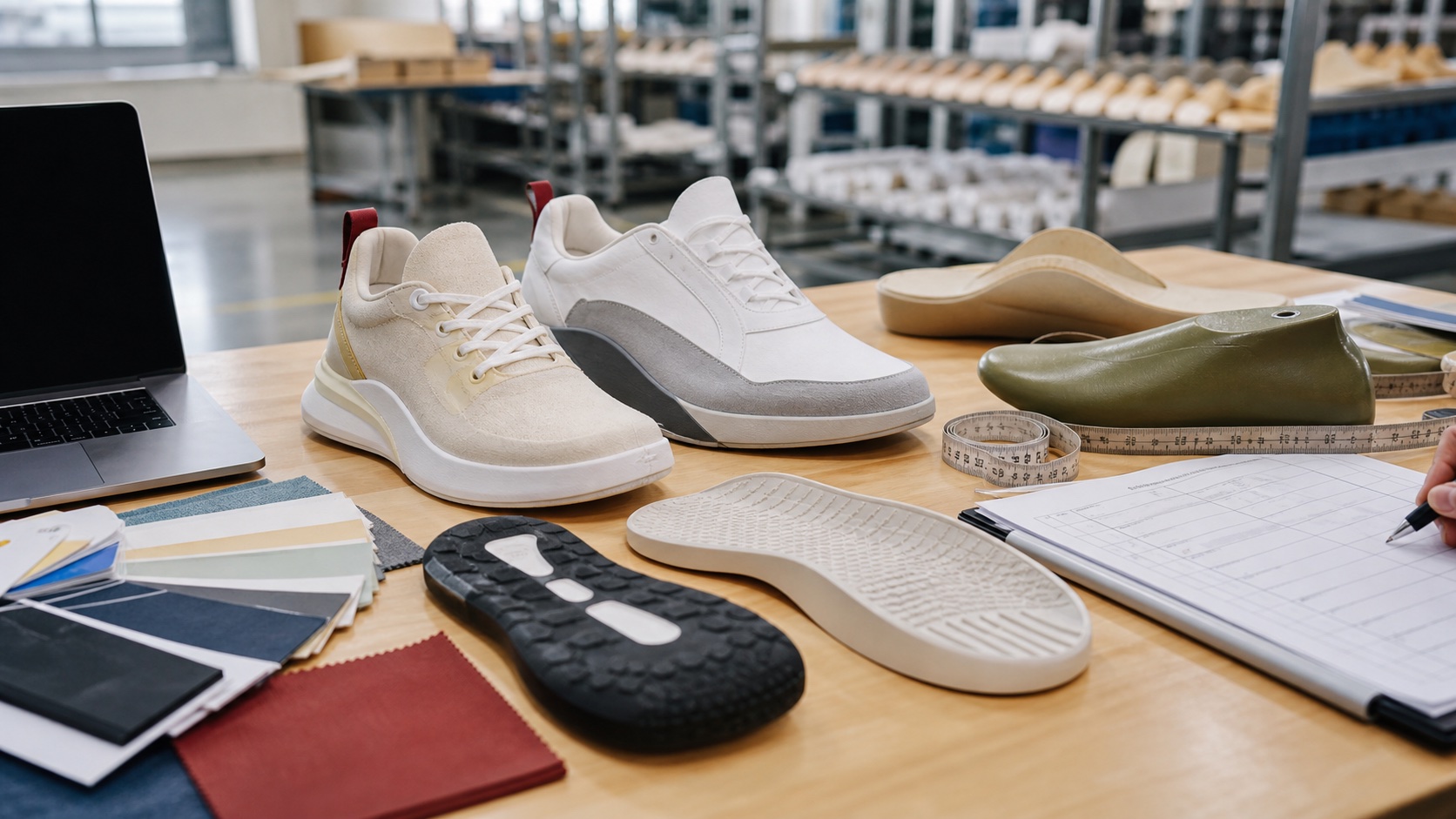
This guide is for buyers who want to work with a custom sneaker manufacturer in China and need a reply that is more useful than "please send more details." It is written from the practical side of the conversation: what a factory needs to know, what a buyer should ask, and how to avoid a sample that looks nice in one photo but fails in real production.
First, be clear about the kind of sneaker you want
"Sneaker" can mean too many things. A fashion leather sneaker, a lightweight trainer, a vulcanized canvas shoe, a platform sneaker, and an exotic leather casual sneaker all sit in different production lanes. Before asking for price, name the direction as plainly as possible.
- Low-top, high-top, slip-on, trainer, court-style, running-inspired, casual leather, or fashion sneaker.
- Men's, women's, unisex, kids, or wide-fit market.
- Target sales channel: boutique retail, wholesale, Amazon, uniform program, pop-up brand, or private label collection.
- First order goal: sample only, small test order, or repeat wholesale plan.
This sounds basic, but it changes the reply. A buyer asking for a leather fashion sneaker should not receive the same production suggestion as a buyer asking for a lightweight trainer.
The eight details that make a sneaker inquiry easier to quote
You do not need a perfect factory tech pack on day one. But if you send the following details, the sales team can check materials, molds, MOQ, sample path, and lead time much faster.
1. Reference photos with notes
Send front, side, back, top, outsole, and close-up references if you have them. Then write what should stay and what should change. For example: keep the low-top shape, make the upper white leather, change the heel tab to navy, use a softer insole, and add an insole logo.
Factories can copy a mood from a photo, but they cannot safely guess every detail. Notes save rework.
2. Upper material direction
The upper material affects price, sample feel, comfort, color, and bulk consistency. Common choices include cow leather, suede, nubuck, synthetic leather, mesh, canvas, microfiber, knit, and mixed-panel uppers.
If the sneaker is for daily wear, tell the factory whether you care more about softness, breathability, structure, water resistance, easy cleaning, or a premium handfeel. Those words help the factory recommend realistic material options instead of showing random swatches.
3. Outsole choice
The outsole is often the biggest practical decision in custom sneakers. An existing outsole can reduce sample time and cost. A new outsole mold gives more control, but it adds tooling cost, development time, and higher commitment.
- Use an existing outsole when the brand is testing a first order.
- Consider a custom outsole when the sole shape is part of the product identity.
- Ask about outsole weight, grip, flexibility, color options, and size availability.
- Confirm whether the outsole already has the size run you need.
If you are still comparing sole materials, the older guide on EVA material in shoes is useful for understanding lightweight cushioning. For a quote, though, the factory still needs to know the exact outsole direction.
4. Last shape and fit market
The last decides toe shape, width, instep, heel grip, and the general shape of the shoe. Two sneakers can look similar online but fit very differently. Tell the factory whether you want narrow, standard, roomy, round toe, almond toe, slim court style, chunky trainer shape, or extra comfort fit.
Mention the destination market too. US, EU, UK, Middle East, and Asian size expectations can be different, especially when buyers ask for unisex sneakers.
5. Logo placement
Private label sneakers can carry a logo in many places: tongue label, side panel, heel tab, insole, outsole, lace tip, woven tag, box, hang tag, dust bag, or carton mark. Each method has its own setup work.
Send the logo file early. A logo that looks clean on a screen may feel too large on the tongue or too weak when embossed into synthetic leather. The first sample should test the logo scale, not just the shoe shape.
6. Colorway and material matching
A sneaker colorway can involve upper panels, lining, lace, eyelet, outsole, midsole, logo, heel tab, stitching, and packaging. If color is important, say which parts must match exactly and which parts can be close.
For first orders, one or two colorways are easier to control than five. Too many colorways can turn a small order into a complicated material planning problem.
7. Size range and first order quantity
MOQ is not only about the total pairs. It is also about how those pairs are spread across sizes and colors. A 300-pair order in one color and six sizes is very different from 300 pairs across three colors and twelve sizes.
Before sampling, decide the size range, size standard, and whether you need full sizes, half sizes, or wide fit. If this is a first private label order, read the shoe MOQ guide before splitting the order too thin.
8. Packaging and label needs
Packaging should not be left until the end. Sneakers may need a custom box, box label, barcode, hang tag, tissue paper, dust bag, care card, carton mark, or marketplace label. These details affect sample approval and warehouse receiving.
Even if artwork is not ready, tell the factory what packaging level you expect. A plain factory box and a private label retail box are different projects.
What changes the price and MOQ?
Buyers often want the price first. That is natural, but a meaningful price depends on the build. The main cost and MOQ drivers are usually:
- Outsole: existing sole, new mold, special color, special compound, or unusual size run.
- Upper material: stock material, special color, mixed panels, leather grade, mesh, knit, or synthetic options.
- Logo setup: embossing plate, screen print, woven label, rubber patch, metal badge, or outsole mark.
- Color spread: one color is simpler than several small colorways.
- Packaging: standard box is simpler than custom printed box, barcode, insert card, and carton labeling.
- QC and documentation: stricter inspection, marketplace photos, and special packing requests take time.
If two factories quote very different prices, check whether they are quoting the same outsole, same material, same logo method, same packaging, and same order structure. Often they are not.
Do you need a tech pack?
A tech pack helps a lot, especially for repeat production. But many buyers do not have a full tech pack at the beginning. That is fine if the inquiry is still clear.
At minimum, prepare a simple document with:
- Reference photos and marked changes.
- Upper material and color notes.
- Outsole reference or outsole style direction.
- Logo placement and artwork file.
- Size range and target quantity.
- Packaging requirements.
- Destination country and timeline.
If you do have drawings or a professional spec, send it. If not, use the shoe tech pack checklist to organize the details before you ask for sample cost.
Sampling: where buyers should slow down
A custom sneaker sample is not only a photo for approval. It is a test of fit, material, outsole, logo, workmanship, packaging, and whether the factory understood the product brief.
When the first sample arrives, check it against a written list:
- Does the last shape match the market you are selling to?
- Does the toe shape look right from the front, not only the side?
- Is the upper material close to the handfeel you expected?
- Is the outsole too heavy, too stiff, too soft, or too slippery?
- Does the logo look clean at real size?
- Are left and right shoes balanced?
- Are stitching, glue line, lining, and insole finishing acceptable?
- Does the box and label match how you will sell or receive the product?
The related sample approval guide is worth using before bulk production starts. A written sample approval record protects both buyer and factory.
A better first message to send a sneaker factory
Here is a simple message that usually gets a better reply than a vague "can you make sneakers?" inquiry:
Hello, we are developing a private label low-top sneaker for the US market. We want a white leather upper with light grey suede panels, an existing rubber outsole if possible, tongue label, insole logo, standard shoe box with our label, and size range US 6-12. First order target is around 300 pairs after sample approval. Please check whether you have a suitable last and outsole, sample cost, MOQ, sample time, bulk lead time, and what artwork or material information you need from us.
This message is not fancy. It is useful. It gives the factory enough information to answer with real options.
QC photos to request before shipment
Custom sneakers can hide small problems until the goods are packed: glue marks, uneven stitching, dirty midsoles, color mismatch, twisted heel tabs, poor logo position, size label errors, crushed boxes, or outsole bonding issues.
Before shipment, ask for photos of:
- Pair view from front, side, back, and top.
- Close-ups of stitching, logo, heel, tongue, insole, and outsole edge.
- Size labels and box labels.
- Packaging, carton marks, and packing method.
- Any defects found during sorting, not only the best pairs.
The shoe quality inspection checklist gives a fuller structure if you need a stricter inspection before payment balance or shipping.
Where this fits inside the Marcusius site
If your project is close to an existing style, start by checking wholesale sneakers and trainers. If you need brand development, use the custom sneakers category as the starting point. For a broader private label workflow, the private label shoe manufacturer checklist connects sneaker sourcing with MOQ, sampling, packaging, and QC.
Marcusius handles inquiries through the contact form and Buyer Portal, where buyers can attach reference photos, tech pack files, packaging artwork, and sample comments. That keeps the email thread cleaner and makes it easier for sales to reply with the right production questions.
Final buyer checklist
- Product type and target market are clearly described.
- Reference photos include notes on what should change.
- Upper material, outsole, colorway, logo, and packaging are listed.
- Size range, first order quantity, destination country, and sample deadline are included.
- MOQ questions are tied to material, outsole, logo, and packaging choices.
- Sample approval checks fit, material, outsole, logo, and packaging before bulk cutting.
- Pre-shipment QC photos include real production pairs, labels, boxes, and carton marks.
A good custom sneaker project does not need to start perfectly. It needs to start clearly enough that both buyer and factory can see the same product. That is what makes the first quote useful, the first sample easier to judge, and the bulk order much less stressful.
Buyer FAQ
Custom Sneaker Buyer FAQ
Can I start a custom sneaker project without a full tech pack?
Yes, but you should still send reference photos, marked changes, material direction, outsole preference, size range, logo plan, packaging needs, target quantity, destination country, and sample deadline. A full tech pack is helpful, but a clear buyer brief is enough to start a realistic discussion.
What changes the MOQ for custom sneakers?
Custom sneaker MOQ usually changes because of outsole mold availability, upper material minimums, color spread, logo setup, packaging, size range, and whether the factory can use an existing construction. One color with an existing outsole is normally easier than many colors with a new mold.
What QC photos should buyers request before shipping custom sneakers?
Request pair photos from several angles, close-ups of stitching, glue line, logo, heel, tongue, insole, outsole edge, size labels, box labels, packing method, carton marks, and any defects found during sorting. This gives buyers a more honest view than only polished sample photos.