Private Label Shoe Manufacturer in China: OEM/ODM Buyer Checklist for 2026
Part of: Private Label Shoe Manufacturing
Choosing a private label shoe manufacturer in China is not just a price comparison. A buyer has to confirm whether the factory can understand the product brief, control sample details, manage material consistency, protect the brand presentation, and keep communication clear from inquiry to shipment.
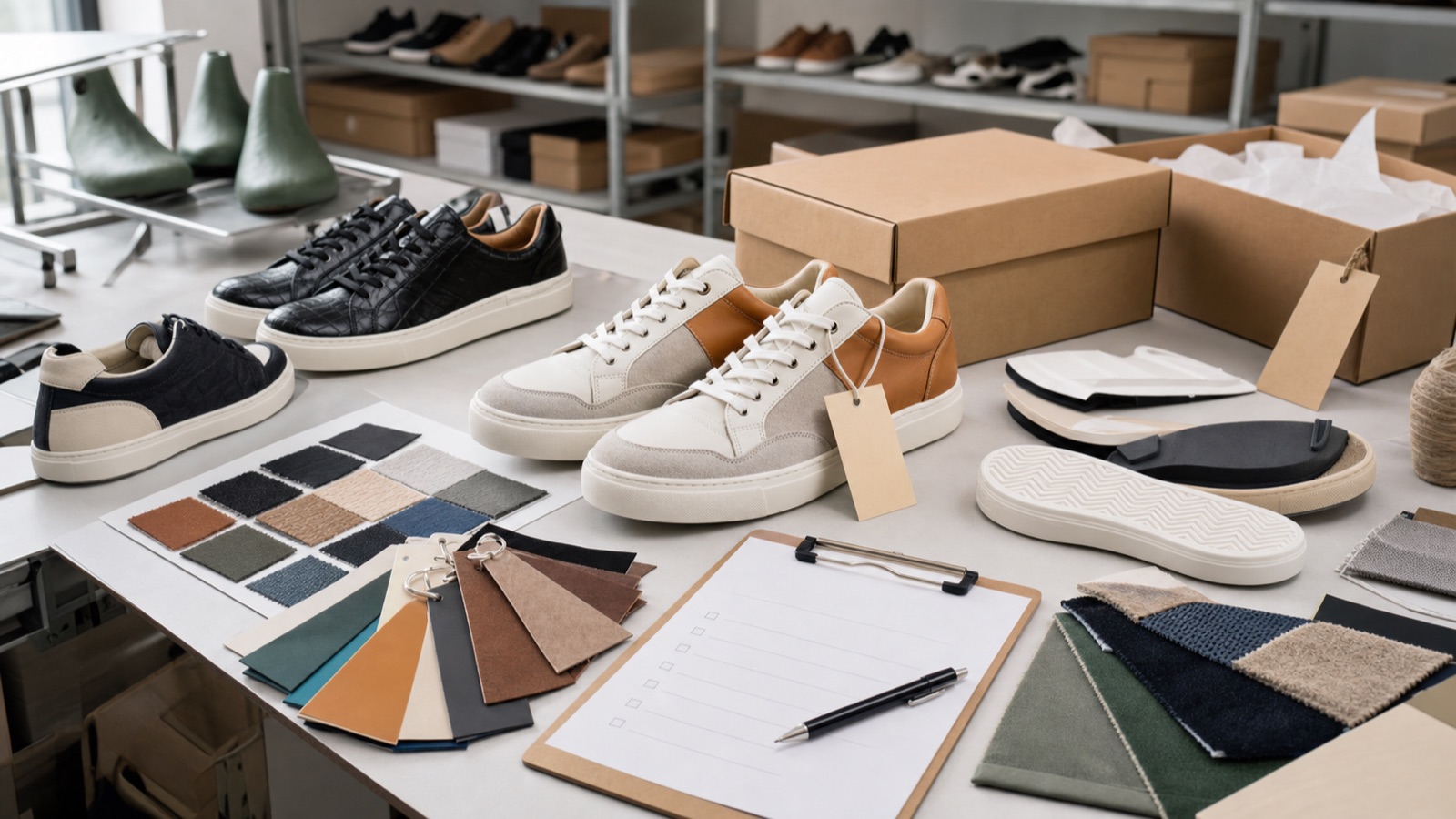
This checklist is written for brand owners, wholesalers, Amazon sellers, boutique retailers, and sourcing managers who want to develop custom shoes with a China-based OEM or ODM partner. It also explains how to turn a rough idea into an email-ready requirement list that a sales and production team can answer quickly.
1. Decide whether you need OEM, ODM, or private label support
Before asking for a quote, define the type of manufacturing support you need. The wrong sourcing model creates slow replies because the factory has to guess how much design work, sampling work, and production risk is involved.
- OEM shoe manufacturing fits buyers who already have drawings, tech packs, physical samples, outsole references, material requirements, and size specifications.
- ODM shoe development fits buyers who want to adapt an existing construction, last shape, sole unit, or material combination into a sellable product for their own market.
- Private label shoes fit buyers who need logo placement, packaging, hang tags, box design, and market-ready presentation around a factory-supported style.
If you are still comparing categories, start with the customized shoes, custom sneakers, leather shoes, and wholesale shoes category pages. They give the sales team a clearer starting point than a general message such as "send catalog".
2. Build a product brief before asking for price
A good private label inquiry should answer the questions a production team needs before it can estimate sample cost, MOQ, and lead time. If those details are missing, the first reply will usually ask for clarification instead of giving a useful sourcing path.
Prepare these fields before contacting a manufacturer:
- Target product type, such as sneaker, loafer, trainer, leather shoe, slipper, boot, sandal, or exotic skin shoe.
- Target buyer and market, including retail price band, country, age group, and sales channel.
- Reference photos or product links showing shape, sole, upper style, color, and finishing.
- Upper material, lining material, insole, outsole, heel, lace, zipper, buckle, or other hardware expectations.
- Logo method, such as embossing, debossing, woven label, metal logo, printed logo, or branded insole.
- Size range, size standard, gender, width requirement, and whether size-set samples are needed.
- Estimated first order quantity and reorder plan.
- Packaging needs, including box, dust bag, hang tag, barcode, carton mark, and insert card.
- Expected sample approval date and bulk delivery window.
The more specific the brief is, the easier it is for the factory to recommend an existing outsole, suggest a material substitution, or explain where a custom mold is required.
3. Compare MOQ with the real development work
MOQ is not one fixed number for every shoe. It depends on material sourcing, color availability, outsole tooling, logo method, packaging, and whether the factory can use an existing construction. A low MOQ is useful, but it should not hide a poor match between your design and the factory's available components.
When comparing manufacturers, ask what drives the MOQ:
- Is the upper material stock material or custom produced?
- Can the outsole be used from an existing mold?
- Does the logo require a new metal mold, embossing plate, printing screen, or woven label setup?
- Will the color require special dyeing or minimum material purchase?
- Is the packaging standard or fully custom?
A serious shoe factory should be able to explain which part of the product creates the minimum quantity. That answer is more useful than a simple number.
4. Treat sampling as a staged approval process
Sampling is where most private label projects succeed or fail. Buyers should not approve a bulk order only because the first sample looks close in photos. The first sample proves direction; later approval should confirm size, materials, workmanship, logo placement, packaging, and color.
A practical sample workflow includes:
- Concept confirmation: agree on style, last shape, outsole, material direction, and logo method.
- First sample: check overall appearance, construction, comfort direction, and obvious design errors.
- Revision sample: correct shape, color, stitching, logo position, sole color, packaging, or material details.
- Size-set or pre-production sample: confirm grading, fit, material consistency, and workmanship standard before bulk cutting.
- Bulk approval: approve only after photos, measurements, and physical sample feedback match the purchase order.
For private label sneakers, trainers, and leather shoes, sample communication should include annotated photos. A written message alone is often not enough to describe toe shape, topline height, stitching distance, or logo scale.
5. Check material and construction fit
A product can look simple but still be difficult to produce consistently. The buyer should ask the factory to explain the material and construction choices, especially when developing shoes for a specific retail price band.
Important checks include:
- Upper material thickness, texture, colorfastness, and availability.
- Lining comfort, breathability, and durability.
- Outsole material, weight, grip, flexibility, and mold availability.
- Insole comfort, arch support, padding, and branding surface.
- Stitching density, edge finishing, glue control, and lasting shape.
- Packaging durability for sea, air, express, or FBA-style delivery.
Buyers developing premium shoes or exotic skin products should also confirm material legality, export expectations, and market-specific requirements before sampling. If the product is a general private label shoe, the focus should be repeatable material sourcing and stable bulk quality.
6. Ask for QC evidence before shipment
Quality control should not start at the end of production. It should be built into the order from the sample stage. The buyer should define which defects are unacceptable and what proof is needed before the goods leave the factory.
Useful QC checkpoints include:
- Material inspection before cutting.
- Upper stitching and component check before lasting.
- Logo placement and color confirmation before mass assembly.
- Sole bonding, trimming, cleaning, and finishing inspection.
- Pairing, size mark, box label, carton mark, and packing check.
- Random pre-shipment photos or video by SKU, size, and color.
If you are new to footwear sourcing, read the related guide on quality control issues in footwear before approving a bulk order.
7. Make your inquiry easy to reply to by email
The fastest replies come from inquiries that can be copied into a clear internal workflow. Instead of sending one long paragraph, use a structured list with reference files, preferred categories, target quantity, required delivery date, and open questions.
A good first message can follow this format:
- Product type: private label sneaker / leather shoe / loafer / trainer.
- Reference style: attach photos or links.
- Target market: country and retail channel.
- Quantity: first order estimate and possible reorder plan.
- Logo and packaging: describe branding needs.
- Timeline: sample deadline and bulk delivery target.
- Questions: MOQ, sample cost, sample time, available materials, and shipping options.
Marcusius keeps inquiry communication email-friendly through the Buyer Portal. Buyers can send a structured requirement, attach files, continue the discussion online, and keep the sales mailbox synchronized for follow-up.
8. Internal links that help the factory understand your project
When contacting the sales team, include the closest category or product reference from the website. This helps the factory understand whether your project is closer to casual wholesale, private label sneakers, leather shoes, loafers, trainers, or exotic skin shoes.
- Customized shoes for OEM/ODM development and private label projects.
- Custom sneakers for startup brands, retail collections, and logo customization.
- Wholesale shoes for existing styles and broader sourcing comparisons.
- Loafers and trainers for common repeatable wholesale categories.
Final checklist before choosing a private label shoe factory
Before approving a China private label shoe manufacturer, make sure you can answer yes to these questions:
- Does the factory understand whether the project is OEM, ODM, or private label?
- Did you provide clear reference photos, materials, size range, logo method, and packaging needs?
- Did the factory explain what drives MOQ and sample cost?
- Did the sample approval process include revision and pre-production confirmation?
- Did you define QC evidence before bulk shipment?
- Can the sales team keep your requirement list, files, and follow-up messages easy to reply to?
If you already have a product idea, prepare your reference photos, target quantity, market, and timeline, then send the requirement through the contact page or continue with a structured thread in the Buyer Portal.