
Custom Leather Shoes Manufacturer in China: A Practical Buyer Guide
Part of: Private Label Shoe Manufacturing
A custom leather shoe project usually fails or succeeds before the factory cuts the first piece of leather. The early details decide whether the sample comes back close to your idea or whether everyone spends two weeks guessing from a few reference photos.
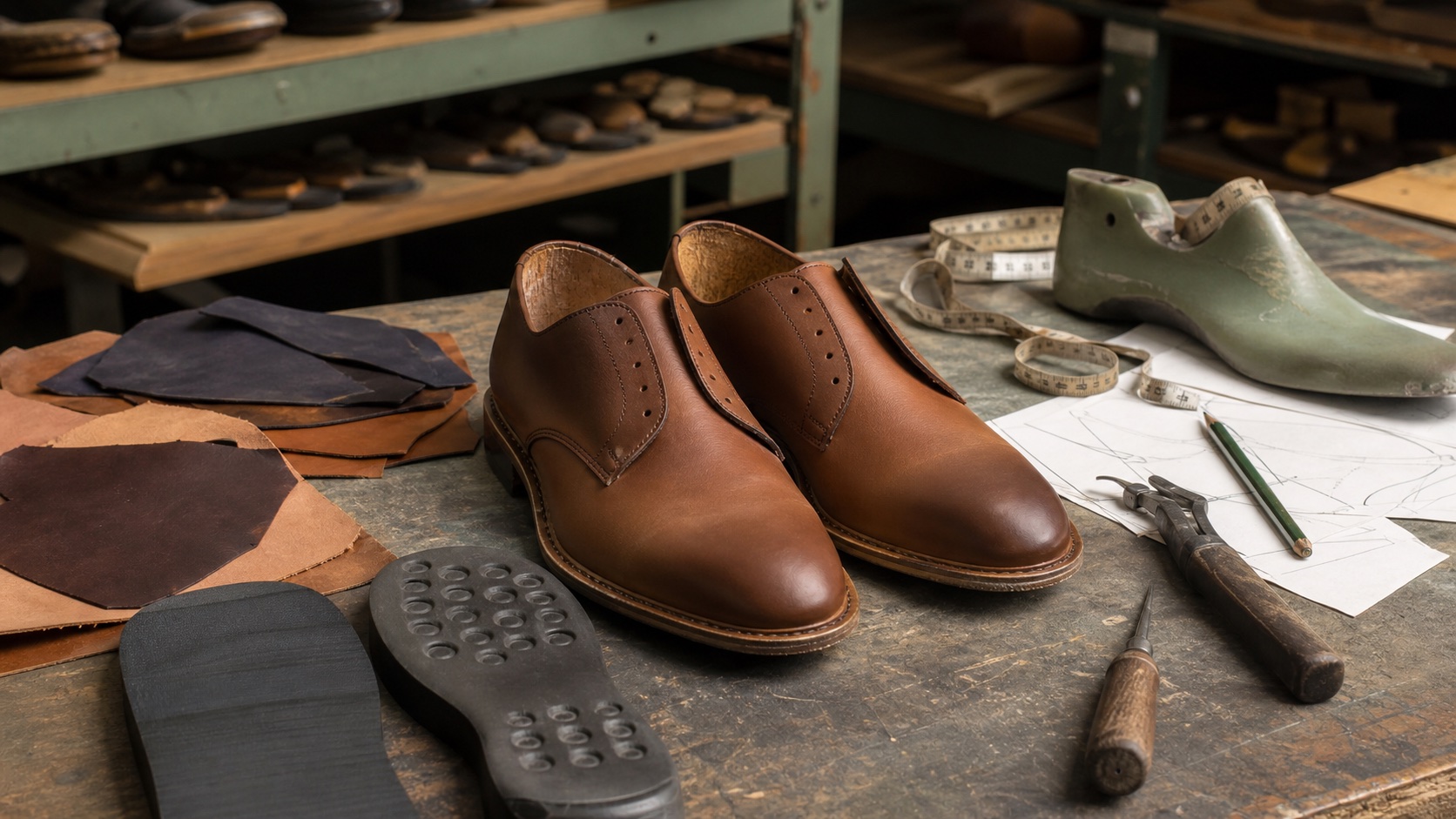
This guide is written for buyers who want to source custom leather shoes from China without turning every reply into another round of missing information. It is not a glossy brand story. It is the practical checklist I would want on the table before asking a factory for a real quotation.
Start with the type of leather shoe, not only a photo
A photo is useful, but it is not a specification. Two shoes can look similar from the side and still use different lasts, lining, soles, leather thickness, construction, and finishing. Before asking for price, name the product clearly.
- Dress shoe, loafer, boot, casual leather sneaker, sandal, or driving shoe.
- Men's, women's, unisex, or children's sizing.
- Target market: office wear, boutique retail, uniform, wedding, casual, or premium private label.
- Expected order: first sample only, small trial order, or repeat wholesale program.
A factory can answer faster when it knows whether you are developing a classic Oxford, a soft loafer, or a leather sneaker that only looks formal in a mood board.
The nine details buyers should prepare before asking for a quote
You do not need a perfect technical package on day one. But you do need enough details for the factory to understand the work. These nine points make a leather shoe inquiry much easier to quote.
1. Reference style and what you want to change
Send clear photos, but say what should stay and what should change. For example: keep the toe shape, change the sole to rubber, use a softer brown leather, remove the side stitching, and add an insole logo.
If you only send a photo and ask "can you make this?", the first reply will usually be another list of questions. A better inquiry explains your intention.
2. Leather direction
Leather choice changes cost, sample result, and production risk. Buyers often use one word, such as "genuine leather," but factories need more detail.
- Calf leather, cow leather, suede, nubuck, patent, full grain, corrected grain, split leather, or synthetic leather alternative.
- Color target and whether a physical swatch is available.
- Finish: smooth, waxed, pull-up, polished, matte, grainy, or embossed.
- Expected handfeel: soft, structured, glossy, rugged, lightweight, or premium.
For first orders, do not choose leather only from a bright phone photo. Ask for material photos in natural light, swatch options, and sample confirmation before bulk.
3. Last shape and fit direction
The last is the foot-shaped form that decides much of the shoe's shape and fit. It affects toe shape, instep, width, heel grip, and overall silhouette. This is why a leather shoe is not just an upper pattern.
Tell the factory whether the shape should be narrow, standard, wide, rounded, almond, square, formal, casual, or roomy. If you sell in the US, EU, UK, or Middle East, mention the market because fit expectations are not always the same.
4. Construction and outsole
Buyers often ask for "high quality," but quality depends partly on construction. Confirm whether you need cemented construction, Blake stitching, Goodyear-style construction, stitched-look detailing, or a simpler casual build.
Outsole choices also matter:
- Leather sole for formal appearance.
- Rubber sole for grip and daily wear.
- EVA or lightweight outsole for comfort and weight reduction.
- Existing outsole to control cost and sampling time.
- New outsole mold when the design truly needs a unique bottom.
If you are unsure about outsole materials, the existing guide on EVA material in shoes can help you compare cushioning and outsole roles.
5. Logo placement
Private label leather shoes usually need branding, but logo method affects cost and sample time. Common positions include insole print, outsole mark, tongue mark, side embossing, heel logo, metal badge, hang tag, dust bag, box label, and carton mark.
Send the logo file early. Do not wait until the sample is almost finished. A logo may look clean on paper but feel too large, too shallow, or too shiny on leather.
6. Lining, insole, and comfort details
Lining and insole are easy to overlook because buyers focus on the outside. But customers feel these parts first. Confirm leather lining, pigskin lining, textile lining, padded insole, arch support, removable footbed, or a simpler cost-controlled insole.
If comfort is a selling point, say it clearly. A dress shoe for short office wear and a leather casual shoe for all-day walking should not be developed the same way.
7. Size range and size ratio
Size range affects material planning, outsole availability, last availability, carton quantity, and inventory risk. A small first order with too many sizes can become expensive because the quantity per size is low.
Before bulk, decide whether you need full sizes only, half sizes, wide fit, EU sizing, US sizing, UK sizing, or market-specific conversion. If this is your first order, review the shoe MOQ guide before asking for too many color and size combinations.
8. Packaging and shipping presentation
Packaging is not a decoration at the end. It affects sample approval, barcode files, box size, carton size, and warehouse receiving. At minimum, confirm whether you need a standard box, custom box, box label, barcode, tissue paper, dust bag, hang tag, care card, or carton mark.
If you sell through retail or marketplace channels, wrong labels can create real headaches after the shoes arrive. Put packaging into the first inquiry, even if the final artwork comes later.
9. Target quantity, deadline, and destination country
Quantity tells the factory whether the project is a sample, a trial order, or a serious wholesale plan. Deadline tells the factory whether the request is realistic. Destination country helps with shipping, labeling, and material document questions.
For leather shoes, especially if special material or documentation is involved, do not hide the destination market. It helps the factory flag questions earlier.
What changes the price of custom leather shoes?
Buyers naturally ask for price early. That is fair. But a useful price needs context. The biggest cost drivers are usually:
- Leather grade and consumption: better leather, larger panels, and stricter cutting selection cost more.
- Construction: simple cemented shoes, stitched soles, and more complex dress shoe builds have different labor needs.
- Outsole and mold: an existing outsole is faster; a new outsole mold adds time and cost.
- Logo and packaging: custom box, dust bag, metal badge, embossing, and label work all need setup.
- Size and color spread: many colors and sizes in a small order make production less efficient.
- QC standard: stricter sorting, more photos, and special packing requirements need time.
This is why two quotes for "brown leather shoes" can be far apart. They may not be quoting the same shoe.
Sampling: where buyers should slow down a little
Rushing the sample often creates a slower bulk order. For leather shoes, use the sample to check shape, fit, material feel, logo, sole, finishing, and packaging direction.
When the sample arrives, do not only ask whether it looks good. Check it against a list:
- Does the last shape match the customer you are selling to?
- Does the leather color look right in natural light?
- Are the left and right shoes balanced?
- Is the logo position clean and not too loud?
- Does the outsole match the intended use?
- Is the lining comfortable enough for the price level?
- Does packaging match how the product will be sold?
The shoe sample approval checklist is worth using before any bulk cutting starts. A written approval record protects both buyer and factory.
A ready-to-send inquiry template
If you want a custom leather shoe manufacturer to reply with useful answers, send a message like this:
Hello, we are developing a private label men's leather loafer for the US market. We want a rounded toe, soft brown calf leather look, rubber outsole, leather lining, insole logo, standard box with custom label, and size range US 7-12. First order target is 300 pairs in one color after sample approval. Please check if you have a suitable existing last and outsole, sample cost, MOQ, estimated sample time, bulk lead time, and what files you need from us.
This message is not fancy, but it is useful. It gives the factory enough information to check real options instead of guessing.
What to ask before paying for a sample
- Do you have an existing last close to our reference shape?
- Do you have an existing outsole that matches this style?
- What leather options are available for sampling?
- What parts can be private label at sample stage?
- What is the sample cost and what does it include?
- How many days for the first sample after details are confirmed?
- What MOQ applies if the sample is approved?
- What files do you need for logo, label, and packaging?
These questions save time because they separate design possibility from production reality.
Quality checks before shipment
Leather shoes need careful checking before shipment because small differences are easy to see: color mismatch, loose stitching, glue marks, uneven polish, lining wrinkles, outsole gap, size label mistakes, and scratched leather.
Before approval, ask for QC photos of pair views, leather close-ups, stitching, outsole edge, logo, insole, size label, packaging, carton marks, and any defects found. The pre-shipment quality checklist gives a fuller inspection structure.
How Marcusius can make the process smoother
For a first leather shoe project, the goal is not to make the longest specification document in the world. The goal is to make the important choices visible enough that the factory can respond clearly.
Marcusius supports leather shoe inquiries through the contact form and Buyer Portal, where buyers can attach reference photos, sample comments, packaging files, and follow-up notes in one place. That matters because leather shoe development has many small decisions, and small decisions get lost when they are scattered across messages.
Final buyer checklist
- Reference photos are clear, with notes on what to change.
- Leather type, color, finish, and handfeel are described.
- Last shape and target fit are discussed.
- Construction and outsole direction are chosen.
- Logo placement and artwork needs are known early.
- Lining, insole, and comfort expectations are written down.
- Size range, quantity, deadline, and destination country are included.
- Packaging and label needs are included before sample approval.
- Sample approval and QC photos are saved before bulk shipment.
Custom leather shoes do not need to start with perfect certainty. They need clear enough information for the first sample to teach the right lessons. When buyer and factory work from the same details, the project becomes easier to quote, easier to sample, and easier to produce without surprises.