How to Email a Shoe Manufacturer and Get a Useful Quote
Part of: China Footwear Sourcing Guide
A good shoe factory inquiry does not need to sound fancy. It needs to be clear enough that the sales person can forward it to the costing team without guessing what you mean.
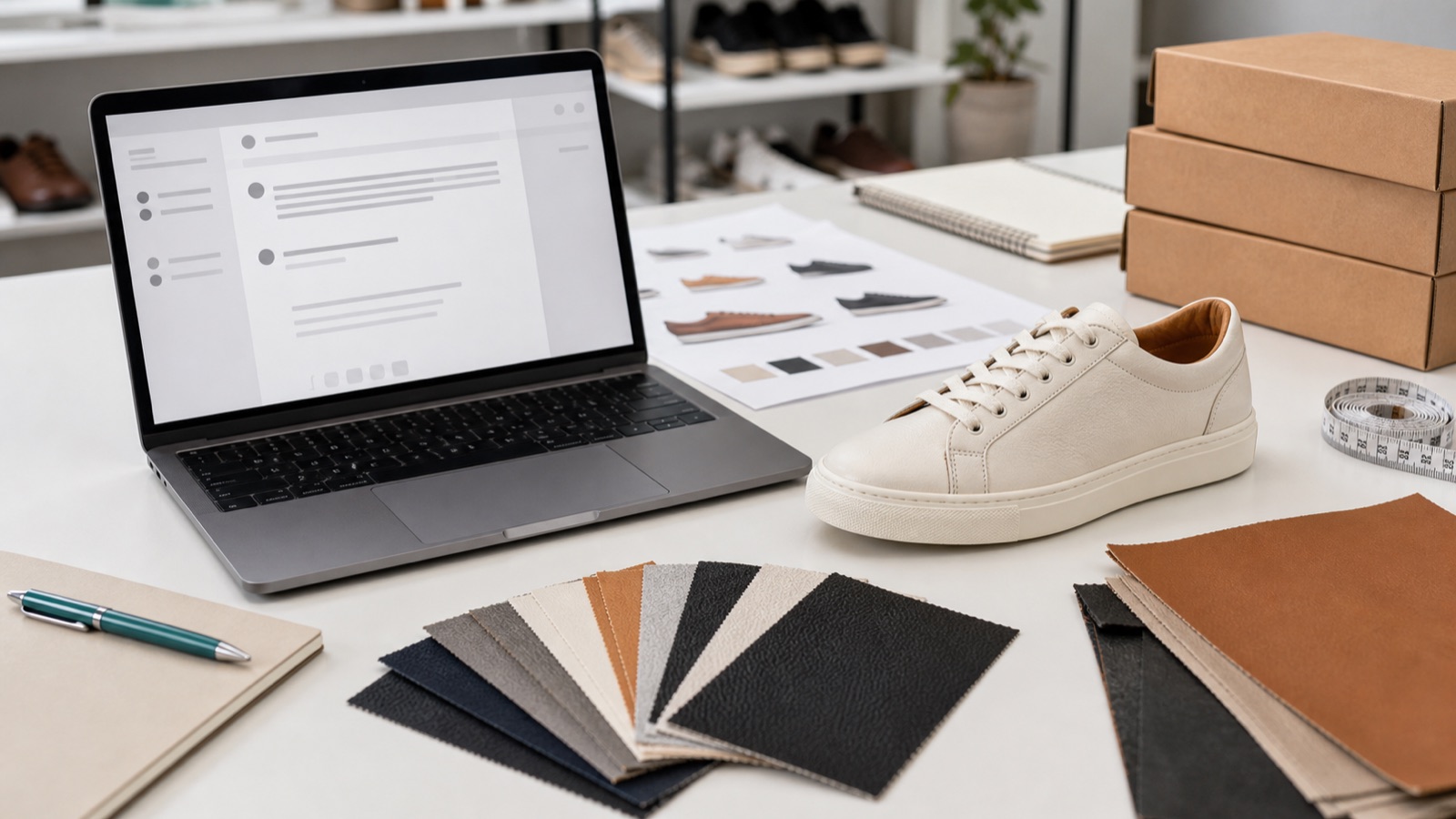
That sounds simple, but many first emails arrive like this: "Hi, I want custom sneakers. Please send price." The buyer is not wrong. Everyone starts somewhere. But from the factory side, that message has almost no information to quote from. The reply will be another question: material? quantity? outsole? logo? size range? packaging? deadline?
If you want a useful answer from a shoe manufacturer, write the first message like a small working brief. Not a long corporate document. Not a perfect tech pack. Just enough detail for the factory to say, "Yes, we understand the direction. Here is the likely path."
Start with the product, not the price
Price matters, of course. But if the first sentence is only about price, the factory still has to build the product picture in its head. Start with the shoe itself.
Good opening:
We are developing a private label men's leather sneaker for the US market. The shape is close to the attached reference, but we want our own logo on the tongue, insole, and box. Our first order target is 100-200 pairs after sample approval.
This is already much easier to answer than "custom sneaker price?" It tells the factory the product type, market, branding need, and rough quantity.
If you are still choosing the category, link the closest page from the site. For example, you can reference custom sneakers, leather shoes, loafers, or trainers. A category link gives the sales team a starting point before they open your files.
The eight details that make an inquiry quote-ready
You do not need every final detail on day one. But these eight fields help a shoe manufacturer reply with something real instead of a polite delay.
- Product type: sneaker, trainer, loafer, dress shoe, slipper, boot, sandal, or bag/accessory if your project includes matching goods.
- Reference files: photos, sketches, product links, or a physical sample photo. Mark what you like and what you want to change.
- Target market: country, customer group, retail price level, and sales channel.
- Quantity: first order estimate, color breakdown, and whether you expect repeat orders.
- Materials: upper, lining, insole, outsole, hardware, and which parts are flexible.
- Size range: EU/US/UK standard, men's/women's/unisex, and sample size.
- Branding: logo position, logo method, shoe box, labels, hang tag, dust bag, or barcode needs.
- Timeline: when you need the sample and when you hope to ship bulk goods.
When one of these fields is unknown, say so. "Material is flexible if you can suggest a similar look at better MOQ" is useful information. It tells the factory where it can help.
Separate must-have details from flexible details
This is one small habit that saves a lot of back-and-forth. Factories can often reduce MOQ or sample difficulty when they know what can be changed.
For example:
- Must have: low-top shape, black upper, logo on tongue and insole.
- Flexible: outsole pattern, lining material, exact box size.
- Need suggestion: best material for a retail price around a certain range.
That kind of note feels more human than a rigid demand list. It also gives the manufacturer permission to be practical. Sometimes an existing outsole or stock material can move the project faster than a fully custom part.
Do not hide your quantity
Some buyers avoid sharing quantity because they are afraid the factory will quote higher. In reality, quantity helps the factory choose the correct production path.
A 30-pair sample market test, a 200-pair private label launch, and a 2,000-pair wholesale order are different conversations. The material purchase, logo setup, packaging cost, and production planning will not be the same.
If you are unsure, give a range:
Our first order may be 100-300 pairs depending on sample result and MOQ. If the design works, we expect repeat orders in two colors.
This is honest and still useful. It lets the shoe factory explain what is possible for first development and what will become easier after repeat orders.
Ask for quote assumptions, not just a number
A number without assumptions can mislead both sides. If one supplier quotes with a stock outsole and another quotes with a new outsole mold, the prices are not really comparable.
Ask the factory to reply with these points:
- Suggested MOQ and what drives that MOQ.
- Sample cost and sample lead time.
- Bulk lead time after sample approval.
- Material and outsole assumptions used for the quote.
- Logo and packaging assumptions included or excluded.
- Questions that must be answered before the quote is final.
This makes the conversation calmer. You can compare the production path, not only the lowest number.
A simple inquiry email you can adapt
Here is a plain version. You can copy the structure, but make it your own.
Hello Marcusius team
We are looking for a China shoe manufacturer for a private label project. The product is a men's casual leather sneaker for the US market. I attached two reference photos. We like the clean upper shape and rubber outsole direction, but we want our own logo and packaging.
Estimated first order: 150-300 pairs after sample approval. Size range: US men's 7-12. Upper material can be genuine leather or good microfiber if you suggest a better option for MOQ and price. Logo needed on tongue, insole, and shoe box.
Could you advise possible MOQ, sample cost, sample time, available outsole options, and what details you still need from us?
Thank you.
This email is not perfect, but it gives the factory enough to start. The reply can now be specific.
When to send a tech pack
If you already have a tech pack, send it. If not, send a clear inquiry first and build the technical file step by step. For many early-stage buyers, the first useful document is a simple one-page requirement sheet.
Once the project direction is confirmed, you can add more detail: measurements, pattern notes, material codes, Pantone color, logo artwork, packaging artwork, outsole drawing, size grading, and QC requirements.
For a deeper checklist, read Shoe Tech Pack for Manufacturers: Quote Checklist for OEM/ODM Buyers.
Use attachments carefully
Photos help a lot, but too many messy files can slow the reply. Name files clearly:
- reference-shape-front.jpg
- logo-placement-example.png
- preferred-outsole-side-view.jpg
- shoe-box-reference.pdf
If one photo is only for inspiration, say that. If one photo is a must-follow detail, mark it. A factory team should not have to guess which image is the main direction.
What happens after you send the inquiry?
A good first reply should not only say yes or no. It should move the project to the next useful step. That may be:
- Confirming whether an existing last or outsole can be used.
- Suggesting material alternatives for better MOQ or price.
- Asking for logo artwork or packaging details.
- Explaining sample cost and timing.
- Separating what can be quoted now from what needs confirmation.
If the factory only sends a price with no assumptions, ask what the price includes. A cheap quote that excludes packaging, logo setup, or material change may become expensive later.
Keep the thread easy to follow
Shoe development often takes several rounds. A buyer may add a new color, change the outsole, ask for a different logo method, or update the launch date. If every update is scattered across separate emails, somebody will miss a detail.
That is why the Buyer Portal is useful. You can submit the first requirement, attach images or files, then continue the same conversation online. The sales team still receives email notifications, but the project thread stays easier to read.
Final check before you send
Before you press submit, read your message once from the factory side. Can a costing colleague understand the project without asking ten basic questions?
- Did you explain what shoe you want to make?
- Did you attach or link a reference?
- Did you share quantity, size range, and market?
- Did you mention material and logo needs?
- Did you say what is fixed and what is flexible?
- Did you ask for MOQ, sample cost, sample time, and quote assumptions?
If yes, your inquiry is already ahead of most first messages. Send it through the contact form or start a thread in the Buyer Portal, and the factory can reply with a practical path instead of another round of basic questions.