
Shoe Production Timeline: How to Plan Lead Time Without Last-Minute Panic
Part of: Private Label Shoe Manufacturing
The shortest answer to "How long will shoe production take?" is usually not the safest answer. A factory may give a production time, but a buyer needs the whole timeline: sample work, revisions, material booking, logo approval, packaging, bulk production, inspection, shipping, and receiving.
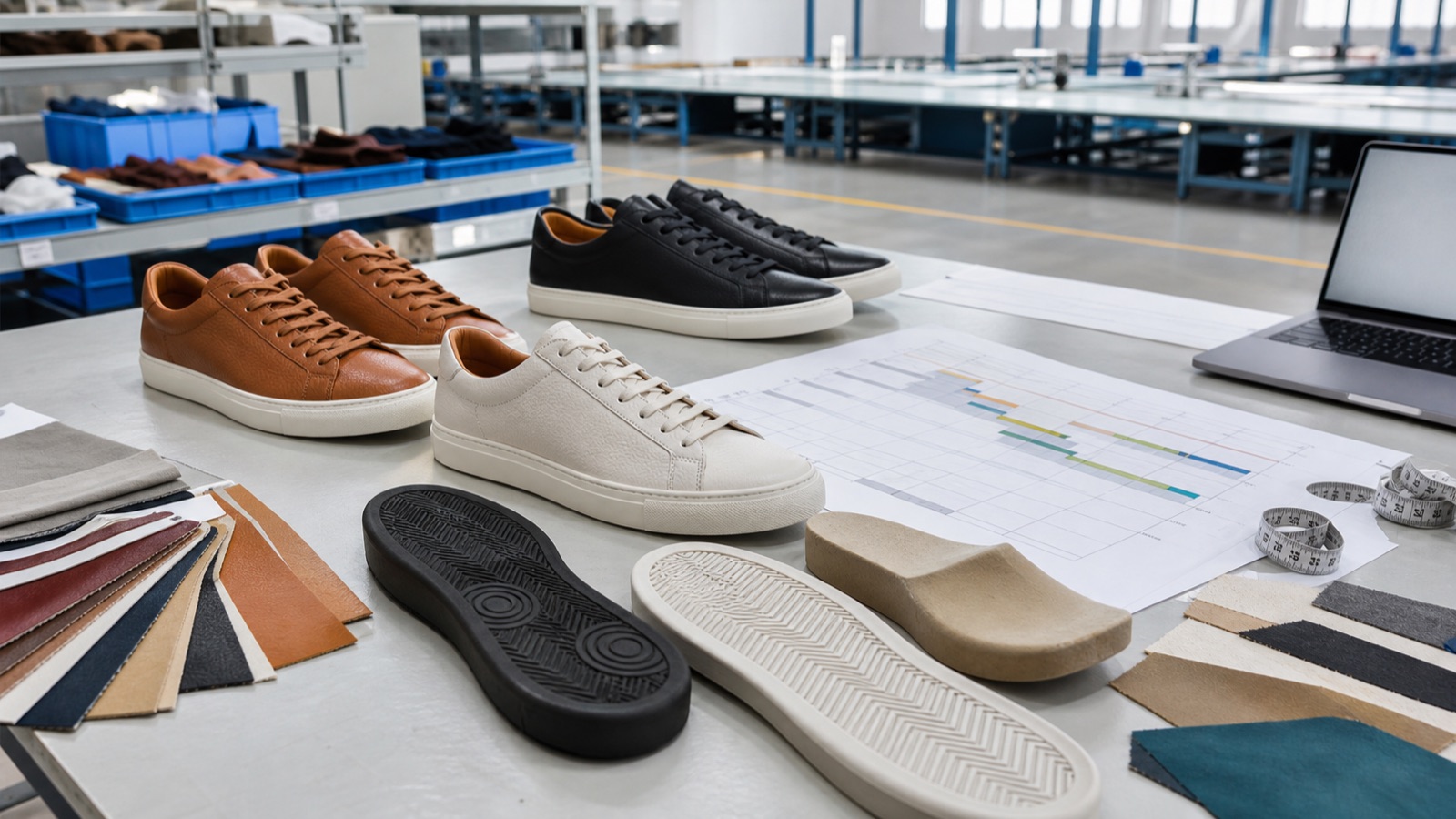
If you are planning a private label shoe launch, the better question is not only "How many days for production?" It is "What date do I need goods in my warehouse, and what decisions must be finished before that?"
This guide is written for buyers who want to plan a first order without the familiar last-minute panic.
Start from the selling date and work backward
Many buyers start with the factory date. They ask when production can finish, then try to build the launch around that answer. A calmer way is to work backward.
Write down these dates first:
- When do you need product photos or samples for marketing?
- When do goods need to arrive at your warehouse or forwarder?
- When does your selling season, trade show, retail delivery, or online launch begin?
- How long do customs clearance, local trucking, and receiving normally take in your market?
Once those dates are clear, the production schedule becomes a plan instead of a guess.
The six real stages of a shoe production timeline
Every project is different, but most private label shoe orders pass through these six stages.
1. Requirement confirmation
This is where the buyer confirms product type, reference photos, materials, target market, size range, quantity, logo, packaging, and price direction. If the request is vague, the whole timeline starts soft.
A clear shoe tech pack can save days of back-and-forth. If you do not have a full tech pack, at least send a clean requirement note with reference images and expected order quantity.
2. Sampling and revision
Sampling is not only making one attractive pair. It is where shape, fit, material, logo, outsole, color, and packaging direction are tested.
For a new style, leave room for one revision. A buyer may approve the first sample, but it is safer to assume at least some adjustment will be needed. Fit, toe shape, logo position, color matching, and material handfeel often need a second look.
Use a structured sample approval checklist before moving into bulk production.
3. Material and component booking
After sample direction is approved, materials and components need to be confirmed. Upper material, lining, insole, outsole, eyelets, buckles, labels, boxes, tissue paper, and cartons may not all come from the same supplier.
Stock material is usually faster. Custom color, special leather, custom outsole, special hardware, or printed packaging can add time. This is one reason a very low MOQ and a very fast timeline do not always fit together.
If MOQ is still unclear, read the shoe MOQ guide before locking your order plan.
4. Bulk production
Bulk production usually starts after sample approval, material confirmation, deposit, and production slot arrangement. The factory then plans cutting, stitching, lasting, sole attachment, finishing, packing, and internal QC.
Order size matters, but complexity matters too. A simple existing style can move faster than a new style with custom materials, many colors, wide size range, special logo methods, and custom packaging.
5. QC and packing
Inspection should not be an afterthought. Finished shoes need to be checked against the approved sample, size run, logo file, packaging file, and carton mark requirements.
Before approving shipment, use a practical pre-shipment inspection checklist. Ask for pair photos, detail photos, size label photos, packaging photos, carton photos, and defect photos if any problem is found.
6. Shipping and receiving
The factory may finish production on time, but that does not mean the goods are already ready to sell. Shipping, export documents, customs, local delivery, warehouse receiving, and final counting also need time.
If the selling date is important, ask whether the quoted timeline ends at factory completion, shipment date, port arrival, or warehouse delivery. Those are not the same thing.
Where shoe projects usually get delayed
Most delays are not mysterious. They come from small unfinished decisions.
- The buyer sends reference photos but no material or size range.
- Logo artwork is not final when sampling starts.
- Packaging is discussed after bulk production is already moving.
- Color approval depends on phone photos instead of a clear reference.
- The size ratio changes after materials or outsoles are planned.
- The buyer asks for many colors in a small first order.
- Sample feedback says "not good" but does not explain what to change.
- Production is planned too close to a trade show, holiday, or peak season.
Good communication does not remove every delay, but it removes many avoidable ones.
A simple timeline buyers can use
For a first private label shoe order, use this as a planning structure. The exact dates will change by style and order, but the order of decisions is useful.
- Week 1: share product direction, quantity, material, size range, logo, and packaging needs.
- Weeks 2-4: sample development and first review.
- Weeks 4-6: sample revision, material confirmation, logo and packaging approval.
- Weeks 6-7: order confirmation, deposit, material booking, and production scheduling.
- Weeks 8-12: bulk production, inline checking, finishing, and packing.
- Week 12 onward: pre-shipment inspection, shipment, customs, and warehouse receiving.
This is not a promise that every order takes exactly this long. It is a planning map. A repeat order using the same materials may be faster. A new outsole, new leather, special packaging, or busy factory season may need more time.
How to ask the factory for a realistic lead time
A useful lead-time question gives the factory context. Instead of asking only "How fast can you make it?", try this:
We want goods ready for warehouse receiving before October 15. The style is a men's casual leather sneaker for the US market. First order target is 300 pairs in one color, existing outsole is acceptable, logo on tongue and insole, standard box with custom label. We need one sample review before bulk. What timeline would you suggest from sample to shipment?
That message gives the factory enough information to think. It also shows the buyer understands that sample, production, and shipment are separate parts of the schedule.
Keep four buffers in the plan
If the order matters, do not plan every step with zero breathing room.
- Sample buffer: allow time for one revision or material adjustment.
- Material buffer: allow time for supplier delays or color confirmation.
- QC buffer: allow time to repair, sort, or recheck if inspection finds problems.
- Shipping buffer: allow time for customs, trucking, warehouse receiving, and local delays.
These buffers are not wasted time. They are what keep a normal problem from becoming a launch emergency.
Use Buyer Portal to keep timeline decisions visible
Timeline problems often happen because the latest decision is buried in old messages. A sample note, a packaging file, a changed delivery date, and a QC photo may all be in different places.
For Marcusius projects, the Buyer Portal helps keep requirements, attachments, timeline notes, and follow-up questions in one thread. If your project is still early, start with the contact form and include your target delivery window.
Final lead-time checklist
- Target warehouse date and selling date are written down.
- Sample, revision, bulk production, QC, shipping, and receiving are separated.
- Material, color, logo, packaging, size range, and quantity are confirmed before bulk.
- Factory timeline says whether it ends at production finish, shipment, or delivery.
- One sample revision buffer is included for new styles.
- QC and shipping buffers are included before the launch date.
- All approvals are saved in one email thread or Buyer Portal thread.
A realistic timeline is not slow. It is honest. When buyer and factory plan from the same calendar, the order is easier to produce, easier to inspect, and much easier to launch without a fire drill.
For a more practical supplier discussion, use customized shoe options alongside the points in this article.