Men's Alligator Shoes Wholesale: A Practical Buyer Checklist
Part of: Exotic Leather Guide
When a buyer searches for men's alligator shoes wholesale, the first question is usually price. That is understandable. But in the factory, a useful quote does not start with price alone. It starts with clear material wording, shoe construction, quantity, size range, sample expectations, packaging, and import document questions.
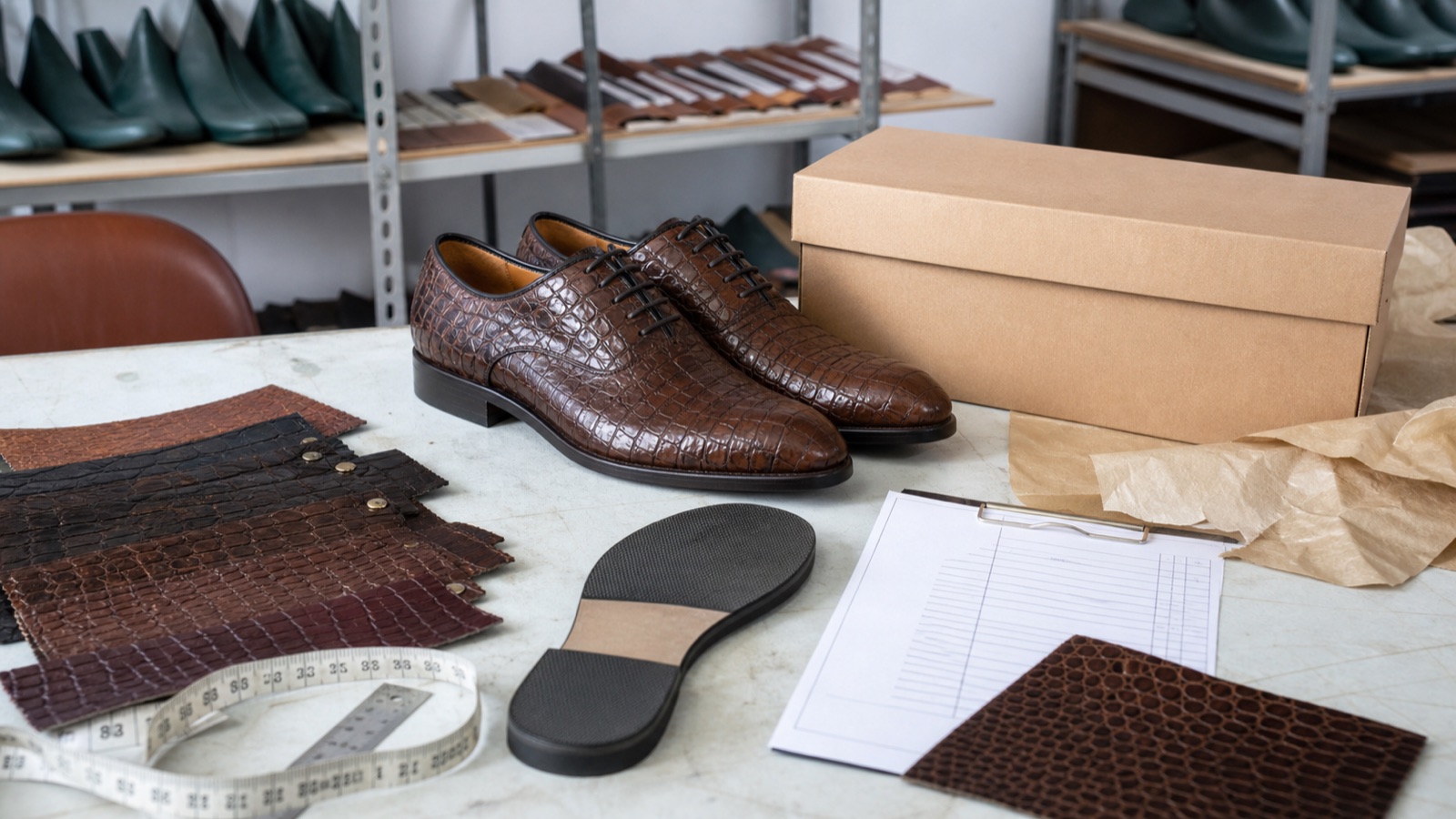
Alligator shoes are not the same as a basic leather sneaker order. The material cost, cutting loss, grain matching, finishing, and compliance checks can change the whole project. A vague inquiry such as "send price for alligator shoes" often leads to a vague answer. A clear inquiry can save several days and prevent the wrong sample from being made.
This guide is written for wholesalers, boutique buyers, sourcing teams, and private label brands that want a practical way to discuss alligator dress shoes, loafers, monk shoes, or casual exotic leather shoes with a manufacturer.
Start by defining what alligator means
The word "alligator" can mean different things in buyer conversations. Before asking for a wholesale quote, decide which material direction you really need.
- Genuine alligator leather: higher material cost, stricter sourcing, more careful cutting, and document checks.
- Genuine crocodile leather: similar premium category, but not the same animal or skin pattern. Buyers should not mix the words casually.
- Embossed cow leather: cow leather pressed with an alligator-style pattern. This is often used when the buyer wants the look at a lower price.
- Mixed construction: genuine exotic leather on selected panels, with calf leather or cow leather on other parts to control cost and improve flexibility.
If your customer expects genuine alligator, say that clearly. If the goal is only the alligator look, say embossed leather is acceptable. This one sentence can completely change the quote.
Choose the shoe type before discussing price
Two pairs can both be called alligator shoes, but the work behind them may be very different. A dress oxford, loafer, monk strap, derby, boot, or casual sneaker uses a different last, upper pattern, lining, outsole, and finishing process.
For wholesale buying, confirm these details early:
- Shoe type: oxford, derby, loafer, monk strap, boot, sneaker, or sandal.
- Toe shape: round, almond, square, pointed, or a reference last.
- Construction: cemented, Blake stitched, Goodyear welted, or another method.
- Outsole: leather sole, rubber sole, combination sole, or custom outsole.
- Finish: matte, semi-gloss, high gloss, hand-finished, burnished, or two-tone.
- Market: men's formal, wedding, boutique fashion, western, luxury casual, or private label retail.
The alligator shoes category is a good place to collect reference shapes before you write the inquiry. If you are comparing alternatives, also review crocodile shoes so the material discussion stays precise.
What the factory needs for a serious quote
A good wholesale inquiry does not need to be fancy. It just needs to answer the questions the production team will ask anyway.
- Reference photos or product links, with notes on what should be copied and what should be changed.
- Material expectation: genuine alligator, crocodile, embossed cow leather, calf leather mix, lining material, and color.
- Quantity by color, and whether this is a trial order or repeat order.
- Size range and size ratio, such as US 7-13 or EU 39-46.
- Logo position: insole, outsole, tongue, heel, buckle, box, dust bag, or carton mark.
- Packaging needs: plain box, private label box, dust bag, tissue paper, barcode label, or retail-ready packaging.
- Target market and delivery window.
- Any compliance or document requirements from your importer, broker, marketplace, or retailer.
If you already have a tech pack, send it. If not, the shoe tech pack quote checklist shows what information helps a manufacturer respond with fewer guesses.
Sample approval should be stricter than ordinary leather shoes
Alligator-pattern shoes draw attention to the upper. Small problems are easier to notice: uneven grain placement, poor color matching, crooked stitching, heavy glue, rough edges, or a toe shape that looks different from the reference.
When the first sample arrives, do not only ask whether it looks attractive. Check it against the job it needs to do.
- Does the toe shape match the target customer?
- Is the grain layout balanced between left and right shoes?
- Is the color close enough under normal daylight?
- Are stitching, lace holes, tongue, heel counter, and outsole edge clean?
- Does the lining feel comfortable enough for the price level?
- Does the logo look premium, or does it make the shoe look cheaper?
- Does the box support the selling price?
Use photos and short notes. A message like "toe too long, color too red, logo 5 mm lower, outsole edge cleaner" is far more useful than "not good." For a structured process, use the sample approval guide before approving bulk production.
MOQ and price: why the cheapest quote can become expensive
With alligator shoes, the lowest number in the first email is not always the best buying cost. A quote may look cheap because it assumes embossed leather, a cheaper lining, stock outsole, no custom packaging, limited size range, or a simpler finish.
Ask what is included in the price:
- Material grade and whether the quote is for genuine exotic leather or embossed cow leather.
- Upper, lining, insole, outsole, heel, lace, hardware, and finishing details.
- Sample fee and whether it can be refunded after bulk order.
- MOQ by style, color, and size range.
- Packaging and label cost.
- Inspection, rework, and replacement policy if defects appear.
For a first order, it is often smarter to make one color and a clean size run than to split a small quantity across too many colors. The shoe MOQ guide explains how small brands can keep a first order realistic without losing production control.
QC points for men's alligator shoes wholesale orders
Quality control should be planned before shipment, not after the carton is already closed. For alligator and crocodile-style shoes, inspection needs to look at both normal footwear defects and exotic-material presentation.
- Pair matching: left and right shoe color, shine, grain, toe shape, and heel height.
- Upper workmanship: stitching, edge folding, wrinkles, loose threads, glue, and lasting tension.
- Comfort basics: lining smoothness, insole placement, heel counter, tongue position, and lace pressure.
- Branding: logo alignment, depth, color, and consistency across sizes.
- Outsole and heel: edge finish, sole bonding, stitching if used, anti-slip surface, and heel balance.
- Packaging: box strength, size label, barcode, dust bag, tissue paper, carton marks, and packing ratio.
Before final payment or shipment release, ask for clear photos of random pairs, details, labels, cartons, and any repaired goods. The pre-shipment inspection checklist can be used as a simple working document.
Compliance and document questions should come early
Exotic leather orders need extra care because every market has its own import rules. The factory quote is not the same as legal clearance. Before placing an order, buyers should confirm document requirements with their importer, customs broker, marketplace, or local authority.
Useful official starting points include the CITES species checklist, the U.S. Fish & Wildlife Service importing and exporting resources, and the U.S. CBP country-of-origin marking guidance. These links are not a replacement for professional import advice, but they remind buyers to check the issue before production begins.
For many buyers, the safest question is simple: "What documents will my country require for this material, and who is responsible for preparing them?" Ask it before you approve the sample.
A simple inquiry template you can send
If you want a cleaner reply from the manufacturer, send a note like this:
Hello, we are looking for men's alligator shoes wholesale production. The target style is a men's loafer/oxford/monk shoe for our market. Please quote both genuine alligator leather and embossed cow leather if possible. First order target is ___ pairs, size range ___, color ___, logo on ___, packaging ___. We need sample photos, sample cost, MOQ, bulk price range, lead time, and document notes for our importer. Attached are reference photos and notes on what we want to keep or change.
This kind of message helps the factory reply with useful numbers instead of a generic price list.
What Marcusius can help with
Marcusius works with custom and wholesale footwear projects where buyers need the material, sample, logo, packaging, and production notes to stay organized. For exotic leather or alligator-style shoes, the first step is usually not a final price. It is confirming the right material direction and whether the buyer needs genuine exotic leather, embossed leather, or a mixed construction.
If you already have product photos, send them through the contact form. If you want to keep files, sample feedback, photos, and follow-up questions in one place, use the Buyer Portal so the requirement thread stays easy to review.
Final buyer checklist
- Use the exact material name instead of only saying "alligator look."
- Confirm shoe type, last shape, construction, outsole, color, and finish.
- Send quantity, size range, logo, packaging, target market, and delivery window.
- Approve sample details with photos and specific revision notes.
- Check MOQ by style, color, size range, and packaging.
- Plan QC around pair matching, workmanship, branding, outsole, and packaging.
- Ask your broker or importer about CITES, country-of-origin marking, and local import rules before bulk production.
A good alligator shoe order is not built from a quick price alone. It is built from clear material language, a realistic sample, honest MOQ planning, careful QC, and a buyer who knows what the customer expects before the factory starts cutting.
Because exotic-skin styles start from one pair, review the low MOQ ordering options before committing to a bulk run.
Buyers pairing footwear with accessories can apply the same material and finish checks to our alligator leather bags.