
Blake Stitch vs Goodyear Welt: Which Fits Your Private Label Shoe?
Part of: Private Label Shoe Manufacturing
Choose Blake construction when a private label dress shoe needs a close-cut edge, a slim bottom and direct sole stitching; choose Goodyear welt when the visible welt, layered bottom and more structured appearance are part of the product brief. Neither method is automatically better. Fit, materials, outsole design, stitch execution, finishing and quality control still determine whether the finished shoe works.
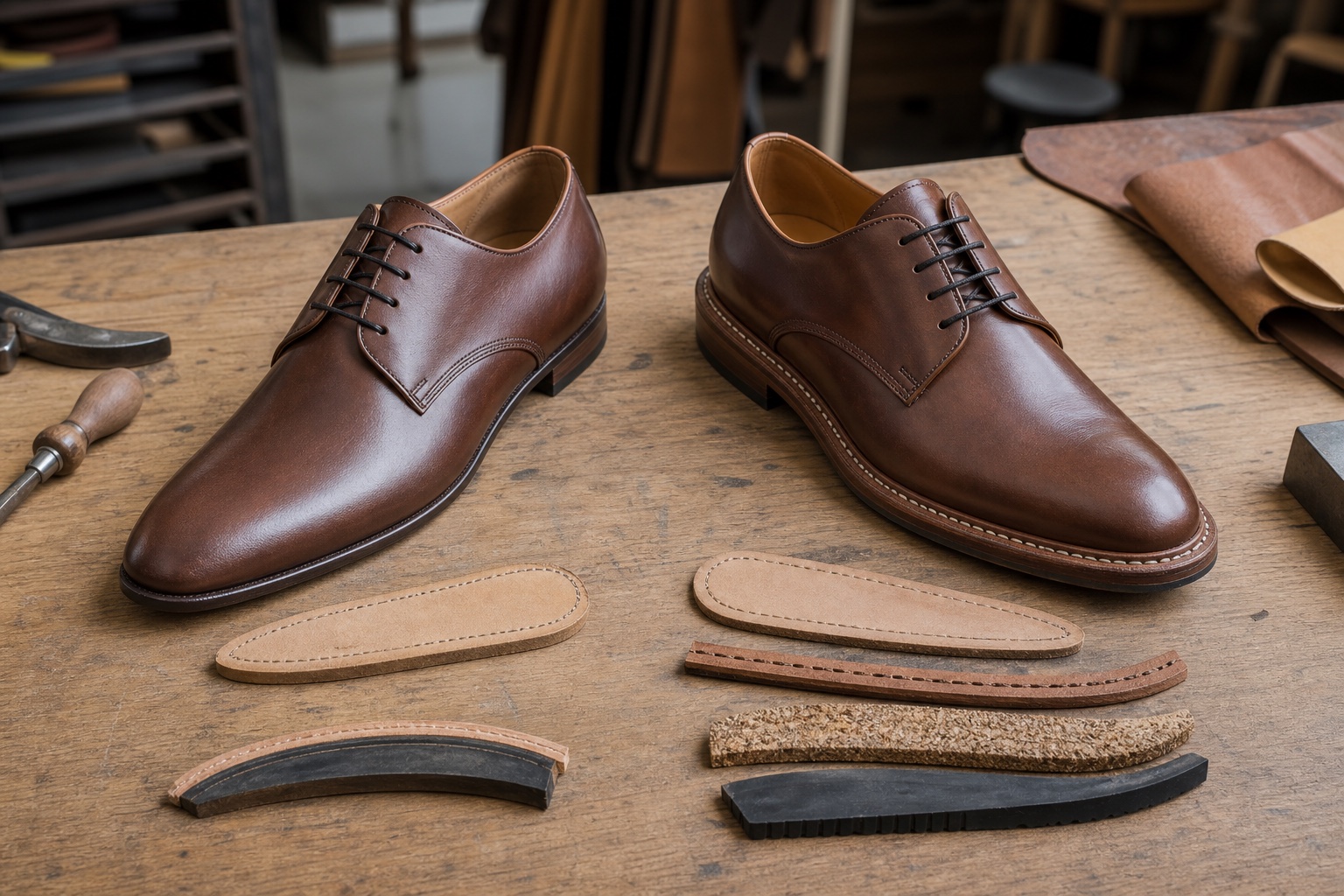
For buyers comparing Blake stitch vs Goodyear welt for private label shoes, the useful question is not which construction sounds more prestigious. It is which one supports the silhouette, use, repair plan, price position and production route of the actual style.
This guide was checked against current ISO and SATRA information on July 21, 2026. Any test method and acceptance value should be agreed for the exact shoe, claim, destination market and intended use.
What changes between Blake and Goodyear welt construction?
In a Blake construction, a machine-sewn bottom stitch passes through the shoe's bottom assembly. This can support a narrow sole edge and a clean, low-profile appearance. The buyer should approve where the stitch is visible inside the shoe, how it is covered, how the outsole channel is closed and whether the selected sole material can take the stitch without an unacceptable appearance or flex risk.
In a Goodyear welt construction, the upper and bottom assembly are joined to a welt, and the outsole is attached to that welt. The layered bottom commonly includes an insole structure, welt, filler and outsole, each of which affects thickness, edge shape, flexibility and finishing. Our existing Goodyear welt buyer checklist covers that route in more production detail.
Construction names hide variations. Welt material, insole preparation, filler, stitching, outsole channel, heel build and edge finish can all change. Ask for a bottom cross-section or a cut development sample when the internal build is commercially important.
Blake vs Goodyear welt: buyer trade-offs
| Buyer decision | Blake direction | Goodyear welt direction | What to approve |
|---|---|---|---|
| Visual profile | Often supports a closer-cut, slimmer edge | Usually makes the welt and layered edge more visible | Edge width, sole thickness, toe spring and heel proportion on the finished sample |
| Initial flexibility | Can feel more direct and flexible with a light sole package | May feel more structured because of the bottom build | Whole-shoe flex point, fit and walking trial rather than a construction label |
| Outsole choices | Leather and suitable rubber directions can work when stitching and channel details are controlled | Leather, rubber and combined soles can be attached to the welt when the design is engineered for them | Material, thickness, channel, stitch, tread, edge finish and replacement plan |
| Water claim | Stitch holes and upper-bottom interfaces still need a complete design assessment | A welt does not make every shoe waterproof | Materials, seams, construction, treatment and an agreed whole-shoe test |
| Repair story | May be resoled by a repairer with suitable machinery and enough remaining material | Often selected when planned outsole replacement is part of the product direction | Exact repair route, local service access and which components can be replaced |
| Production complexity | Fewer bottom-building operations can suit a streamlined stitched dress-shoe program | More components, specialist operations and finishing decisions need control | Factory process, sample sequence, component sources and bulk inspection plan |
These are directions, not promises. A heavy Blake shoe can be stiffer than a light welted shoe. A poorly executed Goodyear welt shoe can fail the buyer's appearance or comfort target. Compare complete samples built on the intended last and sole package.
When Blake construction fits a private label line
Blake can be a strong starting direction for sleek Oxfords, Derbies, loafers and other shoes where a narrow edge and lighter visual profile matter. It can also make sense when the range needs a stitched construction without the pronounced welt appearance of a traditional welted bottom.
The risk is assuming that “Blake” completes the specification. It does not. Record the insole, outsole material, stitch thread, stitch position, channel treatment, internal sock treatment, heel build and edge finish. If a light-colored lining or sock is planned, inspect whether the bottom stitching telegraphs through or creates an unwanted ridge.
When Goodyear welt fits the product brief
Goodyear welt construction can suit structured dress shoes and boots where the welt line, layered bottom and traditional edge treatment are visible parts of the design. It may also support a product plan that expects outsole replacement, provided the exact components and repair route make that claim realistic.
The trade-off is more process detail. Welt width, joint position, insole preparation, filler, outsole stitching, channel closing, heel attachment and edge finishing all need an approved reference. Use the shoe outsole materials guide to define what the bottom needs to do before selecting leather, rubber or a combined sole.
When neither construction is the right answer
A cemented, cupsole, direct-moulded or another construction may be more suitable when the shoe needs a different weight, appearance, weather performance, tooling route or price structure. A casual sneaker should not be forced into a dress-shoe construction comparison simply because stitched soles sound valuable.
Start with the user, silhouette, fit, flex and outsole. Then ask the manufacturer which construction can repeat those priorities in the expected size range and production conditions.
Put the construction into the tech pack
A construction callout should identify the complete bottom, not just one word. Add these fields to the shoe tech pack:
- Construction name and section: Blake, Goodyear welt or another route, supported by a side section or approved physical reference.
- Last and fit direction: last code, size system, fitting size, toe shape and agreed fit comments.
- Upper and lining: production article, thickness direction, reinforcement and lasting allowance.
- Insole system: material, structure, visible treatment and any rib or attachment details.
- Welt or edge: material, color, width, joint position, wheeling or decorative treatment where applicable.
- Filler and bottom layers: material and placement without substituting unapproved components.
- Outsole: material, supplier article, thickness, tread, channel and surface finish.
- Thread and stitching: thread specification, color, stitch route and approved appearance.
- Heel build: base, lifts, attachment, height, pitch and edge finish.
- Branding: sock, outsole, waist and packaging marks, with artwork revision.
- Performance plan: intended use, claims, applicable methods and written acceptance criteria.
- Substitution control: no change to the approved bottom materials or process without written approval and a new reference.
Use testing to answer a defined risk
ISO 24266:2020 specifies two methods for determining whole-shoe flexing durability and notes that the methods may not give comparable results. ISO 17707:2005 addresses outsole flex resistance and the effect of sole materials and surface patterns on cut growth within its stated scope. Neither page supplies a universal pass value for every private label shoe.
For a water-resistance direction, SATRA's TM77 assesses completed footwear for water penetration while it is repeatedly flexed. This is why “welted” or “stitched” should not be used as a waterproof claim without testing the complete design.
Choose the likely failure first: outsole cut growth, a stitch channel opening, internal stitch discomfort, welt separation, edge damage or water ingress. Then have a qualified laboratory or footwear technician confirm the specimen, method, conditioning and acceptance rule.
Approve quality at three separate stages
1. Sample approval
Approve fit and construction on the same sample. Check the last shape, pair weight, flex point, sole thickness, edge width, stitch line, channel, welt joint, heel balance, internal sock and walking feel. Photograph the bottom, waist, heel, welt or edge, and inside of the shoe. If the internal build is critical, keep a cut sample or section with the sealed reference. The shoe sample approval workflow explains how to record revisions before bulk starts.
2. Bulk production control
Identify upper, insole, welt, filler, outsole, heel and thread lots before assembly. Compare bottom components with the approved articles and stop unapproved substitutions. During production, monitor lasting position, stitch route, welt or edge width, channel preparation, filler placement, outsole alignment, heel seating and edge finishing. Record corrections by production lot rather than relying on verbal instructions.
3. Pre-shipment inspection
Inspect finished pairs from sampled cartons against the sealed sample and size specifications. Check pair matching, rocking, heel stability, outsole alignment, open channels, skipped or damaged stitches, loose welt ends, edge finish, visible adhesive, sock condition, labels and packaging. Flex and try on the inspection sample where the agreed plan requires it, then document defects with the shoe size and exact location.
What changes cost, MOQ and timing?
Cost is shaped by the insole and outsole materials, welt, filler, thread, heel build, number of specialist operations, edge finishing, test scope, expected rejection allowance and whether the factory already runs the construction. A custom outsole, unusual welt, new last, special channel or extra color can introduce its own supplier minimum, tooling work or setup.
Ask for the minimums of the finished shoe and key components separately. The available size range, outsole mold coverage and color split can matter more than the total order headline. Lead time also depends on material booking, bottom preparation, sample revisions, testing and the production line's capability. Request a stage-by-stage schedule for the actual specification instead of accepting a generic promise.
Email-ready construction quotation checklist
Subject: Blake or Goodyear welt private label shoe quotation
- Shoe type, intended use and reference photos from side, bottom and inside
- Preferred construction and the reason: slim profile, visible welt, flex direction or repair plan
- Last reference, fitting notes, size range and width requirements
- Upper, lining, insole, outsole and heel material direction
- Target sole thickness, edge width, toe spring and heel height
- Outsole channel, stitch appearance, thread color and internal sock treatment
- Welt, filler and edge-finishing details where applicable
- Logo positions, artwork files and packaging direction
- Expected quantity by color and size, plus destination market
- Performance claims, test methods and acceptance criteria already required
- Sample stage, approval record and any physical reference available
- Request for component minimums, tooling items, sample stages and production schedule
Ask the supplier to reply line by line with the proposed construction, component sources, open decisions and any point that needs a physical sample before quotation can be firm.
What to send us
Send the shoe reference, intended use, preferred construction, last or fit direction, upper and sole materials, size range, expected quantity, destination market, branding, test needs and current sample stage. If you are undecided between Blake and Goodyear welt, explain which matters more: a slim edge, a visible welt, initial flexibility, weather direction, repair plan or target price position.
Use the contact form for an initial construction and quotation brief. If the project includes tech packs, last files, outsole drawings, test reports or several sample revisions, open a thread in the Buyer Portal so the approved files and decisions stay together.
When the product direction is ready, review Goodyear welt shoes before requesting a quotation.