
Selling Crocodile Shoes and Bags: The Sell-Through and Reorder Playbook
Part of: Exotic Leather Guide
Here is the moment this article is written for: your first crocodile pieces sold, the shelf looks thin, and you are wondering whether that was luck or a business. We build crocodile leather shoes and bags for stores in exactly that spot, and the honest answer is: the first order proves almost nothing. The reorder is where a program starts. What follows is what we tell our own buyers about selling the material well, reading the sell-through, and getting the second batch right.
New to the category? Start with the retail stocking guide instead — it covers first orders, assortments and the sample cycle. This one assumes the goods are already on your floor.
Sell the material the way it actually is
Genuine crocodile doesn't need embellishment, and frankly it punishes it. Every skin carries its own scale pattern. Put two pairs of the same style side by side under your window light and a customer will spot differences in the tiles — that's the product working, not failing. Stores that say this out loud, early, sell more of it. Stores that let the customer discover it at home get returns.
Same rule for your price tiers. Plenty of our retail buyers carry genuine crocodilian leather next to crocodile-pattern embossed cowhide, and it's a sensible pairing — but only if the labels say what the invoice says. The customer paying more should be able to see, in writing, what the difference is. If your staff need a crash course, the guide on how to distinguish exotic skin was written for exactly that.
The three questions customers actually ask
After years of these conversations reaching us secondhand, they boil down to three.
"Is it real?" Don't argue it — show it. Two genuine pieces never match tile-for-tile; embossed patterns repeat like wallpaper. Then point to the material wording on your paperwork. Thirty seconds, done.
"How do I look after it?" Keep the answer short enough to remember at the till: wipe it dry if it gets wet, keep it off radiators and out of long sun, store shoes with trees, give it conditioner a couple of times a year. We keep a customer-friendly version in our crocodile care guide — some stores print it and slip it in the box. Cheap loyalty, honestly.
"Is this legal?" Fair question, and the answer should be calm and boring: genuine crocodilian leather moves through the supply chain under CITES paperwork, and you (the store) hold the documents from your import. Know where that file is. The CITES document checklist covers what should be in it.
Put a program on the floor, not a piece
One crocodile shoe on a shelf is a curiosity. A shoe, a bag and a matching belt in the same color family is an outfit, and outfits are what people actually buy. The belt matters more than its price tag suggests — it catches the customer who hesitates at the shoes, and belt buyers come back.
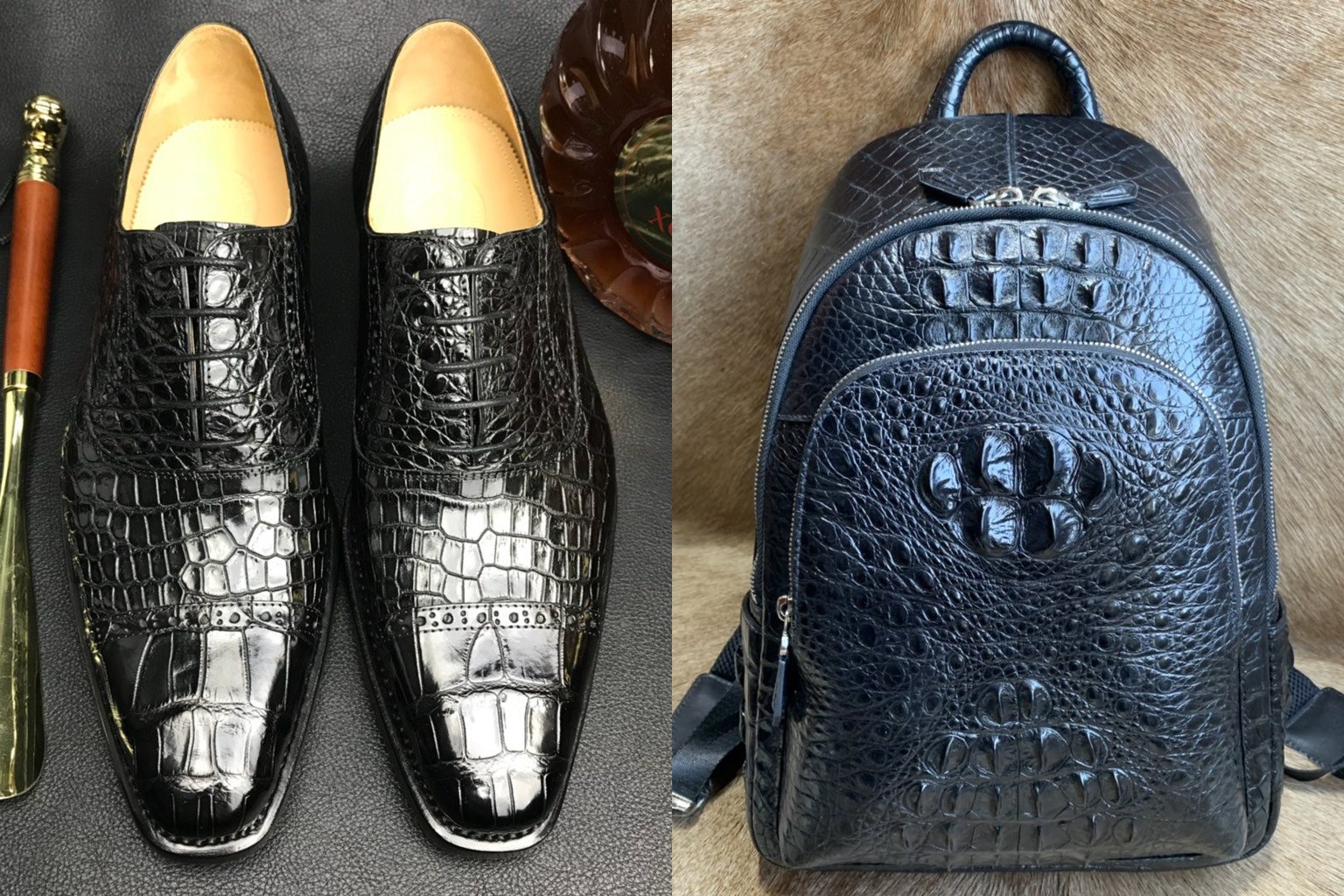
And keep one loud piece visible even if it rarely sells. A hornback backpack, a bold blue pair. Its job is to stop foot traffic; the black and brown staples standing next to it do the volume. Our crocodile shoes and crocodile bags ranges are set up so you can pull staples and one story piece from the same order.
When is a reorder actually justified?
We watch buyers get this wrong in both directions — waiting until the winner is gone, or reordering something that sold once to one enthusiastic customer. Go by signals.
| What you're seeing | What it usually means | What we'd do |
|---|---|---|
| Middle sizes gone, edges left | The style works. Your size curve was right in the center, thin at the ends. | Reorder now, weighted to what went first. Don't wait for the last pair. |
| People keep asking for a sold-out size or color | That's demand you can pre-sell against. | Put named-customer pieces in the reorder. Deposits if your market takes them. |
| Bags outsold shoes, or the reverse | Your customer base leans one way. Very common, very useful. | Rebalance toward the winner. Keep a token of the other side on display. |
| One piece flew out — once | Could be a trend. Could be one person's taste. | Test again cheaply: exotic styles start from one pair, so buy it twice before believing it. |
The timing math is boring, but it decides everything
Samples typically run 7-15 days with us; custom bulk, 15-21 days; then shipping, by air or sea. Add it up and the conclusion writes itself: a reorder placed when a winner is roughly half sold lands about when the shelf would have gone empty. A reorder placed after sell-out means weeks of a display with a hole in it — and the customer who wanted that pair didn't wait for you.
One thing that shortens the cycle a lot: if the style is unchanged, say so in the first line of the email. Repeat batches of an unchanged style can often skip fresh sampling — production photos against the approved reference do the job. Starting quantities by category are on the low MOQ ordering page if you're widening the program while you're at it.
Drift is the reorder killer nobody budgets for
The real risk on batch two isn't price. It's drift — the new batch coming back a shade darker, a touch shinier, hardware half a tone off. Your customers have already decided what this product looks like; the friend who admired the first pair is the reason the second one sells.
Three habits keep a repeat batch honest:
- Photos against the reference. New batch next to the approved reference pair or piece: scale direction, color depth, finish, hardware tone. Side by side, same light.
- Know what's allowed to vary. Scale layout changes from skin to skin — that's the material. Last shape, construction, color family and finish should not move. Say which is which when you review, so nobody argues about it later.
- One thread, forever. Keep the reorder in the same Buyer Portal thread as the original. Spec, sample comments, QC photos — all of it travels with the program. Order three should take ten minutes to place. That's the point.
Pre-shipment photos for a reorder are the same set as a first order — front, side, sole or base, interior, label, box, plus counts by size and color. Full method in the pre-shipment inspection checklist.
Scaling to wholesale without strangling your cash
When the program proves out, depth beats breadth, in this order:
- Fill the size curve on proven styles first. A known winner in more sizes sells faster than a new experiment.
- Then colors. A proven last in a new color is a small bet. A new style is a bigger one.
- Then neighbors. A winning shoe carries a matching belt; a winning bag carries a smaller piece from the exotic leather bags range.
- Private label last, once reorders are routine. When styles repeat on their own, your logo, insole print and box turn the program into a house brand — details on the private label program page.
For wholesale buyers consolidating bigger multi-style orders: remember CITES paperwork for genuine crocodilian leather is per-shipment. Fewer, larger shipments are simply less admin than many small ones.
The reorder email we can quote the same day
Eight things. If they're all in the first message, there's usually nothing left to ask you.
- The original order reference — SKU list or the thread where batch one was agreed.
- Winning styles: what sold, what's left, how many you want per style.
- Size and color split, weighted to what actually sold — not the original spread.
- Changed or unchanged, per style. Unchanged can skip resampling.
- Any pre-sold, named-customer pieces that must be in this batch.
- The date you need it on the shelf, so we plan backward from there.
- Air or sea. Air rescues a broken size run; sea suits planned depth.
- Documents: same as last shipment, or tell us what changed.
What to send us
Reordering? Send the original reference, winning styles with quantities and size split, unchanged-or-changed per style, pre-sold pieces, target shelf date and destination. First order instead? Start from the retail stocking guide and send the styles you'd like to test. Either way it all lives in one thread — and each order gets faster than the one before. That, more than anything on this page, is what a supplier relationship is for.
Buyer FAQ
Crocodile Reorder FAQ
When should a store reorder a selling crocodile style?
Set the reorder point from actual sales velocity, stock by size and the project-specific replenishment schedule confirmed in writing. Ask the supplier to separate material availability, any sample reapproval, production, inspection, document preparation and freight time; do not plan from a generic lead-time range.
How do I keep a repeat crocodile batch consistent with the first order?
Keep the reorder in the same Buyer Portal thread as the original order and review production photos against the approved reference pair or piece. Scale layout varies naturally between skins, but construction, last shape, color family, finish, and hardware tone should match the reference.
How does a retailer scale a crocodile program to wholesale quantities?
Scale proven styles by reviewing the size curve, repeat demand and the written production specification before adding colors or adjacent products. For every shipment, confirm the exact species claim, source, product form, quantity, route and destination; consolidation does not by itself determine or simplify CITES requirements.