
Custom Exotic Leather Belts: How to Specify One Properly
Part of: Exotic Leather Guide
A belt is the hardest easy product we make. It looks like the simplest thing in an exotic leather range — one strip, one buckle, a few holes. But that strip has to be a single continuous piece of hide, and the moment you understand what that means for cutting, most of the confusing parts of a belt quotation start making sense.
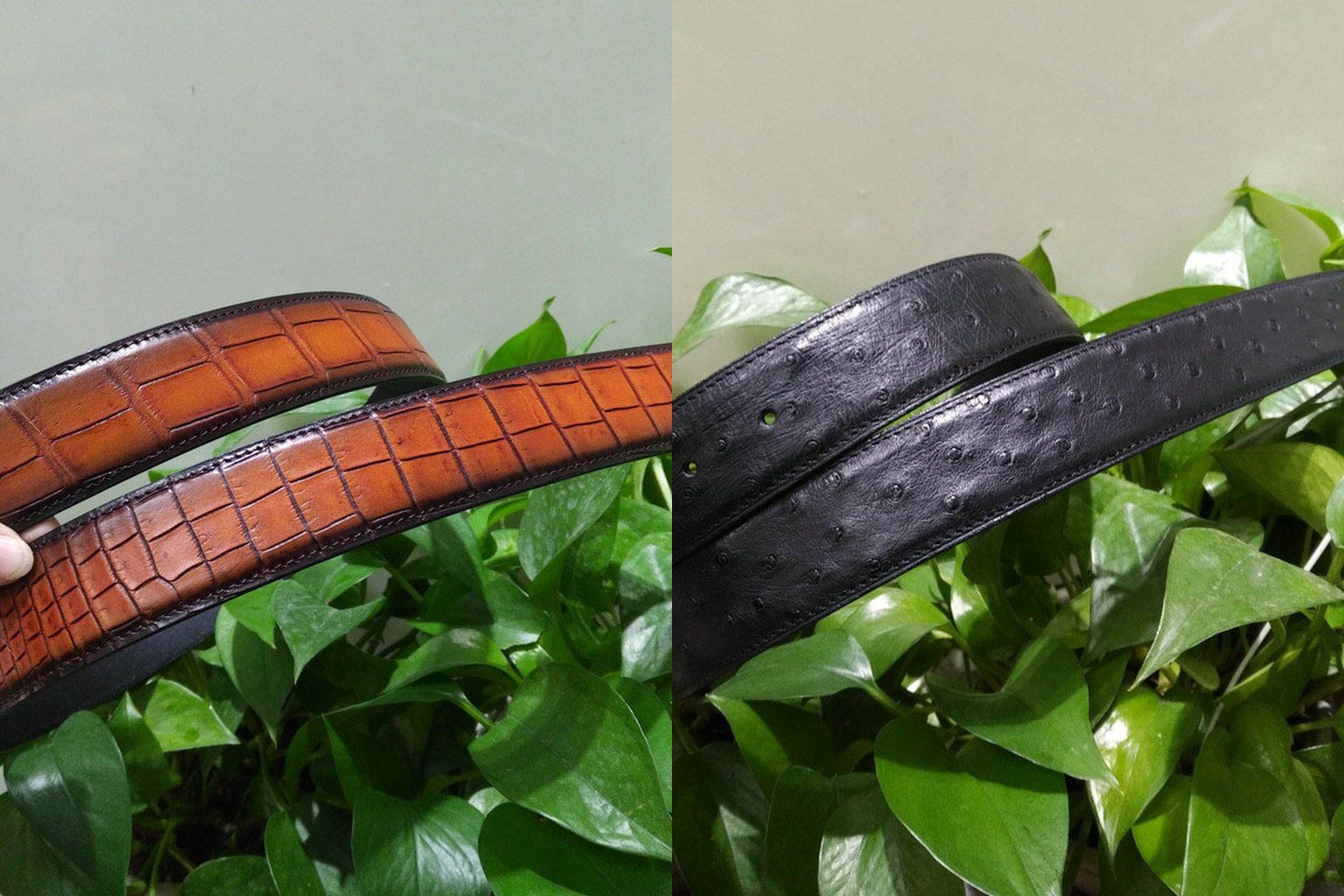
This is for buyers ordering custom belts to sell — boutiques adding an accessory tier, brands building a house line, or anyone who has asked for "a crocodile belt" and been surprised by the follow-up questions. If you are instead trying to judge whether a belt in your hand is genuine, our older guide on what a real leather dress belt looks like is the better starting point.
Why one long strip changes everything
A bag panel can be cut from a good patch of hide, working around whatever the animal's life left behind. A belt strap cannot. It needs an uninterrupted run of clean leather from buckle end to tip — and it needs the pattern to behave sensibly along that whole run.
Two consequences follow immediately. First, usable hide length caps strap length, which is why very long sizes in genuine exotic sometimes cost more per piece or need a different cut plan. Second, a strip crosses more of the hide's natural variation than a small panel does, so the tiles or follicles will change scale from one end to the other. A little of that is the material being honest. A lot of it looks like a mistake. Where the line sits between those two is exactly what the sample stage is for.
Full exotic or inlay: pick before you price
This is the fork that most buyers do not know exists, and it changes the number more than any other choice.
| Construction | What it is | Trade-off |
|---|---|---|
| Full exotic strap | The entire visible strap is crocodile, alligator or ostrich, cut as one strip. | The real thing, and priced like it: maximum exotic material per belt, longest sizes hardest to cut. |
| Exotic inlay | A calf leather strap with an exotic panel inlaid down the center, exotic edges visible around it. | Same visual cue at a much lower material cost. Reads as a dress belt rather than a statement belt. Popular for entry price points and for matching a shoe without matching its price. |
Neither is a compromise on honesty as long as the description says which one it is. An inlay belt is a calf belt with an exotic inlay, and it should be labeled that way — not as a "crocodile belt". Buyers who blur that line get returns; buyers who explain it sell both tiers.
Tile and quill direction across the strap
On a crocodile belt, the classic dress look runs tiles across the strap width, roughly symmetrical about the center line, tiles getting smaller toward the edges. That comes from cutting along a particular direction of the belly. Cut differently and you get a livelier, less formal rhythm — not wrong, just a different product.
On ostrich, the equivalent question is quill coverage: whether the strap runs through the dense crown area, transitional quill, or smooth leather. A full-quill ostrich strap is a narrow ask for the same reason a full-quill bag panel is — the dense area on each hide is limited. Our ostrich leather guide explains the crown in detail, and everything in it applies to a strap.
Send a reference photo. Two buyers using the identical words "even tiles" often mean visibly different belts, and a picture settles it in one message instead of three.
The parts buyers forget to specify
- Width. Dress and casual widths behave differently in a buckle and read differently with a suit. State the width you want rather than leaving it to house standard.
- Size range. Belts are sized, and the range you order determines how many long straps must be cut from premium hide length. Give the sizes you actually sell.
- Lining. Calf-lined is the common build; a fully exotic-lined belt is a different, more expensive product. One of our current crocodile dress belts is lined with crocodile on the back — say if that is what you want, because it will not be assumed.
- Buckle. Plating tone, style, and crucially the attachment: fixed and stitched, or a screw fitting that lets the wearer swap buckles. Interchangeable buckles are a selling point and a cost line.
- Edge finish. Painted or folded, and how the edge treatment handles the flex zone near the buckle — this is where cheap belts fail first.
- Hole count and spacing, plus whether you want a perforated style rather than plain.
- Branding. Embossed logo on the back panel, on the keeper, or engraved on the buckle. Each is a different tooling question.
- Packaging. Coiled in a box, rolled in a pouch, or hung — this affects both presentation and shipping volume.
Checking the belt sample
- Flex the buckle end. Fold it as a wearer would. Look for edge paint cracking, lining lifting, or stitch strain right behind the buckle. That zone takes the most abuse of any part of a belt.
- Lay it flat and look down its length. The strap should be straight and evenly thick, without a wave or a taper you did not ask for.
- Check the pattern against your reference. Gradual scale change along the strip is the hide. An abrupt jump, or tiles running off-center relative to the edges, is a cutting decision to accept or reject now.
- Test the buckle and holes. Pin should seat cleanly in every hole; keepers should hold the tail without stretching.
Photograph the approved belt flat, in daylight, both sides. That reference is what a repeat batch gets compared against — the method is in the reorder playbook.
Ordering, lead time and paperwork
Our belts are made to order rather than stocked at fixed prices, starting from one piece. The belt sample stage typically runs 7-12 days once the leather, buckle, size and logo details are confirmed — note the condition, because the clock genuinely starts at confirmation, and an unanswered question about buckle plating is the most common reason a belt sample sits still.
Because belts pair naturally with footwear, most of our belt orders travel with a shoe order. That is worth doing deliberately: one shipment, one set of documents. For genuine crocodilian and other CITES-listed materials, documentation is arranged per shipment, so consolidating is simply less admin — the questions to ask are in our CITES document checklist. Browse the current range on the exotic leather belts page, and if you are pairing with shoes, the crocodile shoes range is the usual companion.
What to send us
Send the construction (full exotic or inlay), the material, strap width, size range, lining, buckle direction including attachment type, branding, quantity and destination country. A reference photo of the pattern look you want is worth more than any adjective. You will get material wording, a cut plan and a written quotation back — and if the belt is going out with a shoe order, say so in the first message so both are planned into one shipment.
If the shoe half of that pairing is still open, our alligator leather shoes range uses the same hides, so strap and upper can be cut to match rather than approximated later.
Buyer FAQ
Exotic Leather Belt FAQ
What is the difference between a full exotic belt and an exotic inlay belt?
A full exotic strap is cut entirely from crocodile, alligator or ostrich as one continuous strip. An inlay belt is a calf leather strap with an exotic panel inlaid down the center, which uses far less exotic material and costs considerably less. Both are legitimate as long as the description and label say which construction it is.
Why does belt length affect the price of an exotic leather belt?
A belt strap has to be cut as one continuous strip of clean hide from buckle end to tip. Usable hide length therefore caps strap length, so longer sizes in genuine exotic can require a different cut plan or a premium section of the hide. Giving the factory your real size range up front avoids a re-quote later.
How long does a custom exotic belt sample take?
The belt sample stage typically runs 7-12 days after the leather, buckle, size and logo details are confirmed. The clock starts at confirmation, so an open question about buckle plating or lining is the most common reason a belt sample is delayed.