
How Long Does Crocodile Leather Last? An Honest Answer From the Workshop
Part of: Exotic Leather Guide
A customer once emailed us a photo of a belt we'd made him eleven years earlier, asking if we could build a second one "before this one becomes embarrassing." It didn't look embarrassing. It looked like eleven years of daily wear: a settled crease at the buckle, edges burnished from trouser loops, color deepened half a shade. That photo answers the durability question better than any spec sheet — but people deserve the specifics, so here they are: what actually lasts, what actually fails, and what the years cost you compared with ordinary leather.
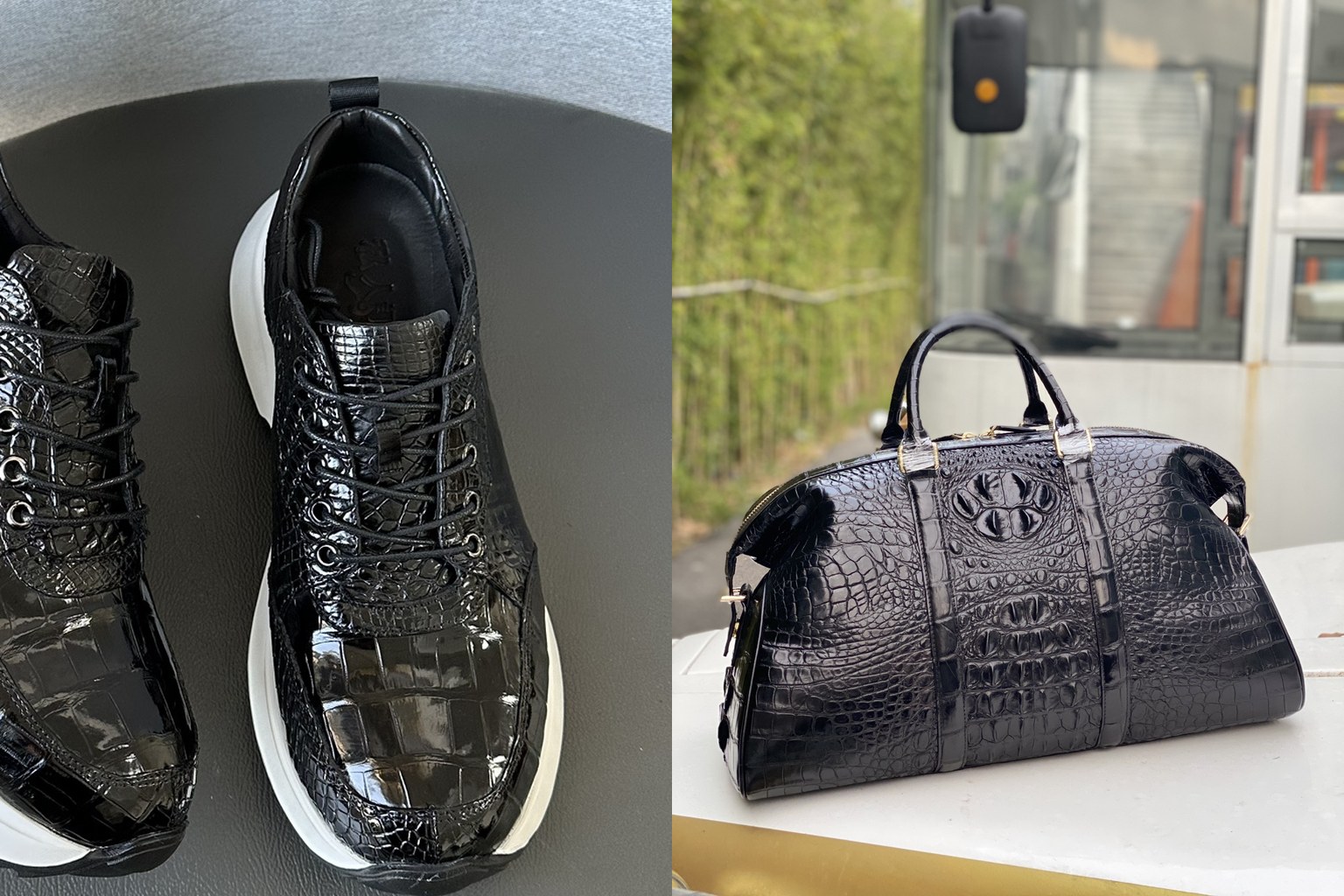
The short answer, then the honest one
The hide itself, kept out of sun and heat and wiped down occasionally, lasts decades. We repair crocodile pieces from the 1990s whose panels are still sound. Structurally, crocodilian leather is dense-fibered and the tile surface shrugs off the small scrapes that scar smooth calf — it's genuinely one of the most durable leathers made into consumer goods.
But here's the honest part: the leather is almost never what fails. Shoes die at the sole, bags die at the corners, belts die at the crease, wallets die at the fold. A crocodile product lasts as long as its weakest ordinary component — which is why a well-built crocodile piece outlives several calf equivalents, and a badly built one dies exactly as fast as any cheap bag, expensive skin and all. Durability is a construction question wearing a material costume.
Shoes: the sole clock and the resole ladder
On any pair of crocodile shoes, parts wear out in a fixed order: outsole first and by a wide margin, then heel, then the lining at the heel counter. The upper — the crocodile — is nearly always the last thing standing. That order is good news, because everything ahead of the upper is replaceable.
How replaceable depends on a decision made before the shoe was built. A Goodyear-welted pair can be resoled repeatedly; each resole buys years, and the upper's condition — not the sole's — decides when the shoe retires. A Blake-stitched pair resoles fewer times but starts lighter and more flexible. Cemented construction, common on casual and sneaker styles, generally isn't resoled — there the sole *is* the clock. Our construction comparison covers the trade-offs; the short version for longevity buyers is: welted formal shoes are decade purchases, cemented casual pairs are enjoy-and-replace purchases, and both are legitimate as long as you knew which one you bought.
Two habits multiply shoe life more than any product: rotation and trees. Leather that rests a day between wears sheds moisture instead of fatiguing, and a tree holds the vamp so flex creases settle instead of deepening. A rotated, treed, welted crocodile pair is the closest thing to a permanent shoe we know how to build.
Bags: corners, anchors, zips — in that order
Repair requests for bags follow the same script every time. First the base corners, scuffed from being set down on hard floors — which is why metal base feet, the cheapest fitting on the whole bag, are the best longevity feature you can insist on. Second, the strap and handle anchors, and note that they fail at the stitching, not in the strap's middle — reinforced, stitched-through anchors are the difference between a ten-year bag and a three-year one. Third, the zip, usually killed by grit that was never brushed out. The crocodile panels themselves? We've replaced linings inside bags whose exterior looked five years old at twenty.
A travel piece like a duffle lives the hardest bag life there is — overhead bins, trunk floors, hotel luggage carts — and hornback cuts take that abuse particularly well, since the raised ridge is the toughest part of the hide and scuffs read as character on a rugged piece rather than damage on a formal one.
Belts: the crease is the whole story
People search "how long do exotic leather belts last" expecting a number, so here's the honest version. An exotic belt has exactly one wear point that matters: the flex zone where it bends at the buckle. That crease starts forming on day one, it's permanent, and how fast it deepens depends on two things — whether the front panel is one continuous piece (joined panels crease faster and can separate), and whether the belt gets rest days.
From repair experience: a well-made one-piece crocodile belt worn daily typically shows a settled, obvious crease within a couple of years and keeps working for many more — the eleven-year belt in our opening was exactly this. The same belt alternated with a second one ages at roughly half the pace, which is why "buy two, rotate" isn't a sales line; it's the cheapest way to double the life of both. Edges wear next, from trouser loops — layered, sanded edges outlast a single thick coat of paint by years. The belt sourcing guide covers the construction checks in detail.
Wallets: the hardest life in leather
A wallet gets folded, sat on, and jammed against keys several times a day — no bag endures anything close. Crocodile handles this well for the same reason it handles everything well: dense fiber, tough scale surface. What decides a croc wallet's lifespan is the fold. Look at where the wallet bends: the tiles there should be small and flexible (good makers place the cut so the fold lands between tile rows, not across a large plate), the edges should be layered and sanded, and the interior should be leather rather than fabric that frays at the card slots. This, incidentally, is a big part of why two croc wallets can differ several-fold in price while looking similar in a photo — cut placement, edge work and interior materials are invisible online and obvious in year three.
How the two finishes age — pick your future
Glazed and matte crocodile don't just look different new; they age along different curves, and knowing the curve before buying prevents most disappointment.
Glazed holds its shine for years with nothing but a dry cloth — but it records history: fine scratches, and permanent flex creases across a shoe's vamp from the first wear. A glazed piece at year five looks like a mirror with a biography. If that biography would bother you, don't buy glazed for daily use.
Matte ages the way people hope leather ages: it darkens slightly where handled, blends scuffs into the surface, and looks broken-in rather than worn out. Hornback and textured cuts are the most forgiving of all. Matte for daily pieces, glazed for occasion pieces is the rule of thumb our repeat customers converge on without being told.
Repair, don't retire — the habit that separates decade owners
The customers whose pieces reach ten and fifteen years share one habit: they treat repairs as maintenance, not as a verdict. A resole costs a fraction of a new pair and resets the shoe's clock entirely. A zip replacement takes a repairer an afternoon and saves a bag whose leather has fifteen good years left in it. Re-edging a belt, restitching a strap anchor, replacing a scuffed base corner panel — all routine work, all far cheaper than the piece they rescue. The mistake we see constantly is the opposite instinct: a bag gets retired over a jammed zip while its crocodile panels are barely broken in, which is like scrapping a car over a flat tire.
One caveat that matters: take exotic pieces to a repairer who actually works with exotic skins. A cobbler who treats a crocodile vamp like calf — sanding across scale edges, feeding it calf conditioner — can do more harm in one visit than years of wear. Ask the question before handing the piece over; a good repairer answers it happily.
Climate is the other quiet variable in how many years you get. Humid coastal summers push toward mildew and ask for silica in the storage bag and a monthly check; dry inland winters pull moisture out of the hide and ask for shape support and distance from radiators. Neither climate is a problem — both just have a season where the closet, not the street, is where the piece is at risk. Storage rules are in the care guide, and they're the difference between a hide that lasts and one that quietly dries out in year six.
The cost-per-year math, done honestly
Genuine crocodile dress shoes in our catalog run US$300-780; good calf dress shoes commonly cost a third of that. So the fair comparison isn't the price tag — it's price divided by years of service. A welted crocodile pair that gets resoled and rotated plausibly serves a decade or more; the calf pair bought at a third of the price rarely lasts a third as long, because it's usually cemented, unresoled and worn daily until it dies. Run those numbers and the crocodile pair is often the cheaper shoe per year — if you actually wear it for years, which is the real condition hiding inside every "is it worth it" question. The full pricing logic, including what moves a pair within the band, is in the price guide.
When crocodile is the wrong buy
We make our living selling this leather, so take this section seriously. Skip crocodile if: you want one pair of shoes for absolutely everything including rain, and won't rotate; you'll never spend the two minutes a week of care that exotics ask (the routine is in the care guide, and it's genuinely small, but it isn't zero); or the piece will live somewhere hot, damp and sunlit, like a car. In those cases honest crocodile-embossed calf gives you the pattern with calf's indifference to neglect, at a fraction of the price — the real-vs-embossed guide explains how to buy embossed knowingly instead of accidentally.
And durability only follows the material when the build deserves it. A crocodile bag with glued anchors and one-coat edges is a short-lived bag in expensive skin; the five-minute inspection in the luxury-grade guide is how you tell before paying.
Questions people ask about crocodile durability
How long do crocodile leather shoes last?
The upper outlasts everything else on the shoe. A Goodyear-welted pair that gets resoled as needed, rotated with another pair and kept on shoe trees serves for a decade or more — the sole and heel are replaceable, and the crocodile rarely quits first. A cemented casual pair lasts as long as its sole, since it generally can't be resoled; that's a legitimate purchase as long as you know it going in.
How long do exotic leather belts last?
Years to decades, decided almost entirely by the flex crease at the buckle. A one-piece front panel creases slower than joined panels and never separates; rotating between two belts roughly halves the wear rate of each. The crease itself is permanent and normal — a well-made crocodile belt keeps working long after it shows one, and edge quality (layered and sanded, not one thick coat) is what keeps it presentable in the meantime.
Does crocodile leather crack or peel?
Genuine crocodile doesn't peel — peeling is the signature of a coated synthetic or a PU-laminated fake, so a "crocodile" surface lifting off in a film answers the authenticity question by itself. Genuine hide can crack, but only after long neglect: heat, direct sun and total dryness. Room-temperature storage, shape support and an occasional wipe keep the hide supple for decades; a piece already dried out belongs with a restorer who handles exotic skins rather than under home oils.
Buy once, properly
If the durability case is what brings you to crocodile, order the piece built for it: welted construction on shoes, stitched-through anchors and base feet on bags, a one-piece front on belts. Everything we make starts from a single pair or piece — reference, your changes, a written specification, a sample in 7-15 days, repeat production in 15-21 days after confirmation. Tell us how hard the piece will live, and we'll build for that; the crocodile shoe range is where most people start. The eleven-year belt got its twin, by the way. Same spec. He's wearing them on alternate days now, exactly as we suggested the first time.
Buyer FAQ
Crocodile Durability FAQ
How long do crocodile leather shoes last?
There is no evidence-based universal lifespan for crocodile shoes. Wear frequency, fit, construction, outsole and heel wear, finish, moisture and heat exposure, storage, maintenance and repairability all affect service life. Confirm which components can be repaired and follow care instructions suitable for the exact finish.
How long do exotic leather belts last?
There is no universal lifespan for an exotic-leather belt. Flexing at the buckle, reinforcement, joining method, edge construction, finish, storage and frequency of use all matter. Inspect the crease, stitching, edges and layer separation over time rather than relying on a promise measured in years or decades.
Does crocodile leather crack or peel?
Cracking or surface lifting does not identify the material by itself. Coatings, finishes, adhesives, flexing, heat, moisture and prior treatment can fail on different materials. Stop using the item, photograph the affected area and ask the supplier or a qualified leather specialist to assess it; verify material identity through records or an appropriate test, not the damage pattern alone.