
Ostrich Leather Bags and Shoes: An Honest Owner's Guide
Part of: Exotic Leather Guide
Ostrich is the exotic people buy second — and the one they end up using most. The crocodile piece gets the compliments; the ostrich piece gets carried every day. We make both in our Guangzhou workshop, and after enough repeat orders a pattern is impossible to miss: customers come for crocodile, then quietly come back for an ostrich tote, an ostrich briefcase, a pair of ostrich shoes they wear into the ground. This guide is for the person circling an ostrich purse, handbag or pair of dress shoes and wondering what the leather is actually like to live with. Short version: it's the most practical exotic there is. Long version below, including the parts that aren't for everyone.
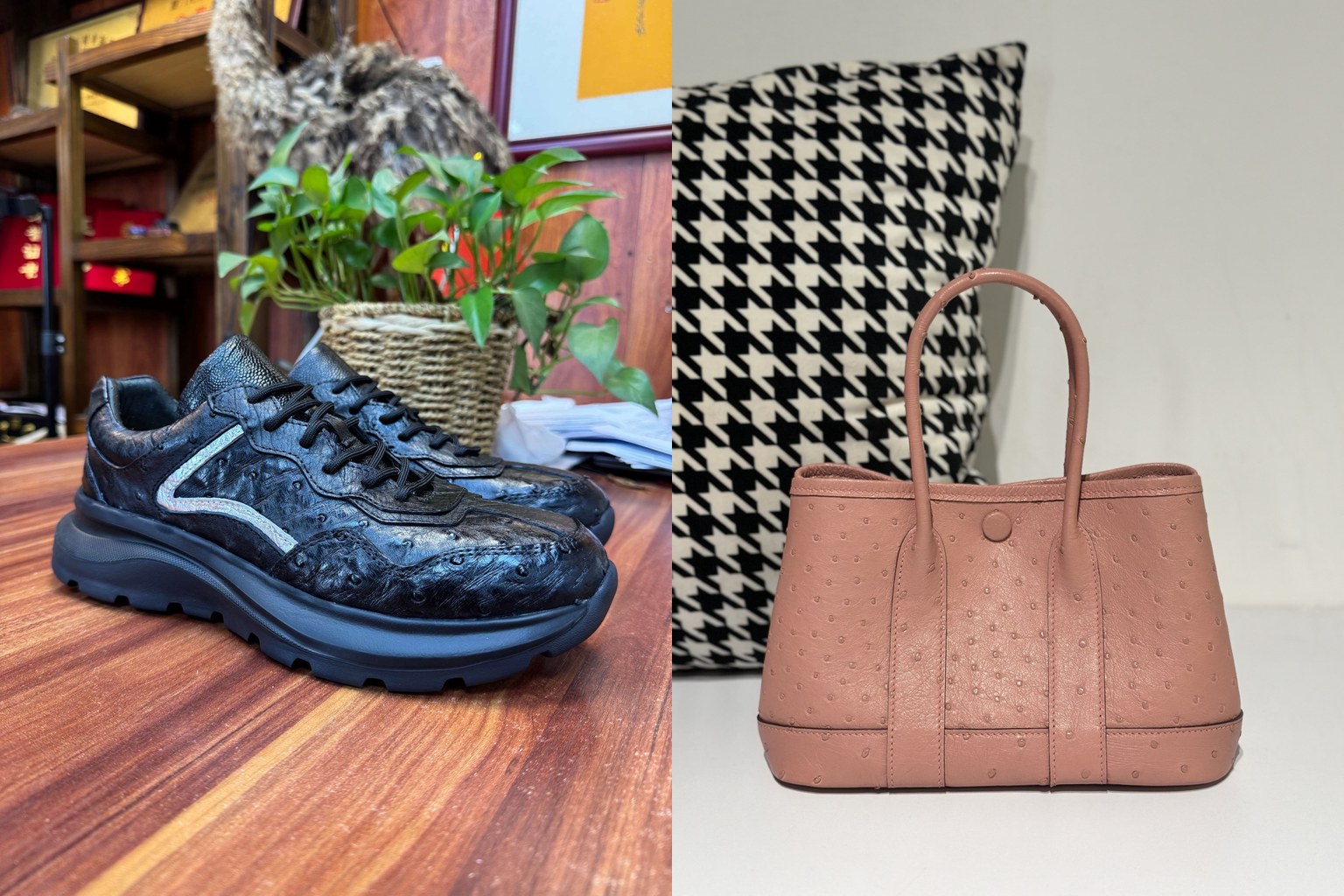
The quill pattern: love it or leave it
Everything about ostrich starts with the follicles — the raised dots scattered across the hide where feathers once grew. No other leather has them, nothing can convincingly fake them at close range, and they're the reason an ostrich bag reads as exotic from across a room without a single scale in sight.
They're also genuinely divisive, and we'd rather say that than sell around it. Some buyers fall for the pattern instantly; a few can't unsee the texture. If you're not sure which you are, look at close-up photos before ordering anything large — and know that only part of each hide carries the full quill pattern. The crown — the prime section — is where the follicles cluster densely and evenly, and it's what "full-quill" means on a product description. The rest of the hide is smooth, with scattered or no follicles, and it's honest, cheaper material for side panels, gussets and linings. A bag with full-quill front panels consumed the best of a hide; a "smooth ostrich" piece is the same leather at a friendlier price. Neither is a trick, but you should know which one a price is quoting — it's the single biggest lever in how two similar-looking ostrich bags can differ in cost.
Why it's the comfortable exotic
Ask a menswear forum for the most comfortable leather shoe to walk in and you'll get a hundred brand answers, but the material answer is simpler: the leathers that are soft, flexible and light win, and that's ostrich's whole personality. Where crocodile is dense and architectural, ostrich is supple from the first wear — there's barely a break-in period to speak of. It flexes with the foot instead of resisting it, it breathes, and a pair of ostrich shoes weighs noticeably less than the same build in crocodile.
That's why our ostrich dress shoes and casual pairs get worn daily in hot climates where a glazed crocodile oxford would stay in the closet, and why ostrich boots are the piece West-Texas wardrobes never retire. The comfort isn't a compromise on toughness either: relative to its weight, ostrich is one of the most durable leathers we work with. The BuyItForLife crowd asks for leather that lasts and stays comfortable; ostrich is the exotic that actually answers both.
One build note worth knowing: because the leather is soft, the shoe's structure comes from the construction rather than the hide. A Goodyear welt gives an ostrich shoe formal backbone and resole lives; Blake keeps it light and casual. On bags, the same logic means the frame, base and reinforcement matter more than they would in stiff crocodile — a soft leather on a lazy frame makes a shapeless bag, and it's the first thing we check on any ostrich sample.
Bags: what ostrich does better than anything
Three things make ostrich arguably the best daily-bag leather, exotic or not.
Weight. An ostrich tote or briefcase runs conspicuously lighter than crocodile at the same size. If the bag carries a laptop five days a week, that difference is your shoulder's quality of life.
Toughness that doesn't show. The matte, quill-marked surface shrugs off the small scuffs of commuting instead of recording them the way a glazed finish does. Scuffs blend; the bag looks lived-in, not beaten up.
Color. Ostrich takes dye deeply and evenly, which is why our ostrich range runs into sage green, denim blue, ceramic pink, golden brown and aqua — territory the crocodile catalog only visits carefully. The follicle texture keeps even a bold color grounded, so a pink ostrich tote reads as considered rather than loud. If you want an exotic bag in a real color, this is the skin for it.
For the ostrich briefcase buyers specifically: this is the quiet-luxury move in a meeting room. The quill pattern is unmistakable to anyone who knows leather and invisible to anyone who doesn't — it never announces a price the way glazed crocodile does. Pair that with the weight advantage and it's the working bag we recommend most often. The ostrich bag range covers totes, shoulder bags and business pieces; the sizing-and-hardware logic in our bag selection guide applies to ostrich unchanged.
What ostrich costs, honestly
Ostrich sits below crocodile and above ordinary calf — the accessible exotic. In our catalog, ostrich shoes run roughly US$200-260 against crocodile's US$300-780, and the same relationship holds across bags. Within ostrich pricing, the levers are the ones this page has already covered: full-quill coverage first (crown panels consume the prime hide), then construction, hardware and finish. A suspiciously cheap "ostrich" piece is usually one of three things — smooth-panel ostrich honestly priced, ostrich-pattern embossed calf that should say so, or a stamped fake. The follicles settle it up close: real quills are raised bumps that vary in size and spacing with a tiny pore where the feather sat; embossed dots repeat in a plate rhythm and flatten under a fingertip. The same judgment framework as our crocodile verification guide, different pattern. And the construction standards that justify any exotic price — stitched linings, reinforced anchors, layered edges — are in the luxury-grade guide; ostrich deserves them as much as crocodile does.
How it ages, and how to keep it
Ostrich ages the way people hope leather will: it softens further, deepens slightly in color where it's handled, and folds its scuffs into the matte surface as patina. The bag-care questions that fill women's-fashion forums — what do I condition with, how do I store it, why did the handle darken — get short answers on ostrich because the leather asks so little:
- Soft dry cloth after heavy wear, worked gently around the quills rather than scrubbed across them — the follicles are the one place grime can sit.
- The universal exotic rules from our care guide apply whole: no heat, no direct sun, no alcohol or calf products; blot water and air-dry; store stuffed, in the dust bag, never in plastic.
- Handles darken first on any light-colored bag — hand oils, not dirt — so a same-day wipe of the handles is the one habit that keeps a pale ostrich tote looking new.
- Shoes: trees in, a rest day between wears, and rotate. The soft upper recovers beautifully when rested and creases early when it never gets the chance.
What genuinely wears out is the same list as every leather product — soles, corners, zips, linings — and the honest lifespan math from our durability guide transfers directly: the hide outlives the parts, so buy the construction that lets the parts be replaced.
Ostrich or crocodile? The honest fork
People treat this as a taste question, but it's really a usage question, and it takes one sentence: crocodile for the occasions, ostrich for the calendar. If the piece will be admired, photographed and worn deliberately, crocodile's architecture earns its premium. If the piece will be carried to work two hundred days a year, thrown under airplane seats, and asked to look good without being thought about — that's ostrich's job description. The buyers who are happiest long-term usually end up with one of each, bought in whichever order their week demanded first. What we'd steer you away from is buying crocodile for an ostrich job: a glazed formal piece pressed into daily duty ages faster and less gracefully than the ostrich that was built for exactly that life.
Wearing it without thinking about it
The styling anxiety that fills menswear threads mostly evaporates with ostrich, because the leather does its talking at close range. A few honest rules from watching what our customers actually wear:
Men's ostrich shoes are easier to style than crocodile. The quill texture reads as "interesting" rather than "expensive," so black or brown ostrich dress shoes slide into ordinary tailoring without demanding the outfit be built around them. The current ostrich shoe collection shows the published reference styles; when a casual shape is not shown, send it as a separate brief and confirm feasibility, fit, construction and material direction before treating it as available. The one-statement rule we preach for glazed crocodile barely applies here; ostrich is the exotic you can wear twice a week without anyone keeping score.
Colored ostrich bags want quiet clothes, that's all. A sage green or ceramic pink tote over a neutral outfit is the whole trick — the color is the accent, the quill texture keeps it grown-up, and nothing else needs to match it. Deliberately matching an ostrich bag to ostrich shoes tips into uniform; one piece per outfit, same as any exotic.
Briefcases and business pieces: keep the hardware quiet. Silver over gold for conservative rooms, minimal logos, structured shape. The leather is the luxury; everything else on a working ostrich bag should whisper.
Ordering: one piece, your spec
Everything above applies to what we build to order, one piece at a time. Choose a reference from the bags or ostrich shoes range — or send photos — and specify what changes: color (this is the skin to be brave with), full-quill or smooth panels, hardware, lining, size or width. The specification comes back in writing, a sample follows in 7-15 days, and repeat production runs 15-21 days after confirmation. Tell us the job the piece is being hired for — daily commute, hot climate, boardroom — because with ostrich that answer changes the build more than any measurement does.
Quick answers on ostrich
Is ostrich leather durable?
Yes — relative to its weight it's among the most durable leathers made into consumer goods, and its matte quill-marked surface hides daily scuffs instead of recording them. The leather itself typically outlives the product's other components; soles, zips and linings wear out first, so construction that allows repair matters more than babying the hide. Softness is not fragility here.
What's the difference between full-quill and smooth ostrich?
Both come from the same hide. Full-quill refers to the crown section where feather follicles cluster densely and evenly — the prime, most expensive cut, and the look people mean by "ostrich leather." Smooth ostrich is the rest of the hide, with scattered or no follicles: the same leather, honestly cheaper, and legitimate for side panels or entire quieter pieces. Which one the visible panels use is the biggest driver of price between similar-looking ostrich products.
Are ostrich shoes comfortable?
They're the most comfortable exotic footwear we make, and it isn't close: the leather is soft and flexible from the first wear with minimal break-in, lighter than crocodile at the same build, and breathable enough for hot climates. The structure comes from the construction rather than the hide, so choose Goodyear welt for a formal pair with resole lives, or Blake and rubber soles for light daily wear.
The quiet exotic
Ostrich never wins the glass-case contest against glazed crocodile, and it doesn't try. It wins the next ten years — mornings when it's the bag you grab without thinking, the shoes that never asked to be broken in, the color that still makes you glad you were brave. If that's the piece you're shopping for, pick the reference, tell us its job, and we'll build it one at a time, the way the leather deserves.
Buyer FAQ
Ostrich Leather FAQ
Is ostrich leather durable?
Yes — relative to its weight it is among the most durable leathers made into consumer goods, and its matte, quill-marked surface hides daily scuffs instead of recording them the way glazed finishes do. The hide typically outlives the product's other components: soles, zips and linings wear out first, so construction that allows repair matters more than babying the leather. Softness is not fragility.
What is the difference between full-quill and smooth ostrich leather?
Both come from the same hide. Full-quill is the crown section where feather follicles cluster densely and evenly — the prime, most expensive cut and the classic ostrich look. Smooth ostrich is the remainder of the hide with scattered or no follicles: the same leather at an honestly lower price, legitimate for side panels or entire quieter pieces. Which cut the visible panels use is the largest price lever between similar-looking ostrich products.
Are ostrich shoes comfortable?
They are the most comfortable exotic footwear made: the leather is soft and flexible from the first wear with minimal break-in, noticeably lighter than crocodile at the same build, and breathable enough for daily wear in hot climates. Because the soft hide contributes little structure, the construction decides the shoe's character — a Goodyear welt adds formal backbone and resole lives, while Blake stitching with rubber soles keeps a pair light for daily use.